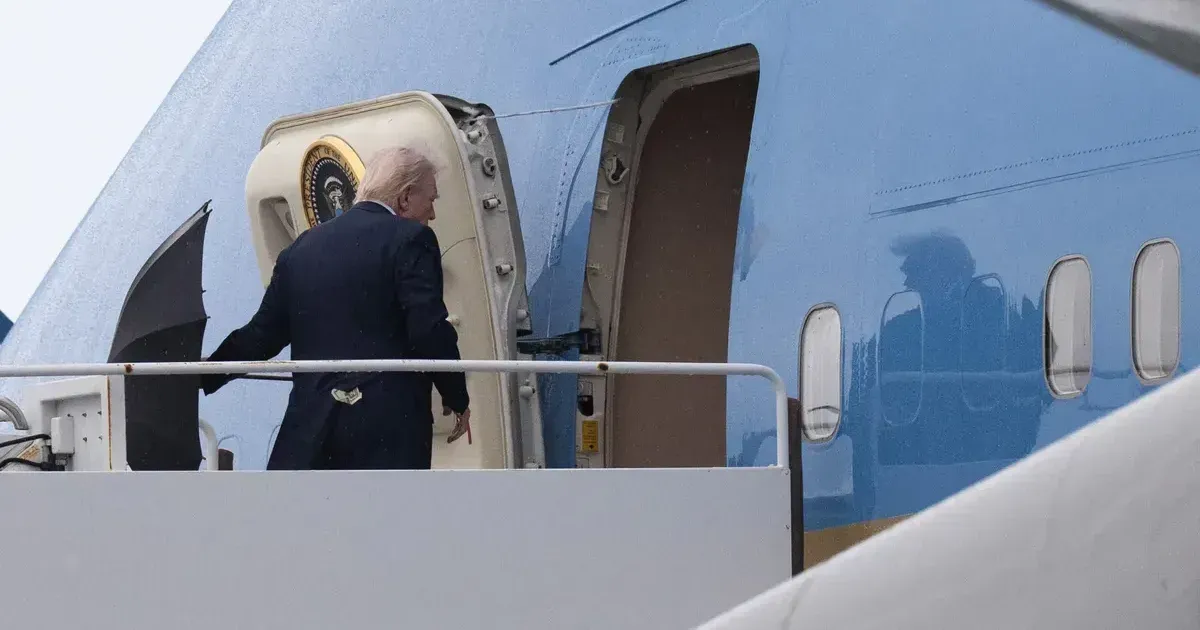
Donald Trump told Group of Seven leaders during a classified briefing that he would not disclose the precise strategic goals of his military intervention in Tehran. Donald Trump issued an ultimatum to NATO allies during an interview with the Financial Times, asserting that the alliance faces a bleak future if members refuse to provide military support for the war in Iran. These tensions surface as the conflict enters its third week with no clear diplomatic resolution in sight. The White House maintains that the offensive is proceeding faster than internal military models suggested. National Economic Council Director Kevin Hassett stated on Sunday that the Pentagon expects the mission to conclude within four to six weeks. This timeline places the end of major combat operations in late April, though the administration has not defined what constitutes a completed mission. Hassett insisted that the American public should prepare for a strong positive economic shock once the military achieves its objectives. Meanwhile, the global energy market remains in a state of high alert as the Strait of Hormuz remains effectively closed to commercial traffic. Brent crude oil prices settled at $103 per barrel on Friday, reflecting the risk premium associated with the maritime blockade. The strait acts as the primary artery for 20% of the world's petroleum and a significant portion of liquefied natural gas. Without safe passage, energy costs in Europe and Asia have begun to put downward pressure on manufacturing output.
Trump Pressures NATO Over Iran
Military planners at the Pentagon have briefed the president on a rapid degradation strategy designed to neutralize Iranian naval and air capabilities. According to White House officials, the US and Israel are focused on destroying infrastructure that allows the Islamic Revolutionary Guard Corps to threaten shipping lanes. Energy Secretary Chris Wright told reporters that he expects a rebound in global supplies as soon as the kinetic phase of the war concludes. He claimed that the administration is in active talks with international partners to secure the region. The reliance on a four-to-six-week window has created friction within the US intelligence community. Some analysts suggest that Iran's asymmetric warfare capabilities could extend the timeline indefinitely through the use of drone swarms and proxy forces in neighboring states. Trump dismissed these concerns during a recent Fox News appearance, suggesting he would know when to end the war based on a personal feeling. This reliance on intuition over established doctrine has left several European heads of state in a state of visible bewilderment.
The war will end when I feel it in my bones.
For instance, the Japanese government has already signaled its reluctance to join a US-led maritime coalition. A senior official in Tokyo described the legal and military hurdles of sending navy vessels to the Persian Gulf as insurmountable. This stance is a rare public break from Washington by one of its most loyal Pacific allies. Japan relies heavily on Gulf oil and has historically sought a middle path in Middle Eastern diplomacy to protect its energy security.
Alliance Split Adds Market Risk
Financial markets experienced an unstable Sunday as traders digested the possibility of a prolonged shutdown of the world's most critical oil chokepoint. US stock-index futures fluctuated between modest gains and sharp losses as investors weighed the risk of an escalation. MarketWatch reports that the uncertainty regarding the Strait of Hormuz is the primary driver of current instability. If the closure persists beyond the Pentagon's six-week estimate, analysts at major investment banks predict oil could test $120 per barrel. Some emerging markets are finding ways to bypass the blockade through backchannel negotiations. India and Turkey have reportedly initiated direct talks with Tehran to secure safe passage for their flagged vessels. These independent diplomatic efforts undermine the US strategy of maximum pressure and international isolation. Russia has also emerged as a secondary beneficiary, as the disruption in Gulf supplies increases the market value of its own energy exports to China and India.
The Trump administration has ramped up its language against NATO members who have hesitated to commit assets to the Gulf. The president suggested that a failure to assist the United States would have long-term consequences for the integrity of the North Atlantic Treaty. He specifically mentioned France and the United Kingdom as nations that should be doing more to protect international shipping lanes. The confrontational approach has further alienated allies who were not consulted before the launch of hostilities on February 28.
Hormuz Dispute Drives Energy Fears
Diplomatic cables from European capitals suggest that the lack of a defined endgame is the primary obstacle to coalition building. The domestic political cost of the war is starting to show in rising gasoline prices across the United States. Secretary Wright has asked for American patience, arguing that the long-term goal of eliminating the Iranian threat justifies the short-term economic pain. The administration expects that a decisive victory will lead to a period of rare regional stability and lower energy prices. However, voter sentiment often tracks more closely with the price at the pump than with long-term geopolitical projections.
The conflict is a test of the US ability to project power without a broad international consensus. While the Pentagon claims the military mission is ahead of schedule, the diplomatic mission is clearly lagging. The administration's plan to announce a new coalition later this week will serve as a litmus test for American influence in the post-globalization era. If major powers like South Korea and France decline to participate, the US may find itself bearing the full financial and military burden of the occupation.
The economic ramifications of a shut Strait of Hormuz extend far beyond the price of crude oil. Liquefied natural gas supplies to the United Kingdom and continental Europe are also at risk, threatening to reignite the energy crisis that plagued the continent in previous years. Shipping insurance premiums for vessels entering the Gulf of Oman have increased by 400% since the start of the month. These costs are eventually passed on to consumers in the form of higher prices for imported goods and raw materials.
Even the White House remains focused on the military destruction of Iranian assets. Intelligence reports suggest that the initial waves of airstrikes have sharply reduced Iran's ability to launch anti-ship missiles from its coastline. The presence of mobile launchers and hidden silo sites means the threat to shipping remains high. The Pentagon is now considering more aggressive ground operations to secure key coastal points. Such a move would represent a major expansion of the current theater of operations.
The coming weeks will determine if the four-to-six-week timeline was a realistic assessment or a political necessity. If the conflict stretches into the summer, the pressure on the global economy will likely force a change in strategy. For now, the US military continues its campaign while the president keeps his allies and the markets guessing. Ships remained anchored outside the danger zone on Sunday evening as the sun set over the Gulf.
Alliance Politics Now Moves Oil Markets
History rarely treats the intuitive hunches of populist leaders with the same reverence as their contemporary supporters. Donald Trump is now gambling the stability of the global energy market on a bone-deep feeling that the Iranian regime will buckle within forty days. It is not a military strategy; it is a hostile buyout of international security where the collateral is the global economy. By threatening NATO with a very bad future, the administration is effectively admitting that the primary American export is no longer democracy or innovation, but coercion.
The transactional view of alliances ignores the reality that a security pact built on threats is a protection racket under a different name. If the Pentagon's six-week window closes without a definitive victory, the US will find itself trapped in a familiar trap with no allies to share the blame and a $100-per-barrel anchor dragging down the domestic economy. The tragedy of the current conflict lies in its utter predictability. A unilateral war launched without consultation or a clear exit strategy is destined to become a self-inflicted wound.
The Strait of Hormuz is not just a chokepoint for oil; it is a mirror reflecting the crumbling authority of a superpower that has forgotten how to lead without a club.