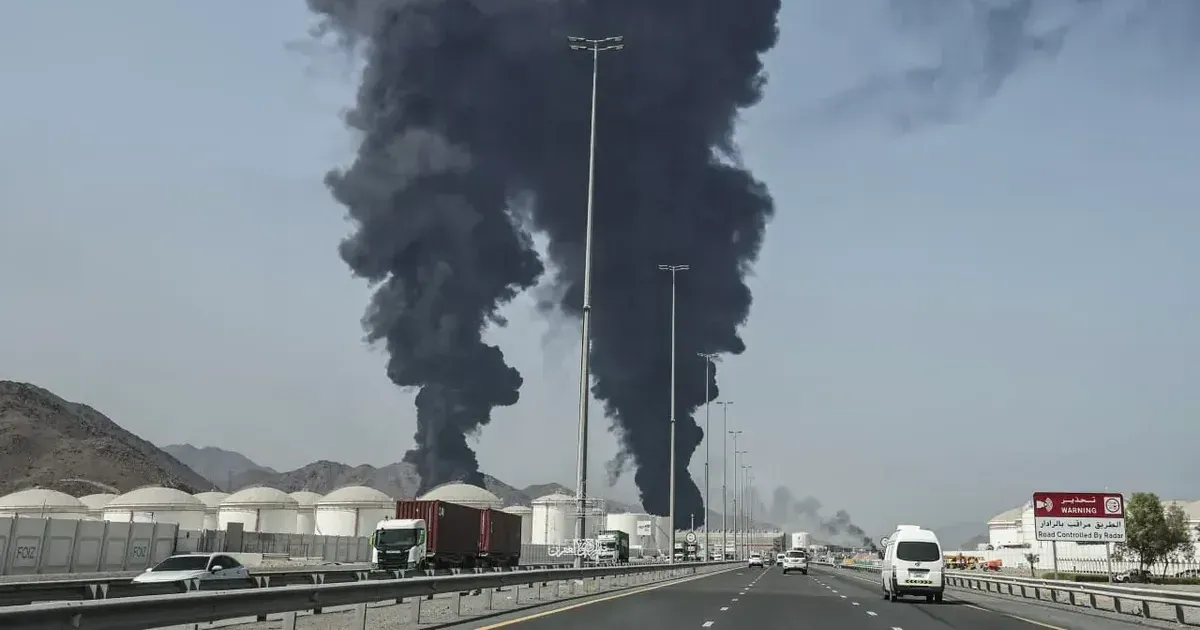
Daphne, Alabama, provides a quiet backdrop for the unfolding economic crisis hitting American households. Rhonda Abbott, a 73-year-old grandmother, watches fuel costs climb while U.S. strikes on Kharg Island push oil prices above $100. Military operations in the Middle East have directly propelled energy costs into an unstable stratosphere. U.S. forces attacked the Iranian export terminal on Kharg Island, while drone strikes targeted a major trading hub in the United Arab Emirates. These coordinated disruptions forced Brent crude and West Texas Intermediate futures to breach the psychological threshold of $100 per barrel for the first time in several months. Traders on the New York Mercantile Exchange reacted with immediate instability. While prices retreated slightly from their daily highs, the underlying instability in the Persian Gulf suggests a prolonged period of elevated costs for Western consumers. Supply chain analysts note that Kharg Island handles the vast majority of Iranian crude exports, making it a critical choke point for global energy liquidity.
Kharg Island Strikes Lift Oil Prices
Pentagon officials confirmed the strikes were intended to degrade infrastructure used by hostile actors in the region. But the immediate result has been a contraction in available supply. Market players now fear a wider regional conflict that could engulf more shipping lanes in the Strait of Hormuz. Insurance premiums for oil tankers have quadrupled in the last 48 hours. Data from shipping trackers indicates several vessels have rerouted around the Cape of Good Hope. This detour adds two weeks to delivery times and increases the carbon footprint of every barrel transported. Fuel speculators have jumped on these delays to justify higher prices at the pump for drivers in the United Kingdom and the United States. The administration maintains that the military action was necessary for long-term security. White House press briefings have focused on the threat posed by regional proxies rather than the immediate inflationary pressure on domestic voters. Alabama residents like Abbott feel the discrepancy between geopolitical strategy and personal accounting.
I had three children and now I am raising my grandson on my own, but gas prices have chipped away at my savings and I worry about my finances every day.
Abbott adopted her 14-year-old grandson and works full-time for her daughter's company to make ends meet. Her Social Security payments cover her mortgage, leaving little room for the $4 per gallon prices now seen at local stations. She is not alone in this struggle.
Fuel Costs Hit Household Budgets
Across the Atlantic, European leaders are voicing similar concerns about the fragility of the current energy system. Simon Harris, the Irish Finance Minister, described the recent price spike as a wake-up call for the continent. He spoke on Bloomberg Television regarding the urgent need to accelerate the transition away from fossil fuel dependence on unstable regions. Harris argued that the surge in inflation stems directly from a lack of energy sovereignty. European nations have spent decades relying on external suppliers, leaving their economies vulnerable to military escalations in the Middle East. Ireland and its neighbors now face a difficult winter as heating costs are expected to mirror the rise in automotive fuel. The Irish government is evaluating new subsidies for home insulation and renewable energy installations. These measures aim to insulate the domestic economy from the whims of global oil markets. Harris emphasized that the current crisis should serve as a trigger for a faster green energy rollout across the European Union. But the transition is not happening fast enough to help families today. Inflationary pressures have already forced several European central banks to consider further interest rate hikes. Higher rates would increase the cost of borrowing for the very green projects Harris intends to promote. Consumer behavior in the United States shows a direct correlation between pump prices and interest in alternative transportation. Online searches for electric vehicles have seen a sharp uptick since the strikes began. Data from CarGurus shows that views of new EV listings rose nearly 10% in the first two weeks of March. Used EV interest grew even faster, with a 15% increase in online traffic over the same period. Google Trends data confirms this shift, with queries for used electric cars nearly doubling since fuel prices surpassed $3 a gallon. Shoppers are clearly looking for an escape from the instability of the combustion engine market. Interest does not always translate into ownership. While searches are up, actual sales for major EV manufacturers like Tesla, Rivian, and Lucid have continued to struggle. High interest rates on car loans and a lack of public charging infrastructure remain major barriers for many American buyers. Only one smaller brand, Polestar, saw a 33% increase in web traffic. This suggests that while consumers are curious about going electric, they are hesitant to commit their capital during an era of high inflation. The gap between search intent and final purchase highlights the ongoing economic uncertainty.
Back in Daphne, the reality of $100 oil is measured in grocery receipts and utility bills. Abbott is a growing demographic of older Americans who are forced to delay retirement to care for younger relatives. These households are particularly sensitive to energy costs because they often rely on older, less fuel-efficient vehicles.
Public transportation in rural and suburban Alabama is virtually nonexistent. This leaves residents with no choice but to pay the increased prices at the pump or curtail their employment. For someone in her 70s, the physical and financial toll of these choices is immense.
In practice, the cost of transporting her grandson to school and extracurricular activities has doubled in the last year. Abbott notes that every extra dollar spent on gas is a dollar taken away from her grandson's future education fund. The geopolitical games played in the Persian Gulf have a direct line to the kitchen tables of the American South.
Wealthy investors often see these price spikes as an opportunity for profit. Hedge funds have increased their long positions in energy futures, betting that the conflict will drive prices even higher. The divergence between the investor class and the working class continues to widen. 2.4 million Americans are estimated to be in similar caregiving positions as Abbott.
Oil Shock Hits Ordinary Households
The hard truth is that Washington can call the Kharg Island strike a strategic move, but drivers and caregivers will pay for the experiment long before any policymaker admits the cost. Oil shock politics always sound abstract until the bill reaches a family that has no bus route, no spare income and no room left to absorb another fuel spike.