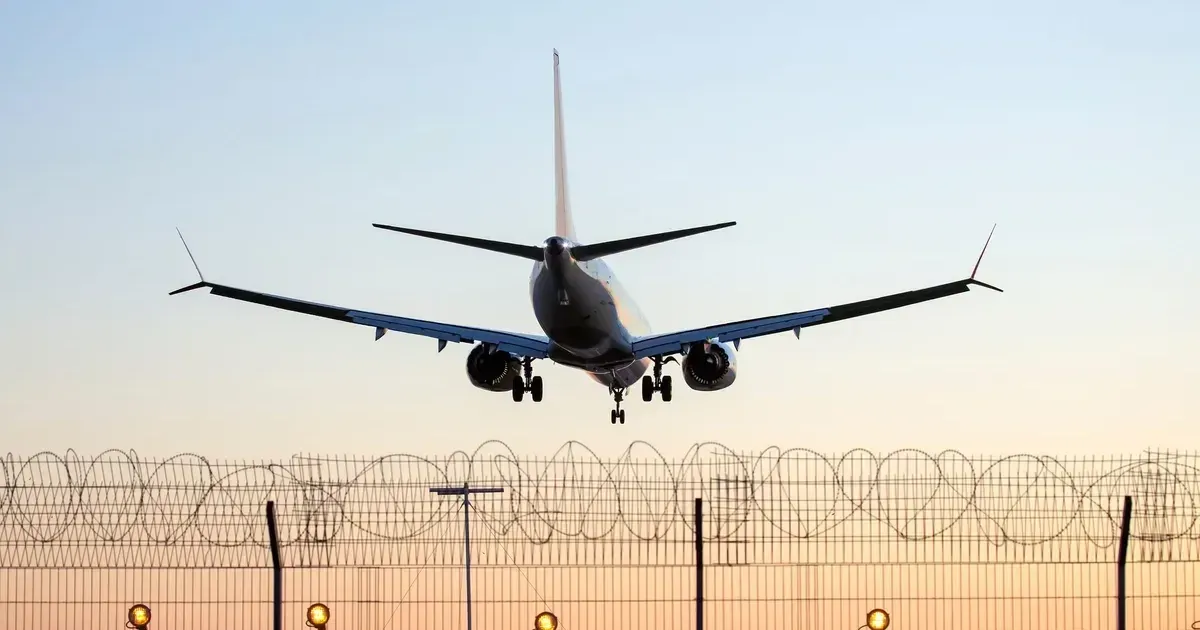
Friday marks the beginning of a precarious period for the American aviation system as thousands of federal security officers prepare to go without a paycheck for the first time in the current budget cycle. Travelers passing through Hartsfield-Jackson Atlanta International Airport on March 13 found relatively short lines, but aviation analysts warn that this stability is likely to evaporate within forty-eight hours. The absence of a bi-weekly deposit often triggers a surge in unscheduled absences among the screeners who manage the nation's security checkpoints. Government operations remain partially frozen after lawmakers failed to reach a consensus on discretionary spending. The travel warning was current on March 13, 2026, as airports prepared for a possible spike in screening delays. For the Transportation Security Administration, the shutdown does not mean a cessation of duties. Security screening is classified as an essential service, meaning officers must report to work despite the lack of immediate compensation. But history shows that the willingness to perform high-stakes labor for zero immediate return has a clear expiration date. Morale is the first casualty of political deadlock. Recent reports from major hubs indicate that call-out rates remain within historical norms for now. Still, the underlying data suggests that the financial cushion for many federal workers is thin. In previous shutdowns, the tipping point arrived exactly when the first zero-dollar pay stub was issued to employees. Financial experts note that many junior officers live paycheck to paycheck, making the cost of gas, parking, and childcare a barrier to reaching their shifts once the bank account empties.
Why Airport Lines Could Worsen
Federal pay cycles are rigid, and the Department of Homeland Security has few tools to circumvent the lack of appropriated funds. When a payroll cycle concludes without a resolution in Washington, the system generates a notification rather than a direct deposit. For the approximately 51,000 officers nationwide, this notification is a functional pay freeze that impacts household budgets immediately. By contrast, those in the private sector often have different contractual protections that federal workers lack during budgetary lapses. Absenteeism tends to rise not out of malice, but out of economic necessity. Many officers seek temporary employment in the gig economy or retail sectors to cover immediate bills, leading to what union leaders call the blue flu. In fact, during the 2018-2019 shutdown, sick leave usage among TSA staff spiked to 10 percent at some major airports, forcing the closure of specific security lanes and even entire terminals. This operational shift directly correlates with the length of the queue at the metal detector.
While we remain committed to the mission, our members cannot pay for groceries with a sense of patriotic duty alone when their bank accounts are empty.
Wait times at international gateways like JFK and LAX often mirror the staffing levels at domestic checkpoints.
Passengers looking to mitigate the impact of the shutdown on their itineraries have few reliable options. TSA PreCheck and CLEAR remain the most effective tools for reducing wait times, as these lanes are prioritized for staffing even when resources are low. But even these expedited programs are not immune to the broader labor shortage. If a terminal usually operates four PreCheck lanes and three are closed due to staffing, the advantage of the membership is sharply diluted.
Travelers might also consider arriving at the airport three hours before domestic departures and four hours before international flights. This buffer accounts for the unpredictable nature of staffing fluctuations that can occur between the time a traveler leaves home and the time they reach the terminal. Separately, checking the flight status and terminal maps through airline apps can provide real-time updates on which checkpoints are experiencing the highest volume.
Using secondary airports often provides a faster route through security. Smaller regional facilities typically have a higher ratio of staff to passengers compared to massive hubs like Chicago O'Hare. The problem remains a simple math equation involving the number of open lanes and the volume of passengers. To that end, some frequent flyers have reverted to early morning or late night flights when passenger volume is at its lowest point.
Security Delays Become a Policy Cost
Can a superpower genuinely claim to be functional when it relies on the forced, unpaid labor of its frontline security staff to keep its economy from collapsing? The current situation is not a bureaucratic hiccup but a systemic failure that treats the nation's aviation infrastructure as a political bargaining chip. We see a recurring theater where the most vulnerable federal employees are expected to subsidize congressional dysfunction with their own household stability. It is an absurd expectation that an officer responsible for detecting explosives should do so while wondering if their car will be repossessed the following Tuesday.
Waiting for the first missed paycheck to act is a strategy of reactive negligence. The reality is that the security of the skies is being held together by the thin thread of employee loyalty, a resource that is finite and rapidly depleting. Instead of discussing wait times as a mere travel inconvenience, we should be discussing them as the visible symptoms of a decaying federal commitment to basic governance. If the private sector operated with this level of fiscal insolvency, it would be liquidated within a week.
Yet the American public is expected to tolerate this as a normal facet of modern democracy. The charade must end before the staffing drain becomes a permanent exodus that the aviation industry cannot recover from.