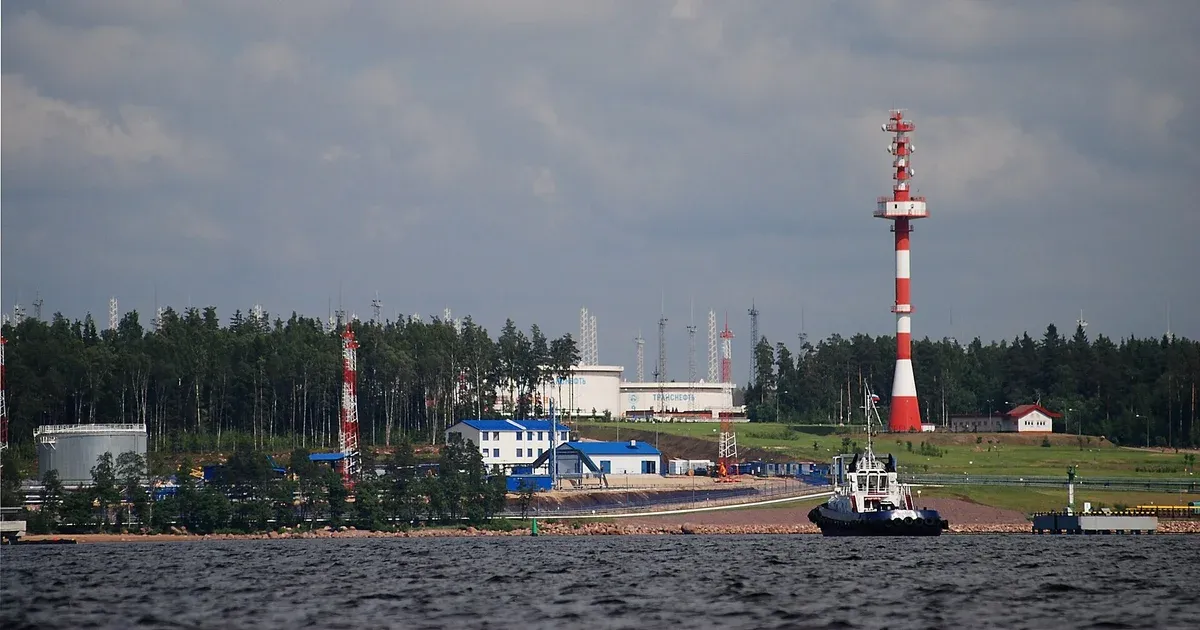
Drone fragments damaged an oil pipeline near Primorsk, putting renewed pressure on Russian export infrastructure far from the front line. The location made the report more significant than a routine interception notice. Leningrad Region Governor Alexander Drozdenko reported the incident on April 5, 2026. Russian officials said air-defense units intercepted drones during overnight waves. Local authorities reported no injuries, but even limited damage near an export port can affect schedules, inspections and security planning.
Primorsk Remains a High-Value Target
Primorsk matters because it is a major Baltic outlet for Russian crude. Any disruption near the port draws attention from energy traders, insurers and governments watching how the war reaches economic infrastructure. The strike also fits a broader Ukrainian pattern: targeting fuel, logistics and export nodes that support Russia's war economy. Deep-rear attacks may not change the front line immediately, but they can force Russia to spend more on air defense and repairs.
Regional reports said nineteen drones were intercepted in the Leningrad Region during the overnight activity.
Pipeline damage can be difficult to judge from early statements. A small puncture, fire or fragment impact may be contained quickly, yet still require pressure checks, cleanup and additional security before normal operations resume.
Air Defense Claims Show the Scale
Russian accounts described multiple drone waves, including wider claims from military units in other sectors. Those figures underline how heavily both sides now use unmanned systems to stretch defenses across large areas. For Ukraine, the advantage is reach. For Russia, the challenge is coverage. Protecting refineries, pipelines, ports and depots across a vast territory requires constant readiness and expensive interception systems.
Energy Markets Watch the Pattern
One damaged segment near Primorsk may not change global oil supply on its own. The larger issue is repetition. If export-linked infrastructure faces regular drone pressure, markets will price in more uncertainty. The attack also carries a political message. Russia's energy system has helped fund the war, and Ukraine is showing that infrastructure once considered safely distant can still be touched. That does not make every reported strike strategically decisive. It does make the Baltic energy corridor part of the war's risk map, so even a contained pipeline incident matters. The key operational question is how quickly the pipeline segment can be inspected and returned to service. Even when crews contain visible damage, operators must check pressure, weld integrity, sensors and nearby valves before declaring a system stable. Primorsk also sits inside a broader maritime risk picture. Tankers, storage tanks, rail links and loading arms are all part of the export chain. A strike near one component can force temporary caution across the others. For Ukraine, the pressure campaign has a strategic logic. Each successful or partially successful strike makes Russia allocate air-defense assets away from other priorities. That defensive stretch can be valuable even when physical damage is limited. For Russia, public messaging has to balance reassurance with deterrence. Officials want to say that drones were intercepted, but they also have to explain why fragments reached sensitive infrastructure.
Energy traders will watch repetition more than one headline. A single contained incident may fade quickly; a pattern of repeated disruptions near export corridors can influence freight rates, insurance and forward pricing.
The episode therefore matters as a signal. The war's geography is no longer measured only by trenches or occupied towns. It also includes the infrastructure that converts resources into state revenue.
The incident also highlights a tactical asymmetry. Drones are relatively cheap compared with the infrastructure and air-defense systems used to stop them. Even failed attacks can impose costs if they force shutdowns, inspections and redeployments. That is one reason energy infrastructure has become a recurring target set in the war. The aim is not always spectacular destruction; sometimes the goal is to create uncertainty, stretch defenders and make normal economic activity more expensive.
For Baltic shipping, the concern is cumulative risk. Operators can handle one contained incident, but repeated alerts near ports make scheduling less predictable. Insurers may ask for higher premiums, crews may require additional safeguards and terminal operators may slow procedures after each alarm. Those frictions matter because crude exports depend on reliability. Primorsk's value is not only the oil that moves through it; it is the expectation that the route will function without constant interruption.
Each future alert around Primorsk will carry more weight than a normal regional security update. The question will be whether exports keep moving predictably after each inspection and whether defenders can reduce the number of fragments reaching critical sites.
That extra uncertainty is enough to keep the Baltic export corridor on watch even when officials describe the immediate damage as contained. Primorsk is important because it sits inside the larger export network that traders watch when assessing Russian crude flows. Even a limited disruption near pipeline or port infrastructure can force insurers, shippers, and buyers to price extra uncertainty into cargo schedules. The incident therefore carries market weight beyond the immediate blast site. For Ukraine, the value is also strategic signaling: hitting energy chokepoints can force Moscow to spend more on protection, rerouting, and repair readiness rather than only frontline logistics. That pressure can persist beyond one trading day.