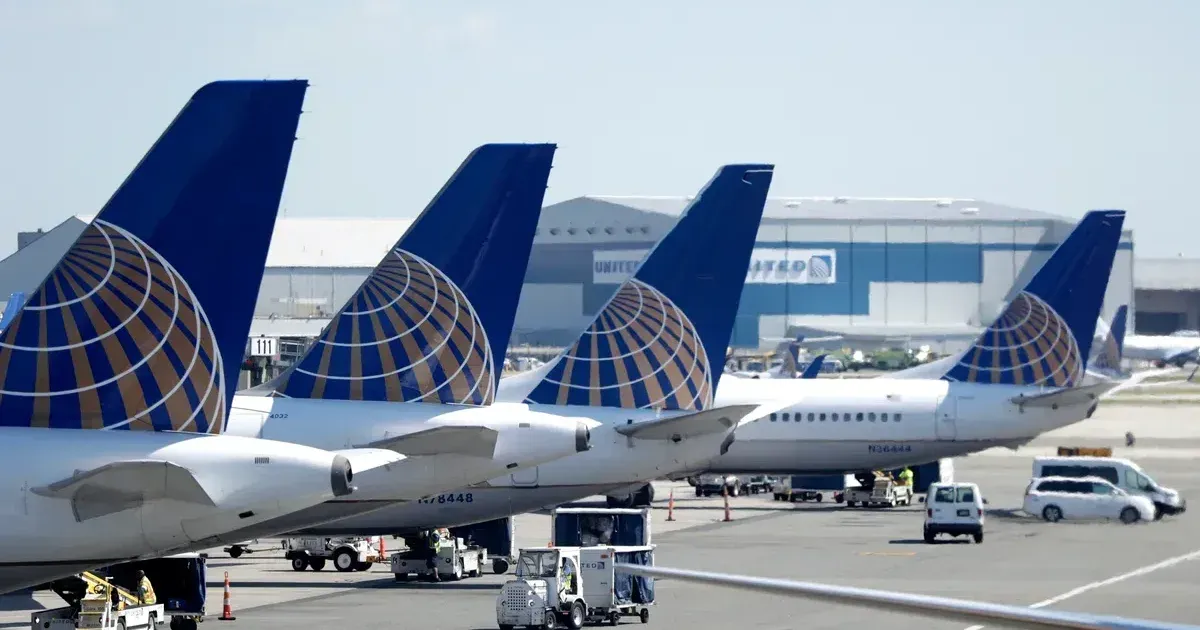
United Airlines faced a second security diversion in two days after a Spain-bound flight returned to Newark over a possible threat tied to a Bluetooth device name. The Newark return turned a small device scare into another reminder of how quickly cabin concerns can disrupt a flight. United now has to explain the response without overstating a threat that investigators may ultimately narrow. The incident adds to a year of heightened passenger sensitivity around unusual electronics, cabin smoke and emergency returns. United Flight 236 left Newark Liberty International Airport for Palma de Mallorca on Saturday evening, May 30, 2026, but turned back over the Atlantic and landed in New Jersey at 9:37 p.m., according to the Port Authority of New York and New Jersey.
The airline said the Boeing 767 had 190 passengers and 12 crew members on board. Security teams met the aircraft after it landed, passengers were taken off, and the plane was inspected before travelers were screened again. The episode caused a long delay but ended without any reported injuries. It also forced a full reset of the trip: passengers had to leave the aircraft, clear another security process, and wait for a replacement crew before the airline could resume the Palma service.
Air traffic control audio reviewed by the Associated Press pointed to the unusual trigger: someone on board had given a discoverable Bluetooth device a name that raised alarm. United has not publicly released the device name or identified the passenger connected to it, leaving officials to describe the event only as a possible security threat.
Bluetooth Name Prompts Return
The concern emerged after the flight had already departed for Spain. Passenger accounts cited by AP said crew members repeatedly asked people to turn off Bluetooth devices, but two devices remained active. After communicating with United's operations center in Chicago, the crew chose to return to Newark rather than continue across the Atlantic.
Air traffic control audio referred to a Bluetooth device with a "certain four-letter word," according to AP.
That narrow description is important because it keeps the report inside what officials and the airline have confirmed. A provocative device name can still require a serious response inside an aircraft cabin, especially on a trans-Atlantic route, but investigators had to determine whether it was a credible threat, a prank, or a careless label visible to other passengers.
Passengers later boarded a replacement flight with a new crew. That flight left early Sunday and arrived in Palma de Mallorca in the afternoon, turning what should have been a direct overnight trip into a long security delay. The use of a replacement crew also points to the practical limits that shape airline recovery plans after a diversion, including crew duty rules and aircraft availability.
Friday Diversion Adds Pressure
The Newark return followed another United incident on Friday night. United Flight 2005, traveling from Chicago to Minneapolis, diverted to Madison, Wisconsin, because of a security concern involving an unruly passenger. United said that flight landed safely, and the airline reported no injuries among the 147 passengers and six crew members.
Dane County airport officials said law enforcement officers on board restrained the passenger before deputies met the aircraft in Madison. Federal authorities are handling that investigation. A passenger interviewed by AP said the man appeared confused, and another passenger said he had reached toward a flight attendant before being held back.
The two cases are different, but together they show how quickly airline crews must make operational decisions when a cabin concern becomes a security issue. In one case, a digital device name caused a trans-Atlantic return. In the other, passenger behavior forced a domestic diversion. Both required coordination among crews, air traffic controllers, airport police, and federal authorities.
Airline Security Costs
For travelers, the immediate consequence was delay and uncertainty. For United, each event brought aircraft repositioning, crew scheduling, passenger handling, and law enforcement coordination. Those costs matter, but airlines have little room to minimize a possible threat once it is reported in flight. Even when the concern later proves harmless, the crew must make decisions based on incomplete information, distance from suitable airports, fuel planning, passenger safety, and the ability of police or federal agencies to meet the aircraft on arrival.
The incidents also highlight a modern security problem that is not limited to prohibited items. A device name, a passenger's behavior, or a misunderstood action can force crews into decisions that disrupt hundreds of people. The safest response is often the most disruptive one, especially when the aircraft is already airborne and the facts are incomplete. That is why the same system that treats weapons and cockpit access as obvious threats can also treat a broadcast device name as serious until officials determine otherwise.
United has not suggested that the Newark and Madison incidents were connected. The common lesson is procedural: crews treated uncertain information as a safety issue, brought aircraft to airports where authorities could respond, and allowed investigations to sort out intent after passengers were safe on the ground. For passengers, that means disruption may feel excessive in the moment, but the safety threshold remains deliberately conservative. United is likely to treat the case as a training example for communicating uncertainty without alarming passengers unnecessarily. The airline will review how quickly crew members verified the device, informed pilots and gave passengers clear instructions during the return. Calm communication can keep confusion from becoming a larger cabin concern, but crews still must make fast decisions from incomplete information. Even when a scare proves minor, passengers, airport staff and maintenance teams absorb the substantial operational cost of returning a flight.