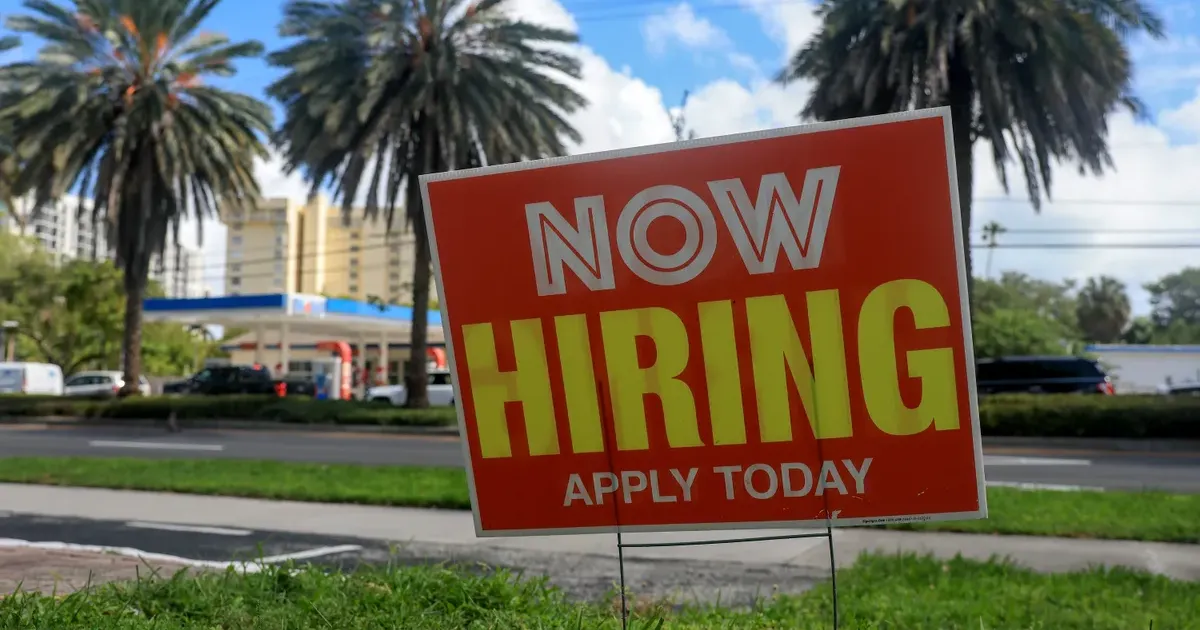
Officials at the Bureau of Labor Statistics released figures showing the national economy added 178,000 jobs during the previous month. Statistical evidence suggests that hiring pace dramatically outstripped the conservative estimates provided by institutional economists. Preliminary data indicates the expansion represents nearly triple the volume of new positions anticipated by market analysts. The April 3, 2026, release complicated expectations for Federal Reserve rate cuts. Economic projections leading into the first quarter of 2026 failed to anticipate the resilience of the domestic labor market. While consensus forecasts predicted a modest uptick in employment, the actual numbers reveal a substantial surge in payroll additions. Private-sector hiring drove much of the momentum as businesses across various industries increased their headcounts. March hiring trends indicate a broader stabilization following a period of fiscal uncertainty.
Employers across the United States showed a renewed willingness to commit to long-term personnel investments. Data from the Bureau of Labor Statistics suggests that this growth occurred despite persistent concerns regarding inflationary pressures. Markets reacted with immediate volatility to the news as traders adjusted their expectations for future interest rate adjustments. Analysts had largely prepared for a cooling period that failed to materialize.
Bureau of Labor Statistics Forecast Accuracy
Forecasts from leading financial institutions were caught off guard by the 178,000 total reported for March. CBS News noted that the actual hiring figures surpassed forecasts by a factor of three in some models. The huge discrepancy between expert predictions and empirical reality raises questions regarding current modeling techniques. Statistical experts suggest that traditional indicators may be lagging behind a rapidly shifting post-industrial economy. Investopedia editor-in-chief Caleb Silver joined NBC News to dissect the underlying causes of the surge. Silver observed that the labor market has demonstrated a surprising capacity for absorption even as corporate belt-tightening dominates the headlines. Disconnects between micro-level corporate announcements and macro-level employment data appear to be widening. High-frequency data points often miss the subtle shifts in small-business hiring that drive these totals.
"Hiring was much stronger than expected in March, with employers adding roughly three times the number of jobs economists predicted," according to reporting from CBS News.
March data fundamentally changed the trajectory of fiscal expectations. Economists at major banks are now forced to recalibrate their models for the remainder of the 2026 fiscal year. Failure to account for 178,000 new positions suggests a systemic undervaluation of current economic health. Pressure is mounting on the Federal Reserve to interpret these numbers as a sign of an overheating market. Stronger employment data typically corresponds with sustained consumer spending and subsequent price increases. The surge follows broader economic trends, including the impact of the March Jobs Report on national industrial costs.
March Employment and the Unemployment Rate
Contradictory data points emerged regarding the exact unemployment rate for the period ending March 2026. NPR News reported a dip to 4.3%, attributing the shift to a decline in the number of active job seekers. NBC News correspondent Brian Cheung presented a slightly different figure, placing the rate at 4.4% based on his analysis of the report. The minor variation highlights the complexity of the household survey used to calculate the jobless percentage.
Workforce participation remains a critical metric for understanding the health of the broader economy. If the drop to 4.3% occurred because people stopped looking for work, the news is less positive than the headline suggests. Bureau of Labor Statistics data often requires deep scrutiny to separate genuine growth from statistical noise created by a shrinking labor pool. Labor force participation rates continue to fluctuate as demographics shift across the country. March saw a definitive pivot in the way employers approach seasonal hiring. Traditional springtime spikes in employment appear more resilient this year than in previous cycles. Numbers provided by the government reflect a broader trend of stabilization in the service sector and manufacturing. Despite the conflicting unemployment percentages, the raw total of 178,000 remains the primary focal point for policymakers.
Reporters at NBC News and NPR News focused on different aspects of the same Bureau of Labor Statistics release. Brian Cheung emphasized the way these numbers surpassed expectations during his televised analysis. NPR contributors characterized the market as springing back to life after a sluggish winter season. The different editorial focuses provide a more complete picture of the national economic sentiment.
Forecasts simply failed to capture the underlying momentum. Investopedia editor Caleb Silver suggested that the surpassing of expectations indicates a hidden strength in consumer-facing industries. While NBC focused on the 4.4% unemployment figure, other outlets prioritized the narrative of a labor market defying its critics. Washington Times coverage pointed out that employers are ignoring the cautionary tales whispered by recession-minded analysts. Momentum in the labor market appears to be self-sustaining for the time being.
Bureau of Labor Statistics researchers collect this data through two separate surveys of businesses and households. Discrepancies between the 4.3% and 4.4% figures usually stem from the margin of error inherent in the household survey. March data will likely undergo further revisions as more complete payroll information becomes available in the coming weeks. Constant updates to these figures are a standard part of the national accounting process.
Financial institutions rely on these reports to guide billions of dollars in investment decisions. Accuracy in the March report is paramount for maintaining investor confidence in the transparency of the American economy. While 178,000 jobs is a substantial gain, the quality of these positions is yet to be fully analyzed. Wage growth and average hours worked will determine the true impact of this hiring spree on the average worker.
March Hiring Keeps Recession Fears Contained
Reliance on consensus forecasts has once again proven to be a fool's errand for institutional investors. When the actual job growth of 178,000 positions triples the expected output, the failure lies not with the economy, but with the analysts. These experts are clearly disconnected from the reality of the American workforce and continue to rely on antiquated models that prioritize corporate sentiment over actual payroll data. This persistent inability to accurately predict market movements suggests that the financial media is more interested in maintaining a narrative of uncertainty than in reporting objective reality.
The discrepancy between the 4.3% and 4.4% unemployment rate reported by various outlets is more than a simple rounding error. It highlights a dangerous fragmentation in how we digest economic data. If the unemployment rate declined primarily because workers abandoned the labor force, then the Bureau of Labor Statistics is effectively masking a structural weakness with a shiny headline number. We should be skeptical of any report that claims a labor market is springing back to life while simultaneously acknowledging a decline in people actually seeking work. You cannot have a healthy expansion when the foundation is built on people giving up. The celebration of these numbers is premature and dangerously optimistic. The stability looks fabricated.