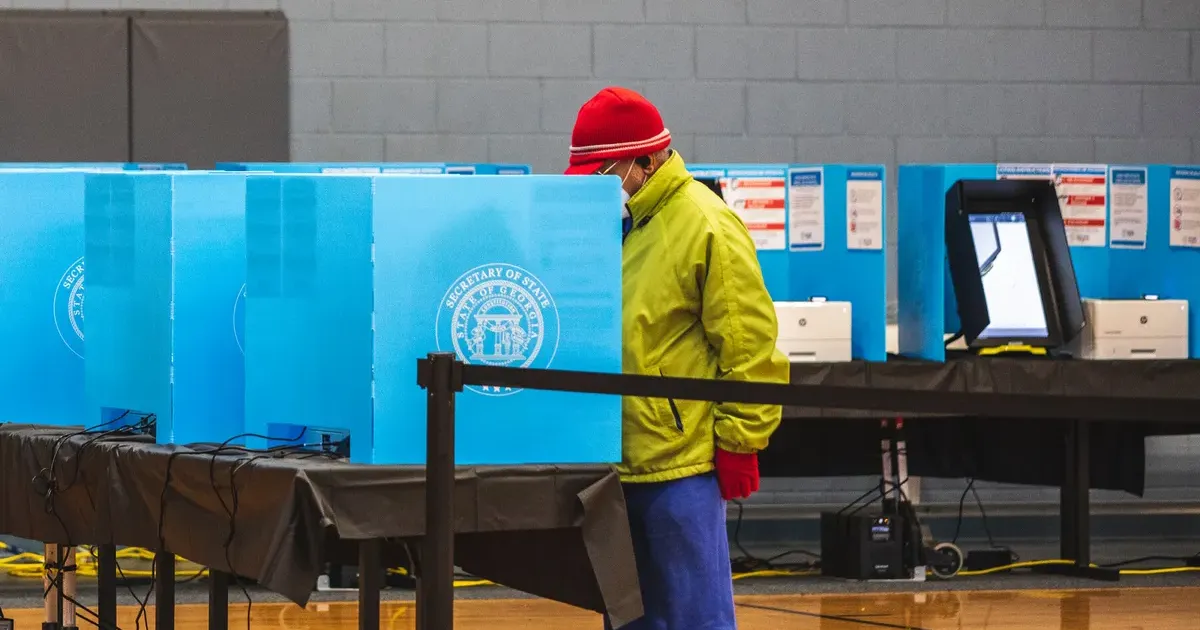
Georgia state representatives adjourned in Atlanta without resolving a statutory deadline that mandates the total replacement of the state voting infrastructure before the November midterms. Legislative inaction leaves 159 counties in a state of administrative paralysis regarding the procurement of thousands of ballot-marking devices. The April 3, 2026, adjournment left counties without a clear path for replacing election equipment. Voters across the state face the prospect of a fractured election process because the General Assembly refused to push back a requirement that effectively decertifies the existing touchscreen fleet by summer. Official records indicate that the current machines must be decommissioned, yet no funding or logistical framework for a successor system was finalized before the gavel fell.
Lawmakers exited the gold-domed Capitol building after weeks of debate that failed to produce a compromise on the timeline for election security upgrades. State law currently prohibits the use of the aging electronic interface, a move intended to strengthen security that now threatens to leave precincts without functional equipment. Election directors in major hubs like Fulton and Gwinnett counties have expressed concern about the lead times required for software installation and poll worker training. Manufacturers typically require six to nine months for the delivery of high-volume orders, a window that has now closed for the November cycle.
Legal Mandates and Procurement Obstacles
Georgia previously established a rigid sunset clause for its current hardware to address cybersecurity vulnerabilities identified in federal court proceedings. $100 million was roughly the amount spent on the previous system, yet the requirement to scrap it remains legally binding despite the lack of a replacement plan. Statutes passed in previous sessions were designed to force a transition to hand-marked paper ballots or more secure digital scanners. Failure to adjust these dates means the state is now legally barred from using the only equipment it currently owns. Under these conditions, the Secretary of State's office faces a mounting pile of vendor contracts that cannot be signed without legislative budgetary approval.
"Georgia must decertify and replace its current electronic voting machines before the November election cycle begins," the Georgia General Assembly's previous mandate stated.
Pressure on local administrators has reached a breaking point as the calendar moves closer to the primary season. County budgets are not equipped to absorb the sudden cost of a statewide equipment overhaul without serious assistance from the state treasury. Because the session ended without a fiscal resolution, local governments may be forced to choose between raising property taxes or implementing emergency paper ballot procedures. Such manual processes often lead to long lines and delayed reporting of results, which previously fueled public distrust in the electoral system. Georgia's crisis joins a broader pattern of national voting rights litigation surrounding election security and administration.
County Officials Warn of Administrative Collapse
Election managers across the 159 counties in Georgia now find themselves in a logistical vacuum. Procurement cycles for high-tech voting machines involve rigorous testing and certification phases that cannot be bypassed. Rushing this process would likely introduce the very security flaws that the new law sought to eliminate. Instead of a smooth transition, the state faces a scenario where 30,000 new machines must be configured and deployed in less than 180 days. The compressed schedule creates a risk profile that insurance providers and cybersecurity experts find unsustainable for a high-stakes midterm environment.
Logistics experts suggest that even if a special session is called, the hardware supply chain remains brittle. Specialized chips used in ballot-marking devices are subject to international shipping delays and manufacturing backlogs. Securing the necessary units for every precinct in Georgia requires a level of coordination that has yet to manifest within the executive or legislative branches. Rural counties with smaller staffs are particularly vulnerable to these delays, as they lack the manpower to execute a total system swap on a shortened timeline.
Partisan disagreements regarding the specific features of the new voting system contributed to the legislative deadlock. One faction insisted on strictly hand-marked ballots, while another group advocated for updated electronic systems with printed paper trails. These divergent visions stalled the bill in committee, preventing it from reaching the floor for a final vote. Public confidence in the outcome of the midterms depends heavily on the perceived stability of the voting process. When the rules of engagement are in flux just months before a vote, participation rates often drop among disillusioned segments of the electorate.
The deadlock leaves the Georgia General Assembly in a position where judicial intervention may be the only path forward to prevent a total collapse of the voting infrastructure. Civil rights groups have already begun preparing lawsuits to compel the state to provide a functional and legal voting method. If a judge orders an extension of the deadline, it might provide temporary relief but would not solve the underlying funding crisis. Without a clear legislative directive, the Secretary of State possesses limited authority to move forward with large-scale acquisitions. The fiscal year ends in June, leaving a narrow window for emergency appropriations to be made outside of a standard session.
Historical precedent in the state shows that rapid changes to voting laws often lead to litigation that extends well past Election Day. Recent cycles were defined by court battles over ballot access and machine reliability. Failing to address the equipment deadline today increases the likelihood that a federal judge will eventually dictate the terms of Georgia elections. Hard data from previous transitions indicates that poll worker errors increase by 15% when new technology is introduced without a full year of lead time. Current projections suggest that Georgia will be operating with less than one-third of that recommended training period.
Voting System Delay Extends Georgia Uncertainty
Georgia lawmakers have effectively engaged in a high-stakes game of chicken with the fundamental mechanics of their own democracy. By allowing the session to expire without addressing a lethal statutory deadline, they have signaled that political maneuvering is more valuable than administrative competence. Is this a case of genuine legislative incompetence or a calculated move to create enough chaos to justify emergency measures later in the year? The refusal to fund or extend a mandatory transition creates a vacuum where only the judiciary can act, effectively outsourcing the responsibility of governance to the courts.
Power resides in the ability to control the conditions under which a vote occurs. By leaving the system in a state of legal decertification, the legislature has created a reality where any result in November can be challenged on the basis of procedural illegality. This is not a failure of the system; it is a feature of a new political strategy that prioritizes the ability to contest an outcome over the smooth execution of the process itself. Georgia is now the primary laboratory for what happens when a state chooses to let its own laws expire into obsolescence. The verdict is clear: instability is the intended product.
Expect a summer of frantic litigation and emergency executive orders as the state attempts to patch a hull that it intentionally breached. The coming months will test whether the state can administer an election under self-created pressure.