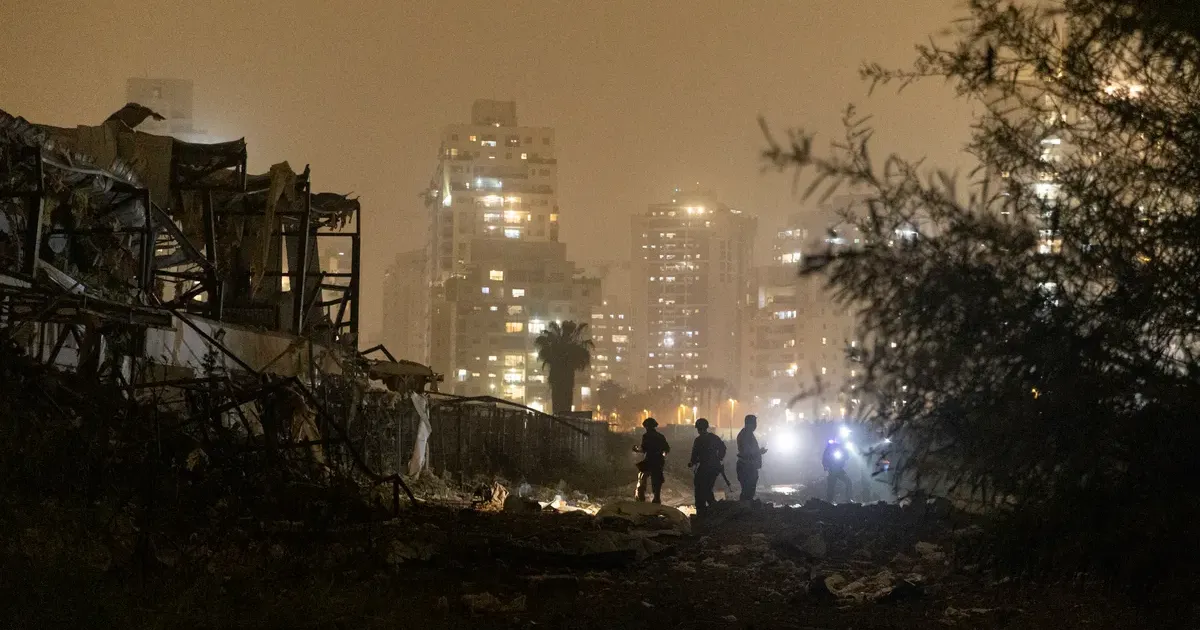
Donald Trump ordered precision strikes against critical Iranian infrastructure as regional hostilities transitioned into full-scale industrial warfare. Missiles launched from carrier-based aircraft targeted the transport arteries of the Islamic Republic. Iranian officials confirmed that the B1 bridge, a large structure connecting Tehran to the city of Karaj, collapsed under the weight of several direct hits. These aerial operations followed hours of coordinated Iranian drone and missile attacks against Western-aligned oil facilities across the Persian Gulf. Explosions lit up the night sky over Kuwait, Saudi Arabia, and the United Arab Emirates. The April 3, 2026, strikes moved the conflict from battlefield targets toward industrial infrastructure.
One of the primary targets included Kuwait's largest oil refinery, which reported fires in multiple processing units. Smoke from the burning crude obscured satellite imagery of the Mina al-Ahmadi region for several hours.
Iranian Infrastructure Crumbles Under Precision Strikes
Videos shared by witnesses on social media captured the moment the B1 bridge span dropped into the riverbed below. Witnesses recorded the sound of multiple secondary explosions. State-controlled media outlets in Iran reported that the strike killed at least eight people. Local hospitals in Karaj struggled to manage the influx of patients. Medical records indicate that 95 people were wounded during the initial bombardment. Rescue teams spent the early morning hours searching through concrete debris for survivors trapped near the bridge footings. The destruction of transport links suggests a transition from tactical containment to total infrastructure degradation.
Tehran maintains that the bridge served purely civilian purposes for commuters. Pentagon officials, however, argue that the artery was essential for the rapid movement of Revolutionary Guard units toward the coast. Imagery analysis confirms that the collapse has effectively severed the primary supply route between the capital and the northwestern provinces. Iranian President Ebrahim Raisi visited the site shortly after the strike to denounce the American escalation. He stood among the wreckage while promising a response that would target the heart of Western energy security. He claimed the bridge was a symbol of Iranian engineering that the West could not tolerate.
Gulf Energy Markets Reeling from Refinery Attacks
Global oil prices surged on the morning of April 3, 2026, as reports of refinery damage reached trading floors in London and New York. Iranian drones successfully penetrated the air defense systems surrounding Kuwaiti energy hubs. One missile struck a primary distillation unit. Engineers in Saudi Arabia reported near-misses at the Ras Tanura facility, though operations there continued at a reduced capacity. Markets responded with extreme volatility. Crude futures spiked above $135 per barrel before leveling off near the noon hour. Industry analysts noted that the simultaneous nature of the attacks across three countries suggests a high level of Iranian planning and coordination. The Iranian military launched these strikes from various mobile platforms to evade detection by regional radar networks.
Supply chains for refined products are now facing major disruptions. Kuwaiti officials stated that the damage at their refinery will take months to repair. The loss of capacity removes hundreds of thousands of barrels of gasoline and diesel from the global market every day. Energy experts at S&P Global warned that a prolonged shutdown of Gulf refineries could lead to rationing in parts of Asia and Europe. Shipping lanes in the Strait of Hormuz saw a 40 percent decrease in traffic as insurance premiums for tankers reached record highs. Maritime security firms advised all commercial vessels to maintain at least 50 nautical miles from the Iranian coastline.
Archbishop Timothy Broglio Challenges War Justification
Religious leaders within the United States have begun to distance themselves from the administration's military objectives. Timothy Broglio, the archbishop for U.S. military services, provided a critical assessment of the conflict during a televised interview on Face the Nation. He argued that the current trajectory of the war fails to meet the stringent requirements of established ethical doctrines. His comments arrived as the White House signaled intent to expand the target list to include Iranian power plants and civilian communication hubs. Broglio emphasized that the preemptive nature of the strikes complicates the moral standing of the American intervention. He noted that the use of military force must be a last resort after all diplomatic avenues are exhausted.
"Under the just war theory, it is not, because while there is a- there was a threat with nuclear arms, it's a- it's compensating for a threat before the- the threat is actually- is actually realized."
Archbishop Timothy Broglio expressed particular concern regarding the rhetoric used by senior defense officials. Defense Secretary Pete Hegseth has frequently invoked religious imagery and the name of Jesus when discussing the necessity of the war. Broglio suggested that such language is inappropriate for a secular military operation. He cautioned that framing a geopolitical conflict as a holy war risks alienating international partners and radicalizing adversaries. Within the Catholic community, his stance has created a noticeable rift between those who support the President's aggressive posture and those who favor a negotiated settlement. The rift complicates the administration's attempt to maintain a unified domestic front.
Pentagon leadership continues to defend the strikes as a necessary response to imminent nuclear threats. Secretary Pete Hegseth stated during a press briefing that the administration will not wait for a nuclear detonation before taking decisive action. He argued that the degradation of Iranian logistics is a humanitarian necessity to prevent a larger catastrophe. Military planners believe that the destruction of bridges and power plants will force the Iranian leadership to the bargaining table. Critics in Congress, however, pointed out that previous infrastructure campaigns in the Middle East failed to achieve such political outcomes. They cited historical data showing that civilian hardship often increases domestic support for authoritarian regimes.
State Department officials are working to maintain the coalition of Gulf partners. Saudi Arabia and the United Arab Emirates have requested additional Patriot missile batteries to defend their remaining energy infrastructure. The Pentagon confirmed that several units are currently en route to the region. Defense contractors have ramped up production of interceptor missiles to meet the sudden surge in demand. Military analysts at the Institute for the Study of War observed that the conflict is evolving into a war of attrition focused on economic endurance. They noted that Iran's ability to strike refineries at will presents a challenge that traditional air superiority cannot easily solve. Tehran continues to mobilize reservists along its western borders.
Bridge Strikes Raise War Powers Questions
Secular governments often find their most powerful opposition not in foreign adversaries, but in the moral scaffolding of their own clerical establishments. The intervention of Archbishop Timothy Broglio is a serious rupture in the domestic narrative required to sustain a high-intensity conflict. When the preeminent spiritual authority for the armed forces publicly dismantles the ethical basis for a war, the recruitment and retention of personnel become inherently political acts. Pete Hegseth and his colleagues in the Pentagon have attempted to bypass this issue by adopting a muscular, neo-crusader rhetoric that simplifies complex geopolitical realities into a binary struggle of good and evil. The strategy is a gamble that ignores the long-term volatility of religious nationalism.
By targeting bridges in Tehran and refineries in Kuwait, the Donald Trump administration has effectively declared that the global economy is a secondary concern to the total neutralization of the Iranian state. The destruction of the B1 bridge goes beyond a tactical success and signals that the rules of engagement have shifted to include the systemic immiseration of the Iranian civilian population. The path rarely leads to the diplomatic capitulation the White House expects. History suggests that when a nation's back is against a broken bridge, it does not negotiate. It digs in. The administration is currently trading moral capital for rubble, a transaction that rarely yields a positive return on investment. The verdict: reckless expansion.