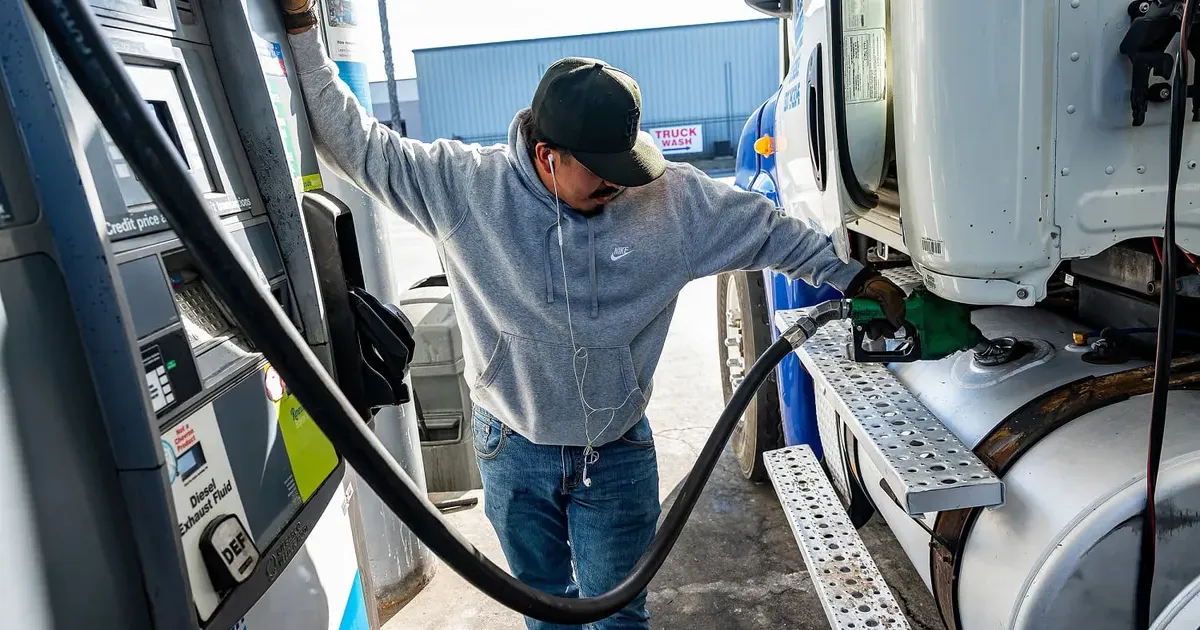
U.S. gasoline prices turned the Iran war into a domestic pocketbook story when the national average climbed above $4 during the March shock. The number later eased after a temporary U.S.-Iran deal brought some relief, but renewed fighting around the Strait of Hormuz has put the threshold back in view. Recent reports put the national average around the high-$3.80s, with analysts warning that another crude push could take drivers back through $4.
The timeline matters. The story is not that every day since March has been a fresh record. The sharper point is that the war created a fuel-price channel that can reopen quickly. Drivers do not need to follow every military update in the Gulf to feel that channel. They see it when a routine fill-up costs more, when summer travel gets repriced, or when delivery fees and airfare move before wages do.
The Pump Translates the War Fast
The Strait of Hormuz is central to global oil movement, so even partial disruption or elevated risk can raise prices before physical shortages reach U.S. stations. Traders price danger early. Refiners, distributors and retailers then pass portions of that cost through the system with delays that vary by region.
The United States produces a large amount of its own oil, but that does not make American drivers immune to global pricing. Crude is traded in a world market. If Gulf risk pushes benchmark prices higher, U.S. gasoline can follow even when domestic wells are still pumping. Foreign policy therefore becomes a pump-price issue faster than any administration wants.
The $4 Line Carries Political Memory
Four-dollar gasoline is not just another decimal point. It is a remembered threshold from the 2022 energy shock and from the earlier 2026 Iran-war spike. When the national average crosses or threatens that line, households understand the issue without needing an inflation chart.
The threshold is politically dangerous. Voters may not parse tanker insurance, refining margins or crude benchmarks. They know what it costs to commute, pick up children, run a small business or drive to a summer trip. The pump turns a distant conflict into weekly arithmetic.
Households Change Behavior Before Economists Agree
When gasoline approaches $4, households start making small decisions that add up. Some postpone trips. Some cut restaurant spending. Some rethink commutes, delivery fees or weekend driving. Lower-income drivers feel the hit first because fuel takes a larger share of weekly cash flow.
The behavioral changes are not always dramatic enough to show up immediately in headline data. They still matter. A few extra dollars per tank can weaken discretionary spending, hurt local services and make consumers more pessimistic. Fuel is one of the prices people watch most closely because they see it posted in giant numbers on the road.
Businesses Feel It Through Freight and Fuel
The gasoline sign is only the visible edge. Businesses feel the same shock through diesel, freight contracts, airline fuel, agricultural inputs and delivery networks. Even companies that do not buy crude directly pay for energy through logistics and supplier prices.
A pump-price story becomes an inflation story through those costs. If freight gets more expensive, the cost can move into food, retail goods, construction materials and service pricing. If airlines face higher jet fuel, fares and surcharges can stay sticky. A war-risk premium can therefore travel through the economy long after the first oil headline fades.
Policy Tools Can Cushion, Not Erase
Strategic reserves, domestic production and refinery coordination can buy time. They cannot fully erase the global price of a chokepoint war. The Strategic Petroleum Reserve is finite, and emergency releases work best as bridges, not permanent shields. Refinery capacity and product inventories also matter because crude prices do not translate into gasoline one-for-one.
Policymakers are left with a narrow path. They need to keep supply flowing, avoid panic, pressure producers and refiners where appropriate, and explain the foreign-policy stakes without sounding detached from household cost. The explanation has to be practical because the bill is practical.
The War's Price Tag Is Local
The $4 line gives the Iran war a visible price tag. The visibility is dangerous for any administration because fuel inflation is frequent, local and hard to explain away with strategy language. A conflict that looks distant on a map becomes immediate when it follows commuters to work, parents to school drop-off and truckers across state lines.
The political problem is blunt. Voters may tolerate foreign-policy complexity for a while, but they punish fuel shocks quickly. If Hormuz remains unstable, every gallon carries some risk premium. At that point, military strategy stops being foreign news and becomes household math.