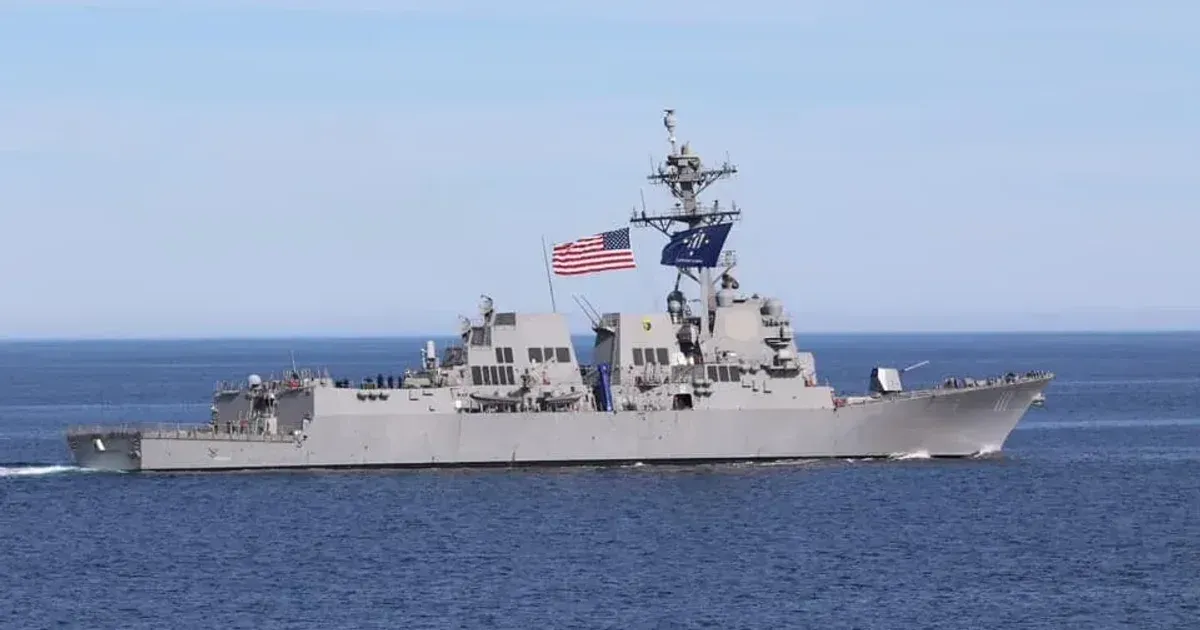
Donald Trump announced that United States naval forces intercepted and attacked an Iranian cargo vessel in the Gulf of Oman. Presidential statements confirmed the Touska, a ship previously flagged for sanctions violations, sustained damage to its engine room during the engagement. Special operations units moved quickly to board the vessel once it slowed in international waters near the approach to the Strait of Hormuz. Marine units successfully took control of the bridge and mechanical spaces without reports of American casualties. The operation was reported on April 19, 2026. Command of the vessel shifted immediately to the U.S. Navy as engineers assessed the structural integrity of the hull.
Naval Interception of the Touska Cargo Vessel
Marine Traffic data indicated the vessel departed from a Malaysian port on April 12, 2026. Intelligence suggests the ship followed a circuitous route designed to evade standard detection protocols used by regional coast guards. President Donald Trump noted that the vessel refused multiple orders to stop for inspection before tactical teams used kinetic force. Kinetic impact resulted in a severe breach in the engine room, forcing the crew to abandon propulsion. Records from the Department of the Treasury show the vessel remains on a high-priority watchlist for transporting prohibited electronics and heavy machinery.
Marines currently maintain full custody of the ship and its cargo.
United States Navy personnel are conducting a thorough search of the holding bays to identify the specific nature of the materials on board. Previous manifests associated with the owner of the Touska involve transactions with known front companies for the Iranian Revolutionary Guard Corps. Federal investigators believe the cargo contains specialized components destined for missile production facilities near Bandar Abbas. Evidence gathered from the ship will likely serve as the basis for further diplomatic pressure at the United Nations. Seizing such a high-value asset in international waters highlights the increased enforcement posture of the current administration.
“The TOUSKA is under sanctions from the U.S. Treasury Department due to a previous history of illegal activities. We have full control of the ship and are checking what is on board,” Donald Trump said.
Tehran Denounces US Blockade as War Crime
Iranian Foreign Ministry spokesman Esmail Baghaei responded to the boarding by categorizing the American naval blockade as a war crime. Tehran maintains that such actions represent a direct violation of Article 2(4) of the UN Charter, which prohibits the use of force against the territorial integrity or political independence of any state. Legal representatives from the ministry stated that the ship was engaged in legitimate commercial activity protected by international maritime law. Baghaei asserted that the interception constitutes piracy under the guise of national security. Iranian officials have requested an emergency meeting of the UN Security Council to address what they describe as unprovoked aggression.
Violation of sovereign rights is the central foundation of Iran's legal argument against the United States. Esmail Baghaei claimed the blockade is a tool of economic warfare designed to starve the Iranian population of essential industrial goods. Defense officials in Tehran warned of potential retaliatory measures if the vessel and its crew are not released immediately. International law experts suggest that the legality of the seizure hinges on the specific nature of the contraband discovered in the cargo holds. If the U.S. finds weapons-grade materials, the justification for the strike strengthens under existing counter-proliferation treaties.
Maritime Security Crisis in the Strait of Hormuz
Hostilities escalated further when reports surfaced that the Iranian Revolutionary Guard Corps fired upon two Indian oil tankers on Saturday. These tankers were transiting the Strait of Hormuz when they encountered small, fast-attack boats originating from the Iranian coastline. Direct hits were reported on the superstructures of both vessels, though neither ship sank during the exchange. President Donald Trump characterized the attack on the Indian tankers as a total violation of the standing ceasefire agreement. Regional maritime trade has slowed as insurance premiums for vessels navigating the Gulf of Oman have tripled in the last forty-eight hours.
Escalation persists as the primary outcome of these overlapping maritime engagements.
Iranian naval commanders briefly reopened the primary transit route on Friday before reversing the decision within twenty-four hours. This reversal followed the implementation of the U.S. naval blockade on Iranian ports, which Tehran views as an existential threat to its energy exports. Every ship moving through the region now faces increased scrutiny from the United States Navy and its coalition partners. Global energy markets reacted with immediate volatility, pushing crude oil prices higher as traders weighed the risk of a total closure of the Strait of Hormuz. Defense analysts suggest the IRGC is using asymmetric tactics to compensate for its inability to challenge the U.S. Navy in a conventional surface engagement.
Diplomatic Collapse and the Looming Ceasefire Deadline
Violent exchanges in the Gulf of Oman coincide with the imminent expiration of a fragile ceasefire agreement between Washington and Tehran. Negotiators have made little progress on extending the truce as both sides accuse the other of bad-faith maneuvers. President Donald Trump signaled a lack of interest in further discussions until Iran halts its interference with international shipping lanes. Diplomatic sources in Europe indicate that the back-channel communications used to manage previous crises have largely gone silent. Intelligence communities are now bracing for a potential surge in cyberattacks or proxy strikes across the Middle East as the deadline nears.
United States Navy assets continue to reinforce their positions near the Horn of Africa and the Persian Gulf. Moving the Touska to a secure port in a neutral or friendly nation will likely be the next operational step for the Marines. Legal challenges will continue in the International Court of Justice, though such proceedings often take years to reach a resolution. Immediate strategic concerns focus on whether Iran will attempt to seize a Western-flagged vessel in a tit-for-tat retaliation. Shipping companies are already rerouting vessels around the Cape of Good Hope to avoid the contested waters, sharply increasing the cost of global logistics.
Maritime Pressure Defines the Risk
Diplomatic niceties have been discarded in favor of kinetic maritime enforcement. The seizure of the Touska is not an isolated law enforcement action but a deliberate opening salvo in a renewed campaign to break the Iranian Revolutionary Guard Corps' grip on regional trade. Washington has correctly identified that a passive containment strategy only invites more brazen attacks, as evidenced by the unprovoked firing on Indian tankers. This shift toward direct interception signals that the United States no longer views the 2026 ceasefire as a viable framework for regional stability.
The international community is unlikely to tolerate a complete shutdown of the Strait of Hormuz based on a cargo dispute, but the cost of keeping it open is a high-intensity naval confrontation that neither side can afford to lose. Iran is cornered, and a cornered regime with a large stockpile of anti-ship missiles is at its most dangerous. Esmail Baghaei may scream about war crimes at the UN, but the reality on the water is governed by the reach of a carrier strike group rather than the text of a charter. The United States must now prepare for the inevitable Iranian counter-move, which will likely target civilian infrastructure to maximize economic pain for the West.