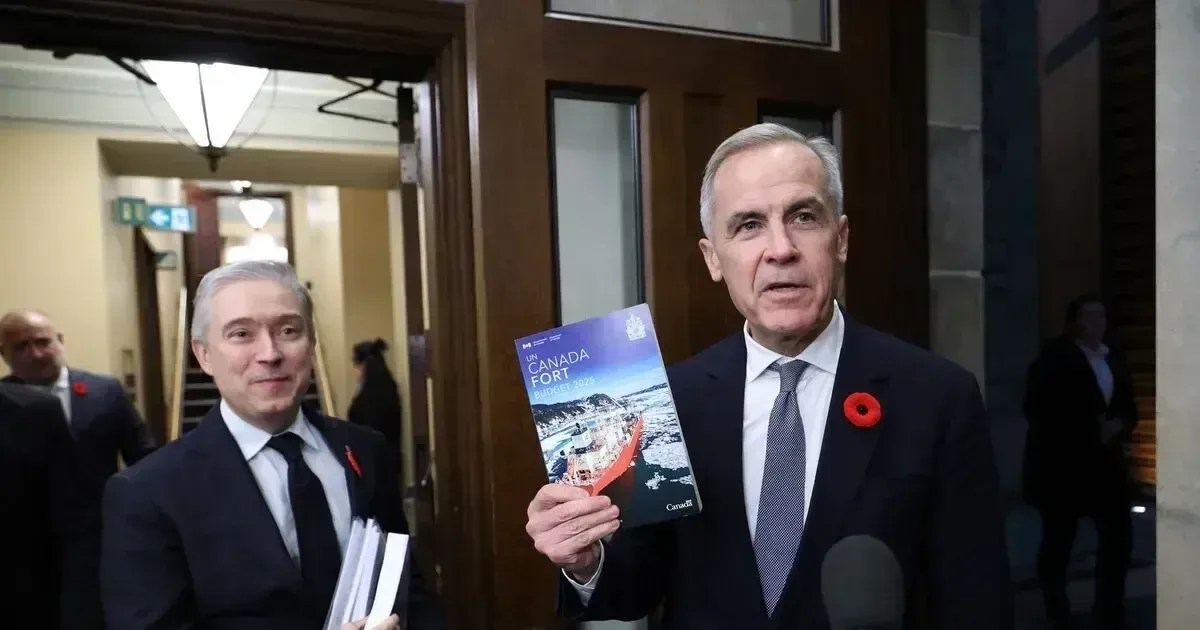
Carney’s criticism of U.S. dependence turned Canada’s trade policy into a sovereignty debate. Prime Minister Mark Carney declared on April 19, 2026, that Canada must dismantle its historical dependence on the United States to survive a shifting global order. His video address, released from Ottawa, signaled a radical departure from decades of North American integration. Carney insisted that the deep-rooted economic link with Washington has transformed from a strategic asset into a structural liability. National security and economic sovereignty now dictate a pivot toward diversified global partnerships.
Decades of reliance on a single neighbor created a vulnerability that recent political volatility in the American capital worsened. Canadian officials pointed to repeated trade disputes over softwood lumber and dairy as evidence of an unreliable partnership. Protectionist measures such as the Buy American provisions in recent legislation forced a rethink of the special relationship once championed by past leaders. Exports to the U.S. currently account for 75% of the total volume.
Carney, a former governor of both the Bank of Canada and the Bank of England, brought an economist's cold logic to the announcement. He argued that the concentration of trade makes Canada susceptible to every legislative whim and electoral cycle south of the border. Such exposure limits the ability of the federal government to set independent fiscal and environmental policies. Investors often view the Canadian dollar merely as a proxy for U.S. industrial demand.
Diversification efforts will now target high-growth markets in the Indo-Pacific region and the European Union. Carney believes that building ties with other countries can provide a buffer against unilateral American policy changes. This strategy involves aggressive pursuit of new trade agreements and infrastructure investment to support trans-oceanic shipping. Recent data from Global Affairs Canada shows a 12% increase in trade inquiries from Southeast Asian nations.
Mark Carney and the Pivot Toward Global Trade Diversity
Diversification remains a complex challenge given the integrated nature of North American supply chains. Automotive manufacturing and energy grids are deeply intertwined, making a sudden decoupling nearly impossible. Carney suggested that the process will be gradual, focusing on emerging sectors like critical minerals and clean technology. Canada possesses some of the world's largest deposits of lithium and cobalt, resources that are in high demand globally. Trading these assets with a wider array of partners strengthens the Canadian bargaining position.
Previous administrations attempted similar shifts, especially the Third Option policy of the 1970s, which ultimately failed to reduce American influence. Carney argues that the current geopolitical climate, characterized by fragmented global blocs, makes his proposal different. European nations are seeking energy security away from Russia, while Asian economies look for stable democratic partners for raw materials. Canada fills both requirements without the baggage of superpower rivalries. This push for independence coincides with broader concerns that US economic ties and policy decisions are eroding the dollar's global standing.
“Canada’s strong economic ties to the United States were once a strength but are now a weakness that must be corrected,” Carney said.
Critics within the Canadian business community expressed concern that antagonizing Washington could lead to retaliatory tariffs. The United States Chamber of Commerce noted that any move to distance the two economies could disrupt the $3.6 billion in goods and services that cross the border daily. Cross-border commerce supports millions of jobs in both countries, particularly in the Great Lakes region. Trade representatives in Washington have already requested a formal briefing on the Prime Minister's comments.
Canadian Reliance on US Markets Under Scrutiny
Domestic critics in the Conservative Party argued that Carney is chasing a globalist fantasy at the expense of established prosperity. They pointed to the logistical reality that shipping goods to Buffalo is sharply cheaper than shipping them to Beijing or Berlin. Proximity is a natural economic advantage that cannot be ignored without incurring enormous costs. Small and medium-sized enterprises rely on the ease of the American market to sustain their operations. These businesses lack the capital to navigate the regulatory hurdles of distant foreign markets.
The Prime Minister countered that the cost of inaction is higher. Unilateral U.S. actions under the Inflation Reduction Act have already siphoned investment away from Canadian green energy projects. Washington's subsidies for domestic manufacturers create an uneven playing field that traditional trade agreements failed to address. Canadian firms find themselves competing with more than American companies; they also face the American treasury itself.
Labor unions in Ontario and Quebec have voiced cautious support for the diversification plan. They see an opportunity to reduce the impact of US plant closures on Canadian workers. Diversified markets mean that a recession in the American Midwest would not automatically trigger a crisis in Canadian manufacturing towns. Security of employment depends on having a broad customer base that spans multiple time zones.
Trade Tensions and the Future of CUSMA
Recent friction over digital service taxes and pharmaceutical pricing added further strain to the relationship. Canada implemented a tax on large technology firms, many of which are based in Silicon Valley, prompting threats of Section 301 investigations. The U.S. Trade Representative argued that such taxes unfairly target American innovation. Ottawa maintains that digital giants must pay their fair share for the infrastructure they use in Canada. These disagreements persist despite the formal mechanisms of the U.S.-Mexico-Canada Agreement.
The scheduled review of CUSMA in 2026 looms as a potential trigger point for these tensions. Both nations have the option to notify their intent to withdraw or seek major renegotiations of the pact. Carney's comments suggest that Canada may enter these talks with a list of demands rather than a plea for continuity. Negotiators will likely focus on strengthening dispute resolution panels and clarifying rules of origin for electric vehicles. The sunset clause in the current agreement forces a mandatory evaluation of the trade relationship.
Energy exports remain the Canadian government’s most important point of leverage for the Canadian government. Pipelines carrying crude oil and natural gas southward provide the backbone of the American energy supply. Carney has hinted that future energy development may prioritize domestic processing or offshore exports to higher-paying markets. This shift would reduce the price discount that Canadian producers currently accept when selling exclusively to U.S. refineries. Global energy markets offer a premium that the North American market lacks.
Canada Trade Dependence Tests Carney Strategy
Mark Carney is attempting a high-stakes geopolitical gamble by labeling the most successful trade partnership in history a weakness. His calculation assumes that the United States has permanently retreated from the rules-based order into a populist, protectionist shell. This logic is seductive for a technocrat who spent his career in the halls of global finance, yet it ignores the sheer gravity of geography. Canada cannot simply wish itself into a different hemisphere or decouple its prosperity from the world's largest economy without enduring a decade of stagnation.
Carney’s rhetoric serves a domestic political purpose, framing him as a defender of Canadian sovereignty against an erratic neighbor. It is a cynical play to capture the nationalist vote while appearing sophisticated on the world stage. However, the reality of global trade is that the Indo-Pacific is not a monolith waiting for Canadian minerals; it is a cutthroat market where Australia and South America have already secured dominant positions. Canada is arriving late to a party where the best seats are taken.
The 2026 CUSMA review will likely be the moment when this bluff is called. Washington rarely reacts well to being told it is a burden, especially by a neighbor that remains dependent on the American defense umbrella. Carney is flirting with a trade war he cannot win. His insistence on correcting the weakness of US ties may instead expose the fragility of a Canadian economy that has no viable Plan B. A hard break from the American orbit would be a self-inflicted wound.