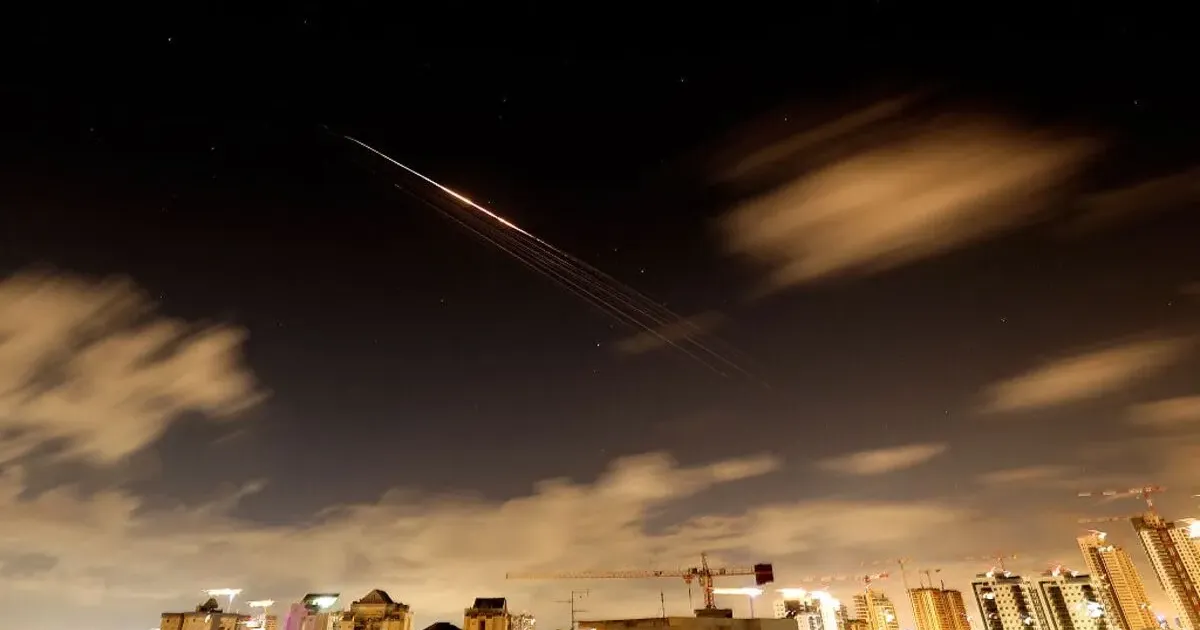
U.S. troop movements into the Middle East in late March 2026 belonged to a wider military picture than a simple defensive deployment. The arrival of the 31st Marine Expeditionary Unit gave Washington more options as Iran warned against U.S. ground operations, Yemen's Houthis escalated pressure and regional diplomats tried to keep a spreading war from locking into place.
The deployment had a clear operational meaning: the United States was adding force protection, naval coordination, evacuation capacity and crisis-response options as the Red Sea, Gulf states, Israel, Iran and Yemen became part of the same conflict map.
A Marine expeditionary unit does not automatically mean an invasion is imminent. It does mean U.S. commanders want a flexible force close enough to respond if shipping lanes, embassies, bases or citizens come under greater threat.
The Houthi Front Changed the Logic
The Houthis had already shown they could threaten shipping and fire toward Israel. By late March, their renewed operations made the Red Sea and Bab el-Mandeb more than a trade-security issue. They became part of the Iran war's pressure system.
If Houthi fire pulls naval assets south, Iranian missile pressure in the Gulf and Israeli operations against Iran become more difficult to manage at the same time. That is the strategic value of the Houthi front: it stretches attention. It forces the United States and its partners to defend routes, bases and skies across a wider geography.
The troop movement remained significant even when officials described it as defensive. A MEU brings command capacity, aviation, logistics, limited raid capability, medical support and evacuation options. In a crisis with missiles, drones and maritime disruption, that flexibility has real military value.
Defensive Does Not Mean Passive
Force protection can sound narrow, but in this environment it is not passive. Protecting U.S. personnel may require intercepting missiles, reinforcing bases, moving citizens, escorting ships or deterring attacks before they happen. Those actions can be defensive in purpose while still raising the risk of direct engagement.
The Middle East deployment also signaled that Washington did not want to depend only on aircraft carriers and long-range strikes. Amphibious forces give commanders a different set of choices. They can operate from the sea, shift location and support missions that fall between diplomacy and major combat.
That middle space is where escalation often happens. A unit sent to provide options can become part of the next decision point if a ship is hit, an embassy is threatened or a base comes under fire.
Saudi Arabia's Position Stayed Delicate
Saudi Arabia's position remained difficult. Riyadh needed air defenses, intelligence cooperation and maritime stability, but it also had reasons to avoid becoming an open party to the Israel-Iran fight. Houthi missiles and drones are designed to exploit that tension.
The Houthis can make Gulf states defend themselves, then accuse them of joining the opposing camp. That benefits Iran and its aligned network because it turns defensive cooperation into political exposure. It also complicates de-escalation for governments that want U.S. support without a broader war on their soil.
The same problem applies to other Gulf states. Bases, airspace, ports and shipping lanes all become part of the operating picture even when governments want to limit their role.
July Made the March Signal Look Smaller
By July, the regional picture had become more severe. U.S. strikes on Iranian targets, Iranian attacks around the Gulf, renewed fighting over the Strait of Hormuz and Houthi threats to widen pressure through Yemen showed that the March buildup was not a passing precaution. It was an early stage of a longer contest over shipping lanes, bases, missiles and political endurance.
That later escalation does not make every March fear accurate. It does show why the Houthi issue could not be separated from the Iran file. Yemen gives Tehran and its allies a way to pressure Israel, Saudi Arabia and global trade without every strike coming directly from Iranian territory.
The United States then has to defend not one front but a network of vulnerable routes and installations. A deployment measured in ships and Marines can therefore become a test of regional strategy.
Reinforcements Buy Options, Not Control
U.S. reinforcements buy options, not control. More troops and ships can intercept missiles, protect bases, evacuate citizens and complicate an adversary's planning. They cannot by themselves solve the political geometry of a war fought through Iran, Yemen, the Gulf and the Red Sea at once.
The Houthi threat expands because it serves a larger conflict. It pressures shipping, distracts naval forces, threatens Gulf partners and gives Iran-aligned actors a way to keep the map unstable.
Until the larger conflict is contained, every defensive deployment risks becoming the floor for the next surge. The 31st MEU's arrival was not the whole story. It was a sign that the United States was preparing for a conflict map that no longer had clean edges.