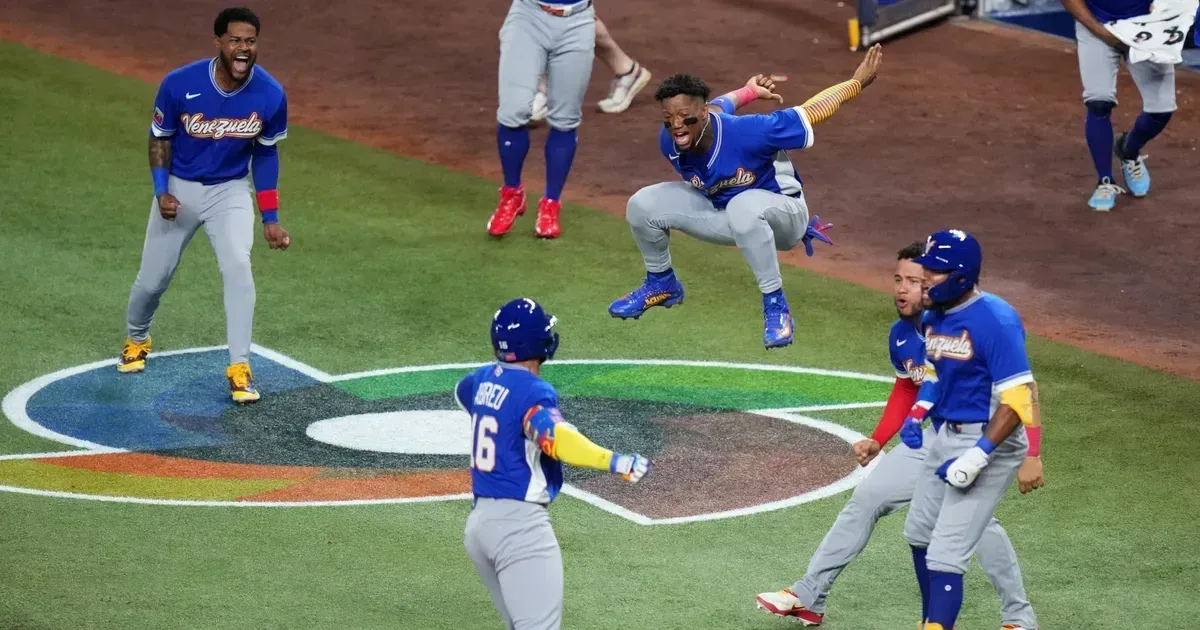
Shohei Ohtani stood on the dirt of the pitcher's mound in Miami, his head bowed as the roar of a South American celebration filled the stadium. The reigning champions of global baseball watched their 2026 title hopes evaporate in a matter of minutes. Venezuela secured a 5-3 victory that reshapes the international baseball hierarchy. Silence fell over the Japanese dugout. Tens of thousands of fans packed into LoanDepot Park to witness what many expected to be a routine advancement for the tournament favorites. Japan had entered the quarterfinals with a perfect record in group play, outscoring opponents by a wide margin. But the precision of the Japanese rotation met its match in the raw power of the Venezuelan lineup. Wilyer Abreu arrived at the plate in the bottom of the sixth inning with two runners on and a sense of impending destiny. The left-handed hitter had already seen several high-velocity fastballs during his first two appearances in the game. He adjusted his stance, waiting for a mistake from the Japanese relief corps that finally arrived in the form of a hanging slider. One swing of the bat redefined the career of Wilyer Abreu. Abreu connected with a force that sent the ball deep into the right-field bleachers, turning a one-run deficit into a two-run lead. He did not immediately run toward first base. He stood at home plate for several seconds, watching the flight of the ball before uncorking an epic bat flip that will likely be replayed for decades in Caracas. Venezuela took a 4-2 lead on that single swing.
Venezuela Stuns Japan in Miami
Managers often speak about the instability of single-elimination tournaments, and the 2026 Japan roster provided a case study in that unpredictability. Despite having a roster filled with NPB and MLB stars, the Japanese offense struggled to capitalize on early scoring opportunities. They left seven runners on base through the first five innings, failing to deliver the knockout blow when the Venezuelan starter wavered. Shohei Ohtani contributed a double and a walk, but he could not carry the entire weight of the national expectation. According to early post-game analysis, the Japanese staff relied too heavily on traditional pitch sequencing that the Venezuelan hitters had clearly studied. The tactical rigidity of the defending champions became their undoing as the game entered the late stages.
Shohei Ohtani is only one player.
Success for the Japanese national team has historically been built on fundamental execution and superior pitching depth. Meanwhile, the Venezuelan strategy relied on emotional momentum and aggressive baserunning. This contrast in styles created a friction that favored the underdog as the pressure mounted in the humid Florida air. Japan now heads home with its worst finish in the history of the 2026 World Baseball Classic. They had reached the semifinals in every previous iteration of the tournament, making this quarterfinal exit a tectonic shift for the sport. The players retreated to the clubhouse in stunned silence, leaving the celebration to their opponents.
Abreu Swing Changes the Quarterfinal
Scouts have tracked Abreu since his rise through the Boston Red Sox system, noting his ability to perform under extreme pressure. His sixth-inning blast was not only a physical feat, but a psychological one. He managed to stay disciplined against a pitcher who had retired the previous four hitters in order. Venezuela entered the tournament with a chip on its shoulder, often overlooked in favor of powerhouses like the United States or the Dominican Republic. The chemistry in their dugout appeared unmatched from the opening pitch of the quarterfinal. They celebrated every foul ball and every defensive stop as if it were the final out of the World Series. Pitchers from the Japanese side seemed rattled by the noise levels in the stadium. The constant drumming and chanting from the Venezuelan supporters created an atmosphere that felt more like a football match in South America than a baseball game in Miami.
Japan Dynasty Takes a Hit
Defending a lead against a lineup that includes some of the best hitters in the world requires nerves of steel. Venezuela turned to its bullpen in the seventh inning, deploying a series of hard-throwing right-handers to neutralize the heart of the Japanese order. They used a combination of high-velocity fastballs and sharp-breaking curves to keep the hitters off balance. In particular, the eighth inning saw a tense confrontation between the Venezuelan closer and the top of the Japanese order. With a runner on second and two outs, the pitcher induced a weak groundout to end the threat. The efficiency of the Venezuelan relief staff prevented Japan from mounting any serious comeback in the final frames. Statistics reveal that the Venezuelan pitchers threw strikes on 68% of their pitches, a strikingly high rate against such disciplined hitters. They avoided the high pitch counts that usually plague teams facing the patient Japanese approach. The Japanese hitters appeared uncharacteristically aggressive, swinging at pitches outside the strike zone in desperate attempts to tie the game. Each out brought the Venezuelan bench closer to the field.
Advancing to the semifinals places Venezuela in a unique position to claim its first-ever title. They are scheduled to face Italy, another surprise contender that has defied expectations throughout the bracket. This matchup ensures that at least one non-traditional powerhouse will compete in the championship game.
Experts will spend the coming days analyzing how Venezuela managed to dismantle the Japanese dynasty. The Italian team will be preparing a defensive strategy to contain the explosive power of hitters like Abreu. The momentum is firmly on the side of the South American squad, but the pressure of the semifinal stage is a different beast entirely. Italy has relied on a gritty, defensive style of play that could frustrate the aggressive Venezuelan hitters. Yet the depth of talent on the Venezuelan roster makes them the clear favorite heading into the next round. The baseball world has been turned upside down, and the path to the trophy is now wide open for a new champion.
Miami remains the center of the baseball universe for the next forty-eight hours. Fans from all over the world are descending on the city to witness the final rounds of a tournament that has already delivered its biggest shock. The Japanese team has already begun the long journey back to Tokyo, leaving behind a tournament that they once owned.
One Star Could Not Save Japan
Was it arrogance or simply the law of averages that finally caught up with the Samurai Japan roster? For years, the international baseball community treated the Japanese national team as an invincible machine, a product of a culture that prioritizes the collective over the individual. But the 2026 World Baseball Classic has exposed the flaw in that myth: you cannot win on reputation alone when a hungry opponent is willing to bat-flip in your face. Venezuela did not just beat Japan; they embarrassed the traditionalist sensibilities of a nation that views baseball as a pursuit of stoic perfection.
While the Japanese stars focused on mechanics and discipline, the Venezuelans played with a raw, sharp joy that rendered tactical charts useless. Shohei Ohtani remains the greatest individual talent the sport has ever seen, but his presence is no longer a guaranteed shield against the rising tide of Latin American dominance. This result is a necessary correction for a sport that has spent too long worshipping at the altar of established hierarchies. The old guard has fallen, and the crown is now being claimed by those who play with fire rather than formulas.
If the baseball establishment is uncomfortable with the noise and the bat flips, they should prepare for a very long decade of discomfort.