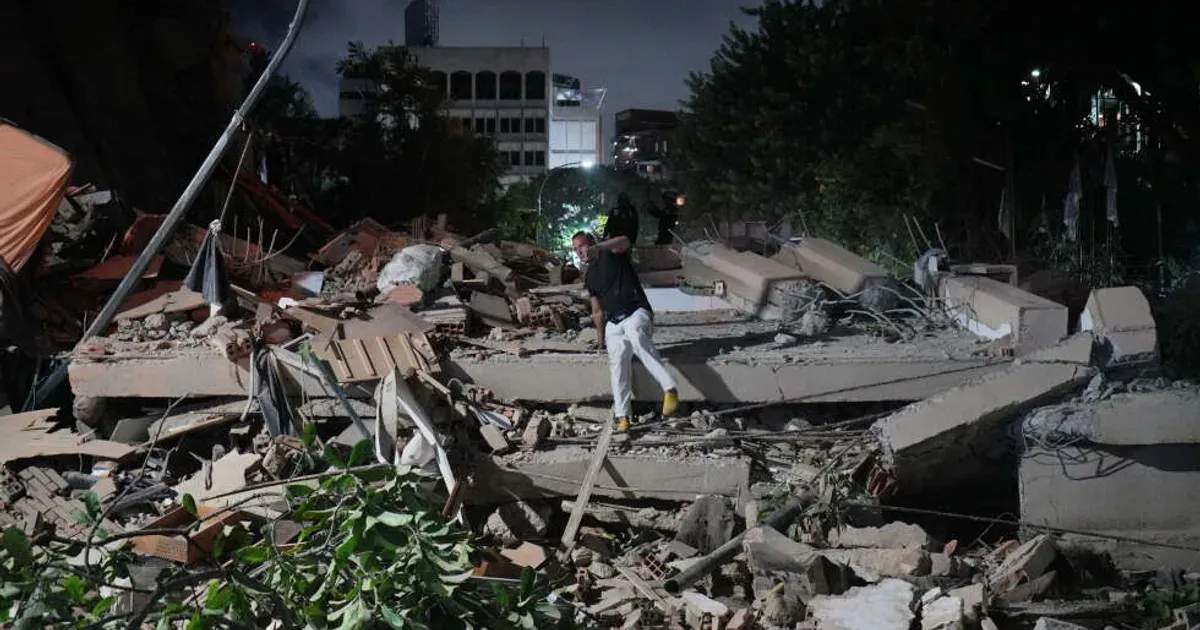
Rescue crews in Venezuela are searching through collapsed buildings after two powerful earthquakes hit the country and left the capital region facing one of its most urgent disaster operations in decades. The first reports point to a disaster that is still moving from shock response into a more organized national search.
The quakes struck on June 24, 2026, near the northern coast west of Caracas, according to reports from officials and seismic monitors. Acting President Delcy Rodriguez said at least 164 people were dead and 971 were injured as emergency teams moved into damaged neighborhoods.
The shaking sent residents into streets, cut communications in some areas and left families posting appeals for missing relatives. Officials described La Guaira as one of the hardest-hit zones, while damage was also reported across Caracas and surrounding cities.
Seismic monitors described the event as a rare and destructive sequence, with one major shock followed almost immediately by another. That pattern matters for rescuers because buildings weakened by the first movement may have failed during the second, leaving damage scattered across multiple neighborhoods instead of a single compact zone.
Emergency Teams Focus On Rubble And Transport Damage
The immediate priority is the search for survivors in buildings that partially or fully collapsed. Rescue teams are working around unstable debris, blocked streets and aftershock risk, which can slow access even when calls for help are still coming from damaged structures.
Transport disruption is also shaping the response. Reports from the region described airport damage, interruptions to metro and rail service, power outages and school closures, all of which complicate the movement of medical teams, heavy equipment and relief supplies.
The disaster hit a country already under severe political and economic strain, leaving local authorities with limited room for error. Hospitals need trauma capacity, rescue units need clear access, and national officials must keep public information moving while telecommunications remain uneven.
Officials also have to manage displaced residents who may be afraid to return indoors while aftershocks continue. Temporary shelter, drinking water, fuel for emergency vehicles and safe routes into damaged districts are likely to become the next operational pressures once the first wave of rescues is underway.
Those needs can change quickly as neighborhoods report damage at different speeds. A building that looks intact from the street may still be unsafe, while families who slept outside overnight may need medical care, sanitation support and verified information about where to go next. Public communication will be part of that safety work, because residents need to know which shelters are open, which roads remain blocked and whether schools or public buildings are being inspected before they reopen.
International Aid Offers Add A Diplomatic Layer
Several foreign governments offered help as the scale of the damage became clearer. The United States said it was preparing assistance, while other countries in the region and beyond signaled readiness to send rescue teams, supplies or technical support.
That aid matters because the first days after a major earthquake are often decisive. Heavy-lift equipment, trained search teams, portable medical capacity and reliable logistics can change survival odds for people trapped under rubble or isolated by damaged roads.
Outside teams can also bring listening equipment, structural engineers and field coordination experience that local crews may lack during a disaster of this size. The challenge is getting those assets to the right sites before rescue work turns into recovery.
Venezuelan officials still face the harder task of coordinating that help on the ground. A crowded aid pipeline can create duplication or bottlenecks if local command structures are unclear, especially when airports, roads and communications are themselves part of the damage picture.
The response is also politically delicate. Foreign aid can save lives, but it has to move through a government system that must show it can direct resources fairly, verify local needs and avoid leaving out poorer communities that may have weaker access to official channels. That distribution test will become more visible if the confirmed death toll rises.
Why The Next 48 Hours Matter
The central test now is whether Venezuela can turn emergency declarations and aid promises into a coordinated rescue operation before the survival window narrows. The casualty count is already severe, but the larger measure will be how quickly crews reach damaged buildings outside the easiest urban corridors.
That is why La Guaira rescue access, hospital surge capacity and clear casualty reporting will matter as much as the headline death toll. Each is a signal of whether the state can keep the response focused while families, local officials and foreign partners all push for urgent action.
The disaster also puts pressure on public trust. If officials provide credible updates, keep aid channels open and prioritize rescue access over political messaging, the response can stabilize. If information gaps widen, families will rely more heavily on informal networks while the search becomes harder to direct.