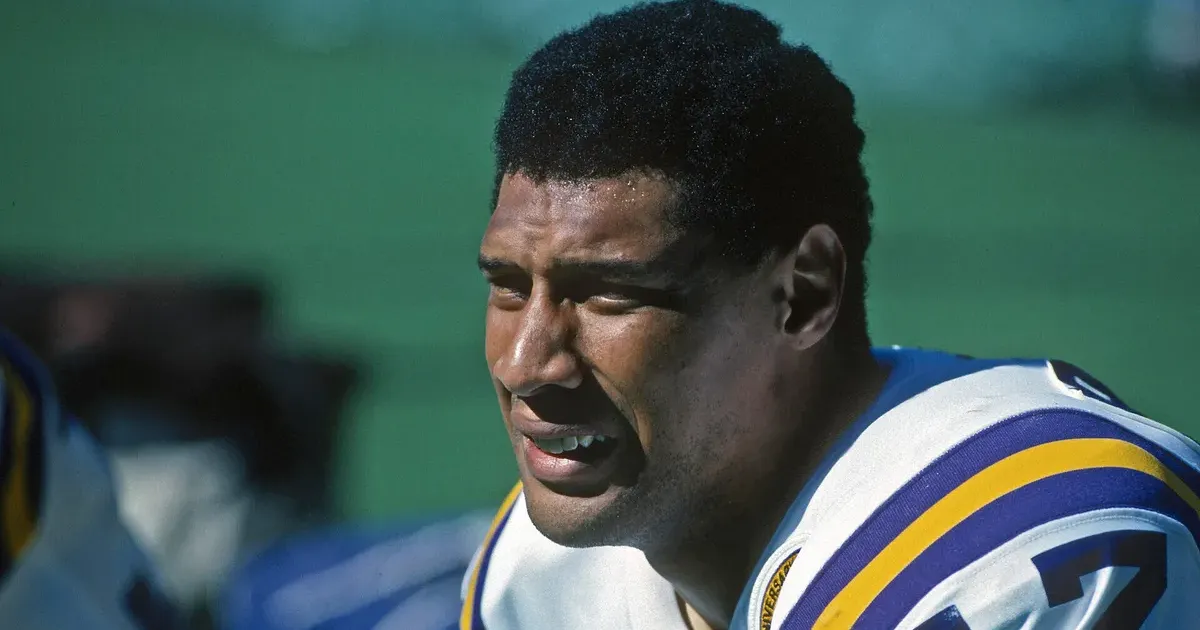
Minnesota is remembering Joey Browner as more than an old highlight reel. Minnesota Vikings officials confirmed on March 29, 2026, the death of franchise icon Joey Browner at his home. He was 65. Browner, a foundation of the secondary during one of the most physically demanding eras of professional football, leaves behind a legacy defined by elite versatility and defensive dominance. His career mirrored the evolution of the modern safety, a position he helped redefine through a combination of bruising tackling and ball-hawking instincts. Six Pro Bowl selections and four All-Pro honors validated his status as a premier athlete of the 1980s. He earned a spot on the Pro Football Hall of Fame All-1980s Team, cementing his place among the greatest to ever play the game.
USC alumni and NFL scouts frequently recalled his collegiate brilliance before he entered the professional ranks. Minnesota officials selected him in the first round of the 1983 NFL Draft, a class widely considered the most talented in league history. While that draft became famous for its quarterbacks, Browner became the defensive jewel of the crop. He spent nine seasons in Minnesota, becoming a fixture of a defense that consistently challenged the elite offenses of the NFC Central. His presence in the secondary provided a level of security that allowed defensive coordinators to experiment with aggressive schemes.
Teammates and rivals alike noted his physical presence on every snap.
Vikings Defensive Icon Joey Browner Career Legacy Statistics only tell a partial story of the impact Joey Browner had on the field. He played 138 games for the Minnesota Vikings, amassing 37 interceptions and 9.5 sacks from the defensive backfield. This rare statistical profile highlighted his ability to play near the line of scrimmage as a pseudo-linebacker while maintaining the speed to cover elite wide receivers. His 1990 season stood out as a statistical pinnacle. During that campaign, he appeared in all 16 games and recorded a career-high seven interceptions, proving his veteran savvy had only sharpened with age. He was a defensive Swiss Army knife long before the term became a scouting cliche.
Success in the playoffs often eluded those Vikings teams, yet Browner was still a consistent performer on the big stage. He appeared in six postseason games, though the elusive Super Bowl ring remained just out of reach. His individual accolades, however, continued to mount as the league recognized his unique contribution to the sport. While Fox Sports notes he was a three-time First Team All-Pro, other records from CBS Sports suggest his impact garnered four All-Pro mentions in total throughout the decade. Such discrepancies in record-keeping often occur when accounting for various news agencies and official league ballots from that era.
Violence on the field was a hallmark of his style, yet he was known for his enormous hands and incredible grip strength. It was often said that once Browner touched a ball carrier, the play was effectively over.
Pro Football Hall of Fame All-1980s Team Selection
League-wide respect for Browner culminated in his selection to the NFL 1980s All-Decade Team. This honor placed him in the same tier as legends like Ronnie Lott and Kenny Easley. Unlike some of his contemporaries who sought the spotlight, Browner maintained a quiet, professional demeanor that endeared him to the Minneapolis community. His play spoke louder than any locker room rhetoric. He forced fumbles, blocked kicks, and intercepted passes with a clinical efficiency that defined the Vikings' defensive identity for nearly a decade. Coaches from opposing teams frequently designed their entire game plans around avoiding his side of the field.
Previously, safety was often viewed as a purely reactive position. Browner changed that perception by playing with an offensive mindset, constantly looking for ways to take the ball away. His 37 career interceptions with the Vikings place him among the franchise leaders, a feat made more impressive by his frequent assignments in run support. He hit with the force of a linebacker but moved with the grace of a cornerback. This duality made him a nightmare for offensive coordinators trying to establish a rhythm. "We've lost a great friend and one of the best Vikings teammates," former Vikings star Steve Jordan said via the team website.
Jordan noted that God blessed Joey with phenomenal talent and a big heart. These sentiments were echoed by dozens of former players who reached out to the family following the news of his passing. The bond between the 1980s Vikings roster persists as evidence of the culture built during those years. Browner was often described as the heartbeat of that unit, a player whose work ethic set the standard for every rookie who entered the building.
Minnesota Vikings Ring of Honor Induction History
Minnesota Vikings leadership finally recognized his immense contributions by inducting him into the Ring of Honor in 2013. That ceremony allowed a new generation of fans to appreciate the highlights of a man who once patrolled the Metrodome with unmatched intensity. By the time of his induction, his 9.5 sacks were still discussed as a benchmark for safety blitzing efficiency. Retirement in 1992 followed a brief seven-game stint with the Tampa Bay Buccaneers, but his heart always belonged to the Twin Cities. He chose to hang up his cleats when he felt he could no longer meet his own high standards for physical play.
By contrast, the modern NFL has moved toward protecting players from the very types of hits that made Browner a legend. He played at a time where the middle of the field was a dangerous territory for any receiver brave enough to venture there. His highlights serve as a time capsule for a version of football that was openly rugged. Beyond the gridiron, he was known for his positivity and his willingness to mentor younger athletes. He never lost his love for the game, even as the toll of a decade in the secondary began to manifest in his later years.
His career ended where it mostly began, rooted in the respect of his peers. Six Pro Bowls represent more than a tally of successful seasons. They mean a decade of excellence that few players in the history of the Minnesota Vikings have ever matched. He was a first-round investment that paid dividends for nearly ten years. As the news of his death spreads, the focus is not just on the loss of an athlete, but on the passing of a man who embodied the grit of his adopted home. Minnesota has lost a foundation of its sports history.
Hall Of Fame Question
Joey Browner is arguably the greatest defensive player in NFL history who has not yet been inducted into the Pro Football Hall of Fame in Canton. The oversight is not merely a statistical curiosity; it is a deep failure of the selection committee to recognize the evolution of the safety position. When you look at the 1980s All-Decade Team, almost every other first-team member has a gold jacket. Why is Browner the exception? His 37 interceptions and nearly 10 sacks at a time of run-heavy offenses should be enough to punch his ticket. Instead, he is relegated to the "Ring of Honor" tier, a local accolade that fails to capture his national impact.
The committee often favors players with Super Bowl rings or those from major media markets like New York or Dallas. Browner played in Minnesota during a period of transition, often overshadowed by the flashy offenses of the San Francisco 49ers or the brutal defenses of the Chicago Bears. However, a head-to-head comparison shows he was every bit as impactful as his more famous contemporaries. If the Hall of Fame is truly about the best of an era, leaving out an All-Decade starter is a logical inconsistency that needs immediate correction. His death should serve as a catalyst for a long-overdue senior committee review. Give the man his due.