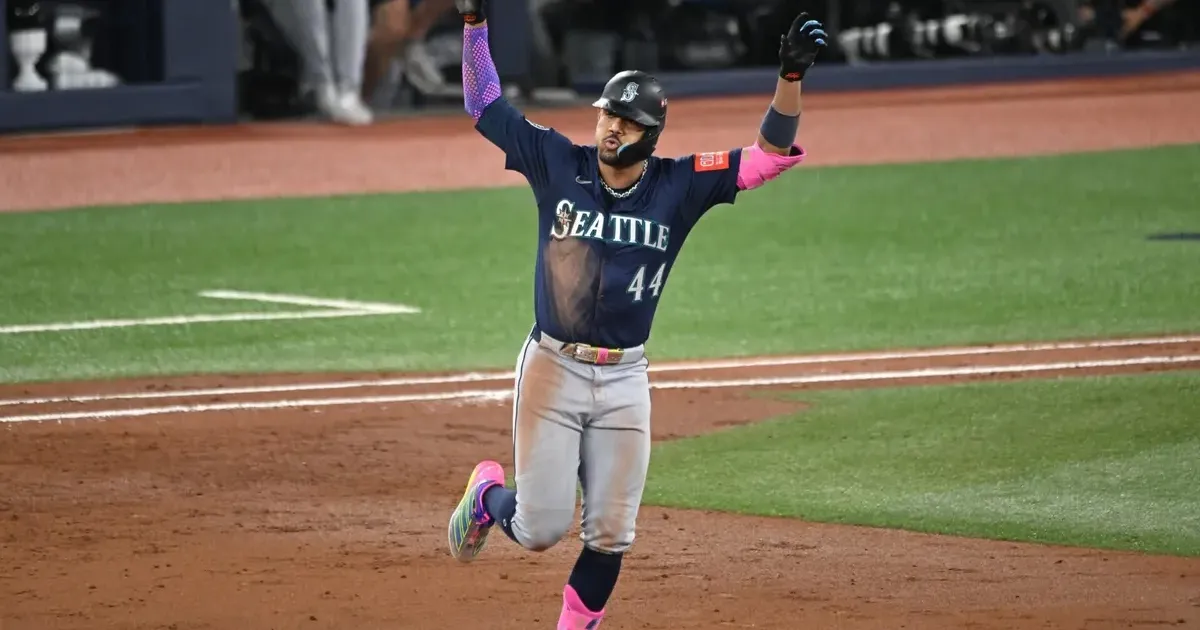
The betting market is treating a regular-season baseball game like a data test. That says as much about the industry as it does about the matchup. Seattle Mariners players prepare to face the Cleveland Guardians on March 29, 2026, in a high-stakes Sunday Night Baseball matchup. National audiences expect a tactical duel between two franchises defined by contrasting philosophies of roster construction. Statistics from early season performances suggest a tight contest where pitching efficiency outweighs raw power. Betting markets have responded with increased volatility as the first pitch approaches. SportsLine recently deployed its proprietary advanced computer model to dissect every potential outcome for this specific pairing. This simulation, which ran 10,000 unique iterations of the game, accounts for weather variables in Seattle and specific pitcher-batter matchups. Analysts at the firm indicate that the model produces insights that move beyond simple win-loss records. Every pitch, swing, and defensive shift is calculated to provide a complete probability map. Digital wagering platforms like Chalkboard are capitalizing on this huge interest through aggressive promotional campaigns. New users currently have access to a 100 percent deposit match up to $100 when using the promotional code NYPOST. This specific offer reflects a broader trend of sportsbooks integrating social features with traditional betting mechanics. Users often share their picks within the app to compete for higher rankings in community leaderboards. Sunday Night Baseball Betting Market Analysis Market analysts observe a meaningful surge in handle for games involving the Seattle Mariners due to their consistent starting rotation. When a team provides predictable pitching depth, bettors feel more confident in over-under totals. Cleveland, meanwhile, presents a challenge for oddsmakers because of its aggressive baserunning and high contact rate. Small-ball tactics often create high-variance scoring opportunities late in the game.
Sportsbooks have adjusted the moneyline several times during the 48 hours leading up to the game. Initial lines favored the home team slightly, but professional money moved the needle toward a pick-em scenario by Saturday afternoon. Information regarding a minor injury to a key Guardians reliever likely triggered this shift. Sharp bettors often wait for these late-breaking reports before committing large sums to the window.
Chalkboard also includes a free pick for the Cleveland Guardians versus Seattle Mariners game as part of its promotional package. Integrating free entries into a deposit match structure is a standard acquisition tactic in the 2026 betting industry. Competitive pressure among apps like DraftKings, FanDuel, and Chalkboard ensures that consumers receive serious subsidies for their initial wagers. Money continues to flow into digital sportsbooks. Cleveland Guardians Offensive Strategy and Roster Depth
Cleveland Guardians maintains a reputation for disciplined hitting and minimal strikeout totals. Unlike teams that rely on the three-run home run, Cleveland focuses on putting the ball in play to force defensive errors. This approach is particularly effective against power pitchers who struggle when their pitch counts escalate early. If the Guardians can exhaust the Seattle starter by the fifth inning, the game dynamics change in their favor.
Jose Ramirez continues to be the focal point of the Cleveland lineup. His ability to hit for both average and power makes him a difficult out in high-leverage situations. Scouts note that Ramirez has improved his plate coverage against high-velocity fastballs over the last two seasons. Cleveland relies on him to anchor a lineup that often features three or four players with high on-base percentages. Defensive metrics for the Guardians show an elite level of efficiency in the infield. Advanced tracking data suggests that the Cleveland shortstop and second baseman have the highest range factor in the American League. Preventing extra-base hits in the gaps is a priority for a team that plays many one-run games. Success for Cleveland depends on maintaining this defensive integrity throughout the nine innings.
Seattle Mariners Pitching Rotation Performance Metrics
Seattle Mariners emphasizes a pitching-first culture that has transformed the franchise into a perennial contender. The front office prioritizes arms with high spin rates and deceptive delivery angles. So, the Mariners staff leads the league in swinging-strike percentage through the opening week of the season. Pitching is the primary variable in the Pacific Northwest.
"SportsLine's model simulated the Seattle Mariners vs. Cleveland Guardians 10,000 times and revealed its MLB predictions," according to SportsLine reports.
Broadcasts frequently highlight the velocity of the Seattle bullpen as a major advantage during Sunday Night Baseball. Relievers in the Seattle system are trained to maximize their output over 15 to 20 pitches rather than pacing themselves for multiple innings. The strategy allows the manager to deploy specialized arms based on the specific strengths of the opposing batter. High-definition cameras at the stadium will track every 100-mile-per-hour fastball in real time.
Locally, the atmosphere at the stadium contributes to the performance of the home rotation. The damp, heavy air in Seattle often keeps fly balls from leaving the park, which benefits pitchers who occasionally miss their spots. While some hitters complain about the conditions, the Mariners coaching staff uses these environmental factors to their advantage. Seattle pitching thrives in this environment.
Advanced Modeling and Statistical Prediction Trends
Advanced models like the one used by SportsLine incorporate thousands of data points that the average fan might ignore. Factors such as the home plate umpire's historical strike zone and the specific turf conditions play a role in the 10,000 simulations. One simulation might see a blowout for Cleveland while another predicts a pitchers' duel ending in extra innings. The aggregate of these runs provides the most likely statistical reality. Technically, the model evaluates the historical performance of every player in night games versus day games. Some athletes perform better under the artificial lights of national television due to better visual contrast of the baseball. The level of granularity is what separates professional grade analytics from casual speculation. Predictions generated by these systems have become the benchmark for serious investors in the sports market.
Analysts emphasize that no model can account for the human element of a 162-game season. Injuries, psychological pressure, and sudden momentum shifts can invalidate even the most sophisticated algorithm. Instead of treating the SportsLine output as a guaranteed result, seasoned bettors use it as a tool to find value in the existing odds. Data science now dictates the flow of capital around professional sports.
Betting Market Readout
Algorithmic betting has stripped the soul from the American pastime by reducing 150 years of tradition to a series of Monte Carlo simulations. The reliance on 10,000 simulations to predict a single game of baseball is an admission that we no longer value the narrative of the sport, only its mathematical probability. When every pitch is viewed through the lens of a promo code or a deposit match, the athletic achievement becomes secondary to the financial transaction.
Market observers note that the gamification of the 2026 season has reached a point of saturation that threatens the integrity of the fan experience. The Mariners and Guardians are no longer teams competing for a pennant; they are data sets competing for the attention of a gambling public. What is unfolding is the transformation of a sport into a high-frequency trading platform where the players are merely the underlying assets. The trajectory devalues the actual skill involved in hitting a 98-mph fastball or executing a perfect double play. The current obsession with advanced modeling creates a false sense of certainty in a game that is, by its nature, chaotic. Baseball fans used to debate the merits of a bunt or a pitching change based on intuition and history. Now, those debates are silenced by the cold output of a computer model. Algorithms kill joy.