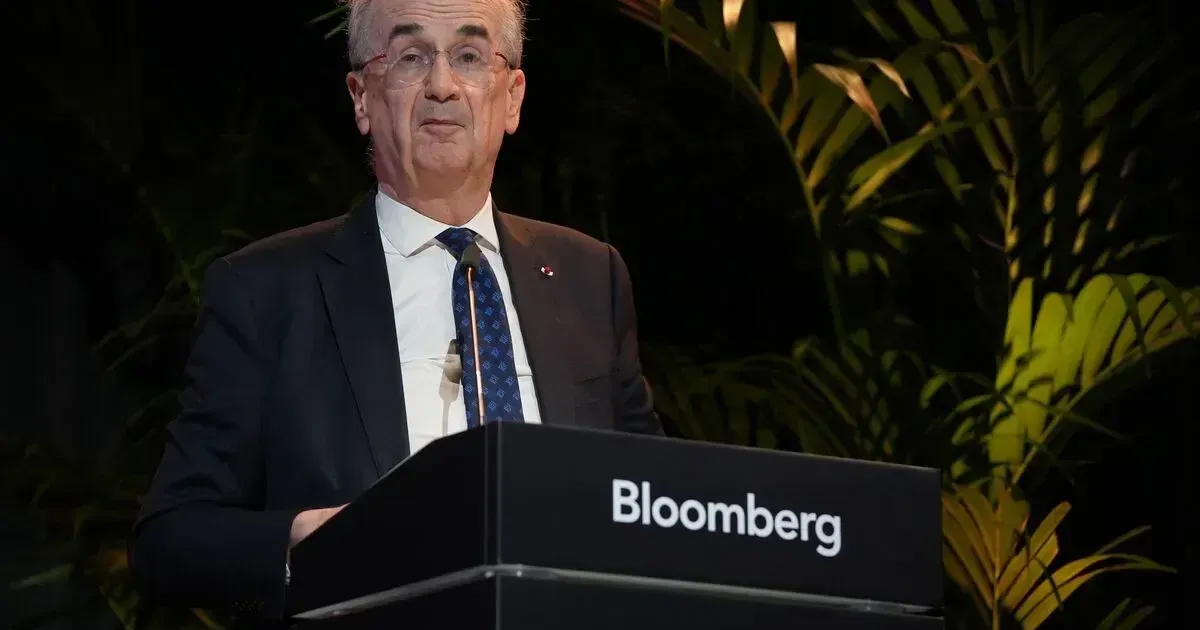
French inflation pressure is returning through corporate pricing plans rather than consumer demand alone. Bank of France Governor François Villeroy de Galhau warned that the number of firms planning price hikes could double this month as war disruptions lift energy and supply costs. Economic indicators gathered from over 8,500 business leaders suggest that the era of cooling prices has met an abrupt end. By April 13, 2026, manufacturing sectors, previously showing signs of stabilization, are now the primary drivers of this renewed upward pressure. Corporate executives cite the increased cost of logistics and raw materials as the catalyst for their revised spreadsheets. Energy-intensive industries are feeling the pressure most sharply as fuel costs fluctuate wildly. French officials had previously hoped for a return to the 2% inflation target by year-end, but these new projections threaten that timeline sharply.
French Firms Prepare Price Hikes
Price adjustments are spreading through the services sector with unexpected speed. Restaurants, transport providers, and hospitality firms have signaled their intent to pass costs onto consumers before the summer season begins. Villeroy noted that the breadth of these planned increases is what concerns the central bank most. While previous price hikes were localized in specific commodities, the current trend appears systemic. Internal surveys from the Bank of France show that 30% of service firms now plan to raise prices, up from 15% just a month ago. This collective pivot reflects a defensive stance against eroding profit margins.
Labor markets remain tight, adding another layer of complexity to the inflation puzzle. Workers are demanding higher wages to compensate for the rising cost of living, creating a potential feedback loop that worries European Central Bank policymakers. Villeroy has often spoken about the danger of such spirals in his role as a key member of the Governing Council. His latest remarks indicate a shift toward a more hawkish posture as the data turns sour. Businesses are not just reacting to current costs but are pricing in the expectation of future instability. Expectations of higher inflation can often become self-fulfilling if left unchecked by policy intervention.
War disruption is now hitting supply chains before policymakers can absorb the shock. Conflict in the Middle East has severed critical shipping lanes and forced a re-evaluation of global trade risks. Iran and its surrounding waters serve as an essential artery for the energy supplies that power European industry. When these routes face disruption, the immediate result is a spike in Brent crude and natural gas futures. French firms, which rely heavily on predictable energy costs for long-term planning, are now operating in a state of constant revision. Supply chain managers report that shipping durations have increased by twelve days on average. Costs for freight insurance have tripled since the outbreak of hostilities. The ongoing Iran war continues to force central banks globally to reassess their monetary tightening cycles.
Refiners and chemical plants are particularly vulnerable to these geopolitical shocks. Because these facilities operate on thin margins, any increase in the price of crude oil forces an immediate downstream adjustment. Villeroy pointed out that the speed of the doubling in price intentions suggests that firms are no longer willing to absorb even minor cost increases. Inventory levels are being drawn down as companies avoid purchasing expensive new stocks. The result is a thinning of the domestic supply of essential industrial goods. Strategic reserves have provided some cushion, but the private sector remains on edge.
The share of firms lifting prices will double this month on the Iran war, according to the Bank of France monthly economic poll.
Villeroy used this specific data point to anchor his call for vigilance among his colleagues in Frankfurt. Central bankers often rely on backward-looking data, but this monthly poll provides a rare forward-looking glimpse into executive boardrooms. The jump from a manageable number of firms to a dominant majority planning hikes is a statistical anomaly in recent French history. It suggests that the psychological threshold for price stability has been breached. Consumers have yet to feel the full impact of these decisions, but the pipeline of inflation is now full.
ECB Vigilance and Inflation Targets
Market participants are now repricing their expectations for interest rate cuts given the Bank of France report. Investors had been betting on a series of reductions starting in the second quarter, but Villeroy's tone suggests those plans may be shelved. The central bank governor has a reputation for pragmatism, yet his current focus is squarely on price stability. Monetary policy works with a lag, meaning the decisions made today will only affect the economy months from now. Waiting too long to react to a doubling of price intentions could allow inflation to become entrenched. The benchmark interest rate remains the primary tool for cooling this overheated corporate sentiment.
External analysts at major investment banks have begun revising their French GDP forecasts downward. Higher prices typically lead to reduced consumer spending, which in turn slows overall economic growth. This stagnation combined with rising prices creates a risk of stagflation, a scenario that every central banker seeks to avoid at all costs. Villeroy argued that maintaining a restrictive policy stance is necessary until the data proves that these price intentions have cooled. Fiscal policy from the French government must also align with these monetary goals to be effective. Excessive public spending during a period of rising corporate prices would only add fuel to the fire.
Statistical models used by the Bank of France suggest that if these price hikes are fully implemented, headline inflation could spike by another 1.5 percentage points. This would pull the national rate away from the desired stability zone. Villeroy concluded his assessment by noting that the central bank will monitor the implementation of these pricing plans weekly. Businesses often announce intentions that they fail to realize if demand weakens. Monitoring the actual transaction prices will be the next critical step for the investigative team at the central bank. The coming months will determine if the French economy can weather this storm without a prolonged recession.
Price Expectations in France
The latest pronouncements from François Villeroy de Galhau are a blunt admission that the central bank's grip on inflation is slipping. By highlighting a doubling of price-hike intentions among French firms, the governor is effectively signaling that the corporate sector has lost faith in the 2 percent target. It is more than a statistical fluctuation; it is a total breakdown in the psychological contract between the regulator and the regulated. Firms are not just passing on costs; they are front-running a geopolitical catastrophe, and the Bank of France is currently powerless to stop them.
We are entering a period when monetary policy is being dictated by the Strait of Hormuz rather than the halls of the ECB. Villeroy's call for vigilance is a polite euphemism for a coming era of higher-for-longer interest rates that will choke off domestic investment. While the central bank focuses on spreadsheets, the reality on the ground is one of survival for French manufacturers. If they do not raise prices, they collapse; if they do, the consumer collapses. It is a binary trap with no elegant exit.
The Bank of France poll is the canary in the coal mine for a European economy that is far more fragile than the official narrative suggests. Expect a summer of discontent as the disconnect between official targets and market reality becomes impossible to ignore. Failure is the only likely outcome.