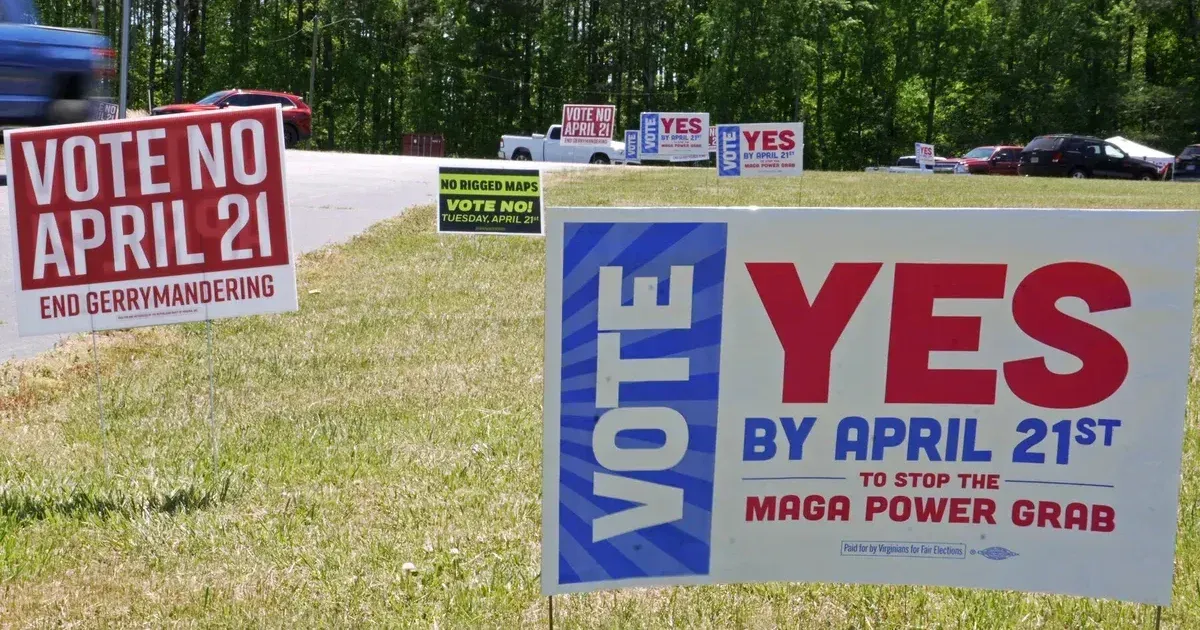
Virginia voters are facing a referendum campaign flooded by outside spending, with financial disclosures pointing to nearly 100 million dollars in political money around a single ballot fight. The scale of spending has turned a state-level vote into a national test of disclosure rules, donor influence and whether ordinary voters can still understand who is trying to persuade them. By April 22, 2026, the referendum had become one of the most expensive political fights in Virginia history.
Referendums are often presented as direct democracy. Voters decide a policy question without filtering it through legislators. That promise weakens when the campaign around the question is dominated by committees, nonprofits and donors whose identities are difficult to trace.
Money Changes the Shape of the Vote
High spending does not automatically prove corruption. Campaigns need money to explain complex ballot language, organize volunteers and reach voters across media markets. The concern in Virginia is proportionality. When spending becomes enormous, the campaign can overwhelm the underlying policy question.
Virginia referendum spending also shows how state elections can become national proxy wars. Donors outside the state may see a referendum as a way to test messaging, build legal precedent or influence policy that could spread elsewhere. Voters then become the audience for a fight that is only partly local.
That dynamic can distort accountability. A candidate has a name, a record and a party label. A ballot committee may have a pleasant title and a donor structure that requires legal research to understand.
Disclosure Rules Face a Stress Test
The key question is whether voters can identify the interests behind the ads before they cast ballots. If money flows through layers of organizations, disclosure may technically exist while remaining practically useless. A filing buried in a database is not the same as meaningful public knowledge.
Election officials and watchdog groups will likely examine timing as closely as totals. Late spending can be especially powerful because opponents have little time to respond and journalists have little time to trace funding. That is why pre-election reporting deadlines matter.
Watchdog groups warned that voters should know who is paying for persuasion before the campaign is over, not after the result is certified.
Voter Trust Is the Real Target
The danger is not only that one side wins because it spends more. The deeper risk is that voters conclude the process is being purchased around them. Once that belief takes hold, even a legally clean referendum can leave a legitimacy problem.
Virginia officials can respond by strengthening donor disclosure, tightening rules around pass-through entities and making campaign-finance data easier to read. Reformers may also push for faster reporting near election day. Opponents of stricter rules will argue that political speech requires privacy and that disclosure can chill participation.
A State Fight With National Lessons
The referendum will be studied beyond Virginia because ballot measures are increasingly used to settle major policy disputes. When legislatures stall, campaigns take issues directly to voters. That can empower citizens, but it can also invite massive spending from actors who prefer ballot campaigns to legislative compromise.
The final vote will decide the policy question. The spending fight will decide something broader: whether voters believe the campaign gave them information or simply surrounded them with purchased certainty.
For a referendum to function as direct democracy, the public needs more than a ballot. It needs a clear view of the forces trying to shape that ballot. Virginia’s nearly 100 million dollar campaign is testing how clear that view remains.
Advertising saturation can also change how voters process information. When mailers, television spots, text messages and digital ads repeat simplified claims, the campaign can become less about persuasion and more about exhaustion. Voters may tune out precisely when they need the clearest explanation of the referendum language.
Local journalists face a resource problem in that environment. Tracking shell organizations, donors and ad buys takes time and expertise. A nearly 100 million dollar campaign can generate more claims than newsrooms can verify quickly, especially outside major media markets.
The spending also affects smaller civic groups. Grassroots organizations may have deep local knowledge but no ability to compete on paid media. Their voices can be drowned out by national committees that know how to buy attention at scale.
Courts have generally protected political spending as speech, which means reform proposals must be designed carefully. Disclosure is often the more viable route than spending caps. Even then, disclosure has to be fast and readable to matter before election day. Digital advertising makes the problem harder. Different voters can receive different claims, and some messages disappear before watchdogs can archive them. Transparency rules built for television and mail do not always capture that environment.
The referendum will therefore test not only voter preference but institutional capacity. Can election systems, media outlets and civic groups give citizens enough context to judge a heavily funded campaign? Or does money move faster than accountability? The answer will shape future ballot fights. If the Virginia campaign succeeds without meaningful donor clarity, other groups will copy the model. If it produces backlash, it may become the case reformers use to argue that direct democracy needs stronger guardrails. The most immediate reform may be presentation rather than ideology. Voters should be able to see top donors, major ad buyers and committee relationships in plain language. If disclosure requires expert navigation, it is not serving the public at the moment the public needs it. Virginia may also become a test for courts and regulators asked to distinguish persuasion from confusion. Political campaigns have a right to advocate forcefully. Voters have an equal need to know who is behind the advocacy and whether claims are being funded by interests that would benefit directly from the outcome.
The campaign also raises a civic fatigue problem. When voters believe every message is funded by hidden interests, they may stop trusting accurate information along with misleading claims. That cynicism benefits the best-funded side because it turns uncertainty into surrender. A healthier system would make sponsorship clear enough that citizens can judge arguments instead of guessing at motives. The final spending reports may arrive after voters have already made up their minds, which is exactly the timing problem reformers want to solve.