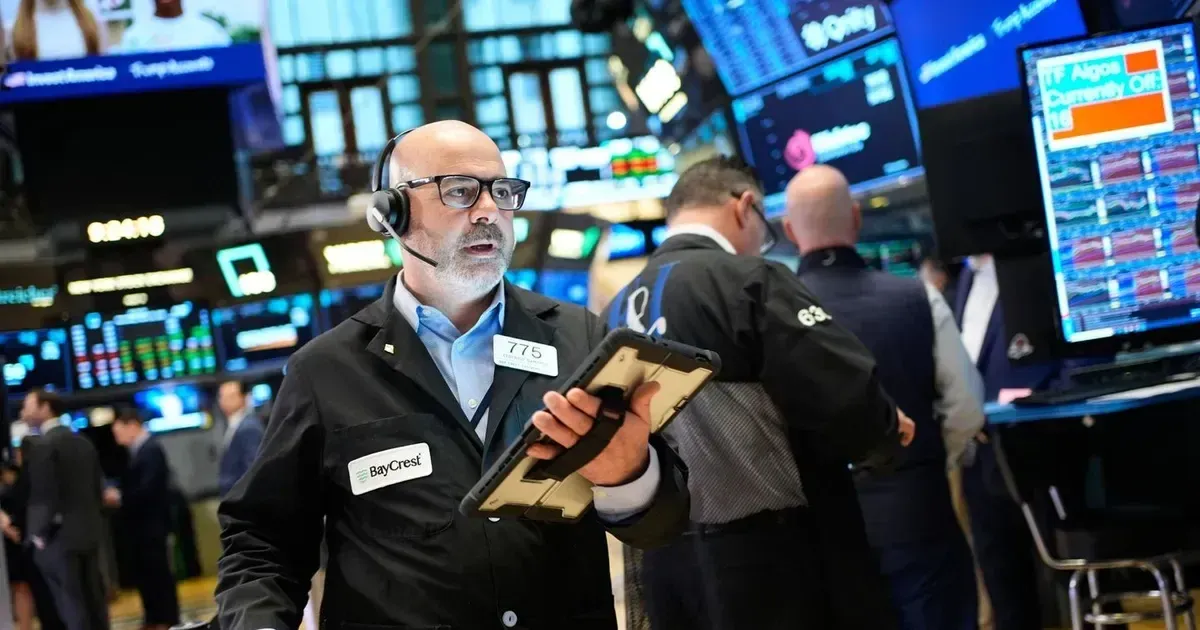
Wall Street traders dumped equities on March 27, 2026, as the S&P 500 careened toward its fifth consecutive weekly loss. Sellers dominated the floor throughout the morning session while news of rising energy costs filtered through trading algorithms. Financial centers in New York and London recorded sharp declines in early trading hours. The benchmark index remained on a downward path that experts identify as the most meaningful slump since the early months of the decade.
Equity markets faced immediate pressure as crude oil futures climbed above $95 per barrel. Energy price spikes often precede broader market contractions because they increase the cost of goods and services across all sectors. Logistics firms and airlines saw their valuations erode as fuel costs threatened quarterly margins. This specific pricing pressure has become a primary driver of the current selloff.
Geopolitical tensions centered on Iran have created a climate of deep uncertainty for global commodity markets. Investors are increasingly skeptical of diplomatic resolutions that fail to produce real cooling of hostilities. Mixed signals regarding military movements in the region have left analysts unable to project a stable floor for energy prices. Speculation regarding shipping lane disruptions in the Persian Gulf added a premium to current oil contracts. Markets reacted poorly to the latest round of rhetoric emanating from Washington and Tehran.
Iran Conflict Pressures Global Energy Markets
Crude oil prices rose sharply as reports of military maneuvers near the Strait of Hormuz reached the trading floor. Supply-chain experts warn that any interruption in the flow of energy from Iran could trigger a global recessionary period. The biggest oil producers have yet to announce production increases that would offset the potential loss of Iranian exports. Traders in Chicago and London began pricing in a worst-case scenario for energy availability through the summer months. Brent crude futures mirrored the rise in West Texas Intermediate as global parity remained tight.
Investors are losing patience with the war in Iran, according to a report by the New York Times.
And yet, the fundamental drivers of the market decline extend beyond simple supply and demand physics. Fear has become the dominant currency on the Wall Street floor. Panic selling often occurs when multiple geopolitical stressors converge on a single trading week. Institutional funds shifted billions into defensive positions like gold and government bonds. Retail investors followed suit by liquidating growth-heavy portfolios in favor of cash reserves.
Meanwhile, the S&P 500 continued to lose ground against historical support levels. Technical analysts pointed to the breach of the 200-day moving average as a sign of further weakness. Momentum shifted toward the bears as sell orders outweighed buy requests by a ratio of three to one. Major technology firms faced the brunt of the liquidation as their high valuations required low-interest environments to thrive. Inflationary pressures from oil prices make such environments increasingly unlikely in the near term.
Oil Price Surge Sparks Inflation Anxiety
Rising energy costs directly influence the Consumer Price Index through higher transportation and manufacturing expenses. Market participants expect the Federal Reserve to maintain or increase interest rates to combat these inflationary pressures. High-interest rates typically depress stock prices by making borrowing more expensive for corporations. Donald Trump has frequently commented on interest rate policy during his tenure, but the central bank remains focused on data. Bond yields rose as traders anticipated a more aggressive stance from monetary authorities.
But the link between oil and inflation is not always linear. Manufacturing efficiency has improved over the last decade, yet the sheer volume of energy required for modern logistics remains high. Ships and trucks still rely heavily on fossil fuels to move global commerce. When $95 oil becomes the baseline, consumer spending power inevitably shrinks. Families in the US and UK are seeing the impact of these market movements at the gas pump. Every dollar spent on fuel is a dollar removed from the broader retail economy.
In a different arena, the broader market indices like the Nasdaq and Dow Jones Industrial Average followed the S&P 500 lower. Sector-wide losses were reported in the automotive and industrial manufacturing industries. These sectors are particularly sensitive to the cost of raw materials and energy. Even companies with strong balance sheets saw their shares discounted by nervous traders. Markets are currently punishing any firm with marked exposure to global supply chains.
Policy Delays Fail to Stabilize Trading
Efforts to delay military escalation in the Middle East have done little to reassure nervous investors. Donald Trump issued a statement regarding a potential pause in operations, but the market viewed the move as insufficient. Delaying a conflict is not the same as resolving it, and Wall Street prefers certainty over temporary reprieves. Traders noted that previous delays have only led to renewed volatility in the following weeks. Political solutions appear to be lagging behind the rapid pace of market movements.
According to reports from the S&P 500 analyst community, the current five-week losing streak is the longest since 2022. That previous period of instability was also marked by energy shocks and geopolitical realignment. History suggests that such streaks often require a major driver to break the cycle. Without a clear de-escalation in Iran, the downward pressure on equities is likely to persist. The biggest investment banks have revised their year-end targets for the index to more conservative levels.
Still, some sectors managed to find small pockets of resistance against the tide of red. Defense contractors and specialized energy firms saw minor gains as their products remained in high demand. These outliers were not enough to lift the broader market out of its malaise. Diversification offered little protection during a session where the correlation between different asset classes tightened sharply. Systematic selling often ignores the individual merits of a company in favor of broad risk reduction.
Institutional Investors Reassess Risk Portfolios
Hedge funds and pension funds have begun an enormous reassessment of their risk tolerance for the 2026 fiscal year. Capital outflows from equity markets have reached levels not seen since the pandemic. Large-scale institutions are focusing on liquidity over long-term growth as the Iran situation remains fluid. Risk managers are currently stress-testing portfolios against oil prices exceeding $120 per barrel. These internal shifts by large players accelerate the downward momentum for the S&P 500.
In practice, the speed of the decline has caught many automated trading platforms off guard. Stop-loss orders were triggered across many blue-chip stocks, leading to a cascade of selling. Such mechanical reactions can worsen market swings even in the absence of new headlines. Wall Street firms are closely monitoring their internal risk controls to prevent a broader systemic failure. Exchange officials stated that no trading curbs were currently necessary, though the situation remains under review.
Yet the political landscape in Washington remains focused on the upcoming electoral cycle. Donald Trump has used the market volatility to criticize current economic management while promising stability. His supporters point to previous periods of growth, while critics highlight the volatility inherent in his foreign policy. These competing narratives do little to provide the clear guidance that institutional investors crave. Political rhetoric rarely provides a firm foundation for sustainable market recoveries.
Equities ended the session near their daily lows as the closing bell rang in New York. Total trading volume was much higher than the 30-day average. This level of participation indicates that the moves lower was supported by a broad consensus of market participants. Traders now look toward the weekend for potential developments in Iran that could influence Monday's opening. Current sentiment remains deeply pessimistic across biggest brokerage houses.
The Elite Tribune Perspective
Markets do not care about political timelines or the ego of a sitting president when the supply of energy is at risk. We are currently witnessing the terminal phase of the delusion that one can engage in endless brinkmanship in the Middle East without paying a severe economic price at home. This five-week slide is not a statistical anomaly; it is a rational, cold-blooded rejection of the uncertainty radiating from the White House and its failed diplomatic theater.
For years, the financial elite have tolerated the performative delays of Donald Trump, but the reality of $95 oil has finally broken the spell. No amount of social media posturing can offset the brutal physics of a choked global supply line. The S&P 500 is behaving exactly as it should when faced with a leadership that focuses on optics over the stability of the global energy grid. Investors have finally realized that a delayed war is still a war, and the costs are already being deducted from their retirement accounts.
If Wall Street continues to bleed, it is because the market has finally decided that the current path is unsustainable. Economic gravity always wins in the end.