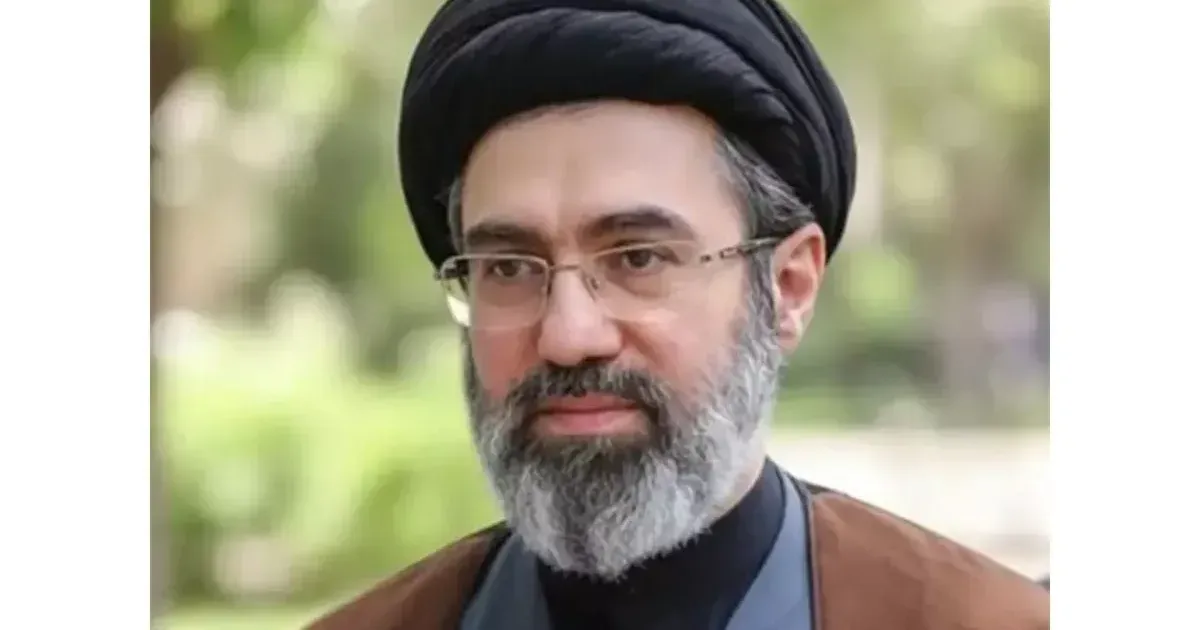
Rewards for Justice, a long-standing State Department program, announced a $10 million bounty for information leading to the identification or location of Mojtaba Khamenei. He is the son of the late Ali Khamenei and sits at the apex of the clerical establishment as the new Supreme Leader. The bounty was reported on March 13, 2026, as Washington escalated pressure on Iran's leadership. This bounty marks an escalation in diplomatic warfare that focuses on personal vulnerability rather than institutional sanctions. State Department documents indicate that the reward also extends to other senior officials, including Ali Larijani. Larijani has served as a fixture in Iranian politics for decades, often acting as a bridge between hardliners and pragmatic elements of the regime. Targeting him suggests a strategy aimed at isolating the new Supreme Leader from his most experienced advisors. This directive signals that the era of treating the clerical upper crust as untouchable has ended. Security experts in Washington suggest that the financial pressure is designed to incentivize defections within the high-level security details surrounding these men. Money remains the most potent weapon in the American diplomatic arsenal. According to official notices, the bounty of $10 million translates to roughly 92,47,48,000 Indian Rupees. Highlighting the conversion reflects a desire to broadcast the offer to regional actors and intermediaries who frequent the commercial hubs of the Middle East and South Asia. For instance, intelligence assets operating in the border regions of Iraq and Pakistan may find such a sum more persuasive than political rhetoric. The State Department intends for the life-changing nature of the reward to encourage a climate of paranoia within the Revolutionary Guard.
Washington Raises the Price on Khamenei
Mojtaba Khamenei transitioned from a shadow figure managing his father's office to the primary power broker in the capital. His rise was met with internal resistance and external skepticism, yet he successfully consolidated control over the military apparatus. Still, his public appearances remain rare and highly choreographed. The announcement of the bounty occurred just hours after Mojtaba and Larijani were seen participating in al-Quds demonstrations. These events traditionally serve as a display of regime strength and ideological purity. By contrast, the American response frames these leaders as fugitives rather than statesmen.
Intelligence circles in Washington believe the timing of the reward was not coincidental. For one, the al-Quds rallies provided fresh photographic and thermal imagery of the leadership's movement patterns. Analysts from the Central Intelligence Agency are reportedly cross-referencing this data with previous movement logs to map the Supreme Leader's security protocols. This financial pressure targets the loyalty of those tasked with his physical protection. Even the most ideologically committed guard might reconsider his allegiance when faced with a payout that secures several generations of family wealth.
But the Iranian leadership has faced similar threats in the past without fracturing. During the height of the maximum pressure campaign in 2019, several commanders were designated as terrorists, yet they remained in power. In fact, the clerical elite often uses such designations to fuel domestic narratives of American victimization. To that end, the Revolutionary Guard has already begun a series of counter-intelligence sweeps in Tehran. They are looking for any signs of communication with foreign entities among the mid-level officer corps.
Sanctions and Protests Tighten Pressure
Retaliatory strikes and escalating regional tensions provided the backdrop for this latest policy shift. The Persian Gulf has seen a spike in drone and missile exchanges between regional proxies and American naval assets over the last forty-eight hours. Washington maintains that these Iranian-backed attacks necessitate a direct response against the coordinators in Tehran. Separately, the Treasury Department is preparing a new tranche of sanctions aimed at the private assets held by the Khamenei family in foreign jurisdictions. These assets are often masked by complex layers of shell companies in East Asia and Europe.
President Trump commented on the situation during a press briefing where he expressed confidence in the current path. He claimed that the clerical regime is nearing a point of total surrender under the pressure of military and economic isolation. He did not mince words when describing the targets of the new bounty program.
They are deranged scumbags who have spent decades killing our people and destabilizing the world, and we are going to militarily dismantle their entire operation once and for all.
Military officials confirm that drone surveillance over the capital has increased sharply since the al-Quds events.
Intelligence Messaging Becomes Public
While Bloomberg suggests the Iranian economy is stabilizing through illegal oil exports, Reuters sources claim the internal banking system is on the verge of collapse. The discrepancy highlights the difficulty of measuring the true impact of American pressure on the ground. Still, the cost of living in Tehran has skyrocketed, leading to sporadic protests that the government struggles to contain. If a high-ranking official were to flee the country with sensitive information in exchange for the $10 million, it would devastate the regime's remaining morale. Tehran has not yet responded to the specific financial threats against its new leader. Instead, the state-run media has focused on the success of the recent missile strikes against regional targets. The silence often precedes a more aggressive military posture or a significant diplomatic pivot. In turn, the State Department is closely monitoring the movements of Ali Larijani, who has frequently traveled to neutral capitals for back-channel talks. His inclusion in the bounty program effectively ends his utility as a diplomatic envoy.
Security protocols for the Supreme Leader have reportedly been overhauled following the announcement. Mojtaba Khamenei is said to be moving between various hardened bunkers beneath the capital to avoid detection. At the same time, the State Department is working with regional allies to tighten the net around Iranian diplomatic pouches. These pouches are often used to move hard currency and encrypted communication devices. The goal is to starve the leadership of the tools they need to manage their external proxies. The use of bounties reflects a return to a more transactional form of intelligence gathering. The Rewards for Justice program has paid out more than $250 million since its inception in 1984.
Bounties Are Political Signals
Washington has traded the surgical strike for the open-market solicitation of betrayal, a move that exposes the desperation of an administration unable to achieve its goals through traditional diplomacy. Placing a bounty on Mojtaba Khamenei is not a strategy; it is a confession that the State Department has run out of ideas to contain a nuclear-capable adversary. These rewards do not fracture the inner circle of a religious autocracy; they reinforce the siege mentality that keeps the regime in power. History proves that when the United States targets the personal safety of foreign leaders, those leaders do not surrender.
They double down on repression and accelerate their pursuit of asymmetric deterrents. This $10 million offer will likely be viewed by the Iranian public as an insult to their national sovereignty rather than a liberation effort. By treating the Supreme Leader like a common cartel boss, the administration has burned the last remaining bridges for a negotiated settlement. We are not watching the collapse of a regime, but the hardening of a conflict that will consume the next decade of American foreign policy.
If Washington truly believes that Ali Larijani or the Khamenei family can be bought for the price of a mid-sized apartment complex in Manhattan, they have fundamentally misunderstood the nature of ideological power.