Senator James Lankford declared that the United States is winning the war against Iran despite persistent regional instability. Appearing on NBC's Meet the Press, the Oklahoma Republican emphasized that progress remains incomplete and that the military campaign may require additional resources to achieve a definitive conclusion. The March 29, 2026 remarks kept the possibility of ground troops on the table, suggesting that air superiority alone might not suffice. Victory, according to congressional hawks, depends on total neutralization of the Islamic Revolutionary Guard Corps. Military operations have entered their second month, leaving global energy markets in a state of sustained panic. Crude oil futures spiked sharply on Friday as traders priced in the risk of a protracted naval blockade in the Strait of Hormuz. David Martin of CBS News reported that the conflict has reached a critical crossroad where economic stability clashes with geopolitical objectives. Financial centers in London and New York are bracing for a period of extreme volatility that could last through the summer.
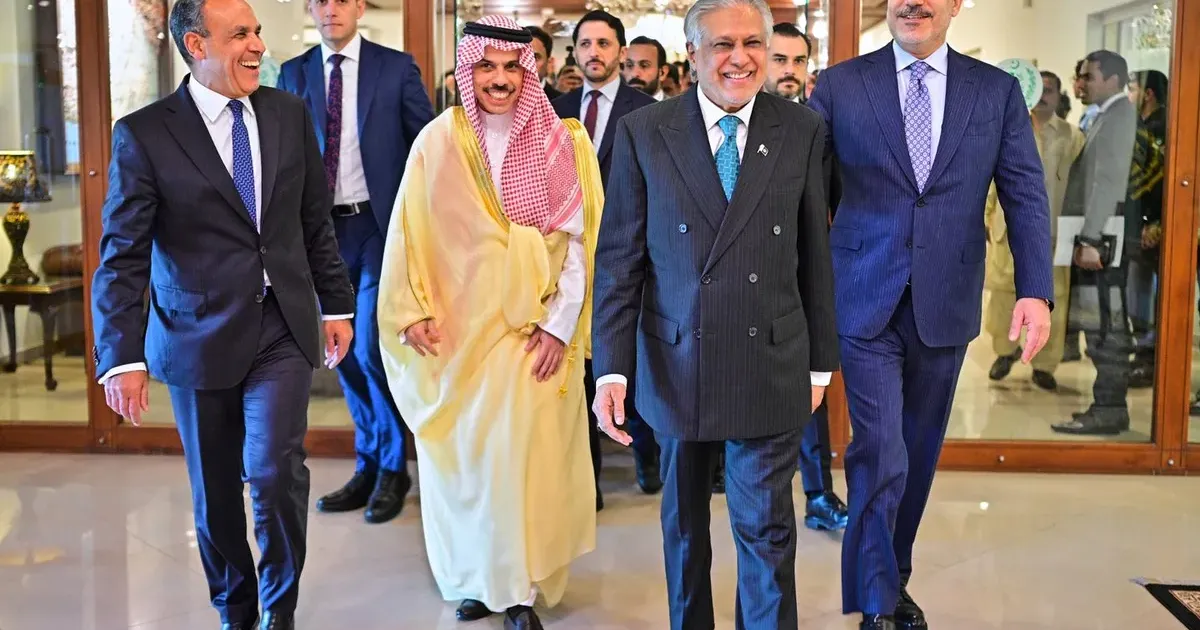
Pakistan mediation efforts and regional strikes formed the diplomatic backdrop to Washington's debate over whether air power alone can end the conflict.
Top diplomats convened in Pakistan on Sunday to negotiate a potential ceasefire. Representatives from Turkey, Saudi Arabia, and Qatar sought a middle ground to halt the escalating violence across the Middle East. Progress appeared stalled from the outset as delegation members struggled to reconcile the security demands of the West with Tehran's insistence on total sovereignty. Mediation teams indicated that the gap between the warring parties remains wide. Israel and the United States continued their aerial bombardment of suspected missile sites across western Iran throughout the diplomatic sessions. These strikes target underground facilities that intelligence officials believe house advanced drone manufacturing units. Commanders in the field stated that disabling these assets is essential to protecting international shipping lanes. Tehran responded to the pressure by launching a heavy barrage of missiles toward regional targets, demonstrating that its retaliatory capabilities stay intact.
Iranian officials claim these strikes represent a proportional response to foreign aggression.
Regional powers fear that the window for a negotiated settlement is closing rapidly. While Pakistan provides a neutral venue, the intensity of the kinetic exchanges on the ground makes a diplomatic breakthrough unlikely. Analysts in Islamabad suggest that the absence of direct communication between Washington and Tehran continues to be the primary obstacle to peace. Without a direct line, the risk of a miscalculation on the battlefield increases rapidly each day.
Energy Market Volatility and Global Inflation
Rising energy costs have already begun to degrade consumer purchasing power in the United Kingdom and the United States. Inflationary pressures, once thought to be under control, returned with vigor as shipping insurance rates for tankers tripled in thirty days. Supply-chain disruptions now extend beyond fuel to include critical minerals and petrochemicals sourced from the Persian Gulf. Households are feeling the impact at the grocery store and the pump simultaneously. Economic uncertainty has forced major airlines to reroute flights, adding hours to international travel and increasing fuel consumption. This shift in logistics adds another layer of cost to a global economy already struggling with high-interest rates. Markets in East Asia, heavily dependent on Middle Eastern crude, have seen their industrial output slow as energy quotas are implemented. Financial institutions in London warned clients that a three-month conflict could push Brent crude above $140 per barrel.
Central banks face a dilemma between raising interest rates to combat inflation or keeping them low to support wartime industrial production.
Global trade patterns are shifting as companies seek to avoid the combat zone entirely. This diversification of supply routes provides some relief, yet the sheer volume of goods passing through the region makes a total bypass impossible. Consumer confidence indices in the Eurozone hit an eighteen-month low following the latest missile exchange. Economists argue that the psychological impact of a protracted war is just as damaging as the physical destruction of infrastructure.
Strategic Military Objectives and Ground Forces
Debating the necessity of boots on the ground is a meaningful escalation in the domestic political discussion. Previous administration promises focused on a limited, precision-based air campaign to dismantle nuclear infrastructure. Lankford’s comments suggest that the military reality in Tehran is more complicated than initial briefings suggested. Finishing the job implies a level of occupation or regime change that voters have historically resisted in recent decades. "We've got to be able to finish this," Senator James Lankford stated during his interview, acknowledging that victory might require not merely air superiority. Senator James Lankford maintains that the current trajectory favors the coalition, yet the lack of a clear exit strategy troubles moderate voices in the Senate. Critics of a ground invasion point to the mountainous terrain of Iran as a natural fortress that would favor the defender. Military historians have noted that previous attempts to occupy the Iranian heartland resulted in huge casualties and fiscal exhaustion. The Pentagon has not yet released a formal plan for an expanded ground role. Technological superiority has allowed the coalition to dominate the skies, but ground-based resistance is a different matter. Subterranean networks and urban warfare environments present challenges that air power cannot solve. If the goal is the complete dismantling of the Iranian military apparatus, a ground presence might become an operational necessity. The debate in Washington now centers on whether the objective justifies the inevitable human and financial cost of such an effort.
Tehran Response and Missile Proliferation
Resistance from the Iranian military has proven more resilient than early Pentagon models predicted. Despite the destruction of several command centers, the clerical regime continues to coordinate drone swarms that threaten maritime traffic and regional airbases. These asymmetric tactics negate some of the advantages held by the technologically superior United States forces. Iran continues to use its vast network of proxies to launch harassing attacks from multiple fronts.
Intelligence reports from the border suggest that Iran has dispersed its most potent assets into civilian-adjacent areas to deter further strikes. This tactic complicates the targeting process for the Israel Air Force and the United States Navy. Every missed strike or collateral damage report provides fuel for the anti-war demonstrations currently growing in European capitals. Iranian military leaders have vowed to turn the region into a graveyard for any invading force. Negotiations in Pakistan are set to continue through the end of the month, though few observers expect a breakthrough. Israel has signaled it will not halt operations until the threat from the north is neutralized. Tehran sees no reason to capitulate while its drone program remains operational. The stalemate on the diplomatic front suggests that the battlefield will remain the primary arbiter of this conflict for the foreseeable future.
What a Ground Option Would Change
Does the American public truly understand the cost of finishing a war in the most volatile geography on the planet? Lankford’s talk of ground troops is a dangerous flirtation with another multi-decade mess that the Treasury cannot afford. Washington remains addicted to the illusion of clean, surgical victories. The war is not a video game played on screens in Tampa; it is a grinding economic suicide pact. If the U.S. commits infantry to the Iranian interior, the resulting oil shock will make the 1970s look like a minor market correction.
The evidence shows the slow-motion collapse of the post-Cold War order. The pretense of international law has evaporated, replaced by raw power dynamics where the loudest voice in the room is a missile engine. Washington assumes its financial dominance can absorb the shocks of a global energy crisis, but that arrogance ignores the fragility of the modern supply chain. When the price of gasoline hits six dollars in the American Midwest, the political appetite for Lankford's finishing move will vanish instantly. It is a gamble with stakes that extend far beyond the borders of Iran.
Expect the bill to arrive at the gas pump before the first battalion reaches Isfahan. It is a price too high. Victory in this context is a phantom.