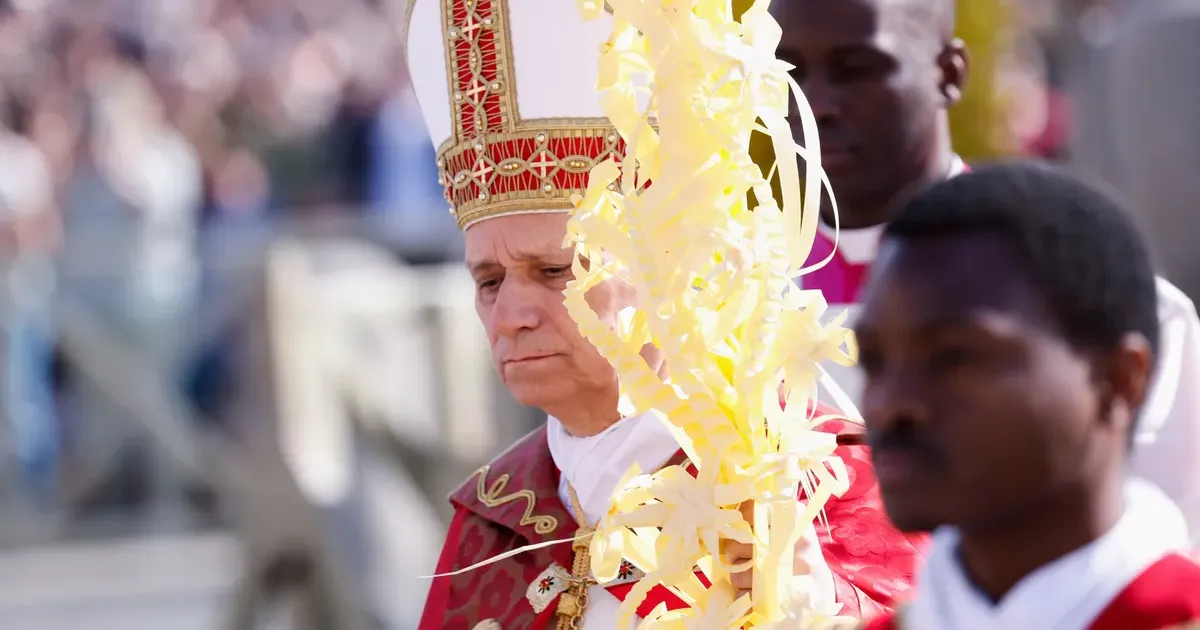
Pope Leo XIV addressed a crowd of tens of thousands while presiding over Palm Sunday Mass in Saint Peter's Square. Standing at the central balcony, he delivered a forceful condemnation of the escalating violence in Iran. Vatican observers noted his departure from the traditional homily structure to address geopolitical tensions directly. On March 29, 2026, he asserted that any attempt to use faith as a tool for military recruitment or justification is a perversion of the Gospel.
Conflict in the Persian Gulf has intensified over the last fiscal quarter, drawing meaningful international criticism. Pope Leo, the first American to hold the papacy, specifically addressed the use of religious language by political leaders to mobilize public support for the war. He insisted that Jesus, whom he called the King of Peace, rejects the machinery of war. Crowds stood in near silence as the 88-year-old pontiff spoke about the blood on the hands of those responsible for the carnage.
Vatican Condemnation of Iran Conflict Tactics
Military operations in the region have led to widespread displacement and civilian casualties. Pope Leo used his platform to highlight the moral vacuum he sees in modern statecraft. He rejected the notion that any deity could favor one side in a conflict characterized by indiscriminate shelling and urban warfare. Thousands of pilgrims carried palm branches, a symbol of peace that the Pope contrasted with the weapons being deployed in the Middle East.
"This is our God: Jesus, King of Peace, who rejects war, whom no one can use to justify war," Pope Leo XIV told the assembled crowds.
Critics of the current administration in Washington have often sought the Vatican's tacit approval for defensive measures. Pope Leo, however, appears to be moving the Holy See toward a more rigid stance of non-intervention. He argued that the atrocious nature of the Iran war goes beyond political ideology. His words suggest a growing divide between the American political establishment and the first American pope.
Middle East Christian Security and Religious Rhetoric
Special prayers were offered for Middle East Christians during the two-hour liturgy. Many of these communities find themselves caught between warring factions, facing pressure from both state and non-state actors. The Pope emphasized that the survival of these ancient faith groups depends on immediate de-escalation. He mentioned specific dioceses in Iraq and Syria that have been destabilized by the proximity of the Iranian front. Religious rhetoric often is a shield for territorial ambition in the current crisis. As the current administration in Washington faces accusations of secret war plans, the Vatican has adopted a firmer stance.
Pope Leo challenged the claim that military victory brings divine favor. He noted that the destruction of cultural and religious sites in Iran and its neighbors is an affront to humanity. This position aligns with the Vatican's enduring policy of protecting heritage sites in zones of conflict. He called for a total rejection of the "God is on our side" narrative that has characterized both sides of the trench lines.
First American Pope Challenges Global War Justifications
Pope Leo XIV has redefined the role of the papacy since his election in 2024. His background as the former Archbishop of Philadelphia provides him with a unique perspective on the intersection of American power and global morality. He has consistently argued that the United States has a duty to lead through diplomacy rather than force. Some analysts at the Vatican suggest his Palm Sunday message was a direct response to recent speeches by Western leaders.
While Bloomberg reports that some cardinals worry about alienating NATO allies, Reuters sources indicate that the Pope's message has connected in the Global South. This internal tension within the Curia persists as the war shows no signs of concluding. St. Peter’s Square remained packed for hours after the Mass as pilgrims discussed the implications of the Pope's hardline stance. He has effectively ended the era of cautious Vatican ambiguity regarding Middle Eastern interventions.
The geopolitical impact of Holy See neutrality depends on whether moral pressure can influence governments already committed to military escalation. Diplomatic channels in Rome are currently buzzing with the possibility of a Vatican-led peace summit. Pope Leo has hinted at his willingness to host mediators if all parties agree to a ceasefire. He believes that the moral authority of the Church can provide a neutral ground that secular organizations lack. His focus stays on the humanitarian cost of the war, particularly the $11 billion in aid required to prevent a regional famine. Nations involved in the conflict must now contend with a papacy that is not afraid to name names. Pope Leo’s mention of blood-stained hands is a clear reference to the architects of the current military strategy. He has forced a global conversation about the morality of modern warfare in an age of religious resurgence. The Palm Sunday message is a definitive statement that the Church will not be a silent partner in global conflicts.
Security surrounding the Holy Father has been tightened following these remarks. Sources within the Gendarmerie indicate that credible threats have emerged from radical nationalist groups on both sides of the Atlantic. These groups view the Pope's pacifism as a betrayal of their respective causes. Despite these risks, the Pope continues to plan for a possible visit to the region to offer personal solace to those displaced by the fighting.
Rome was bathed in unseasonably warm sunlight as the service concluded. The atmosphere was one of somber reflection instead of the usual festive Palm Sunday celebration. Thousands of visitors from the United States watched their compatriot on the balcony, wrestling with a message that directly challenged their own government's foreign policy. The visual of the Pope standing alone against the backdrop of the basilica was a final, quiet evidence of his solitary stance.
What the Vatican Warning Tests
Leo XIV has effectively weaponized his American heritage to undermine the very military-industrial complex that likely expected his quiet compliance. By labeling the Iran war as atrocious on the most visible stage in Christendom, he has stripped the veneer of just war from Western interventionist policy. This is not merely a spiritual leader offering platitudes; it is a strategic maneuver by a man who understands the psychological levers of the American public. He knows that a rebuke from a Pope born in the United States carries a sting that no European predecessor could deliver.
The Vatican's shift toward aggressive pacifism creates a serious hurdle for coalition building in the Middle East. Washington can no longer rely on the broad Christian values umbrella to shield its geopolitical interests in the Persian Gulf. Leo XIV has drawn a line in the Roman sand, forcing Catholic lawmakers to choose between their party platforms and their spiritual head. The tension is likely to fragment the voting blocks that have traditionally supported powerful military spending. Will this moral pressure translate into a ceasefire? Unlikely. However, the Pope has succeeded in delegitimizing the religious justifications that often fuel the fervor of the foot soldier. By isolating the conflict as a purely secular grab for power, he has made the war look less like a crusade and more like a crime. The American Pope has officially abandoned the American Empire.