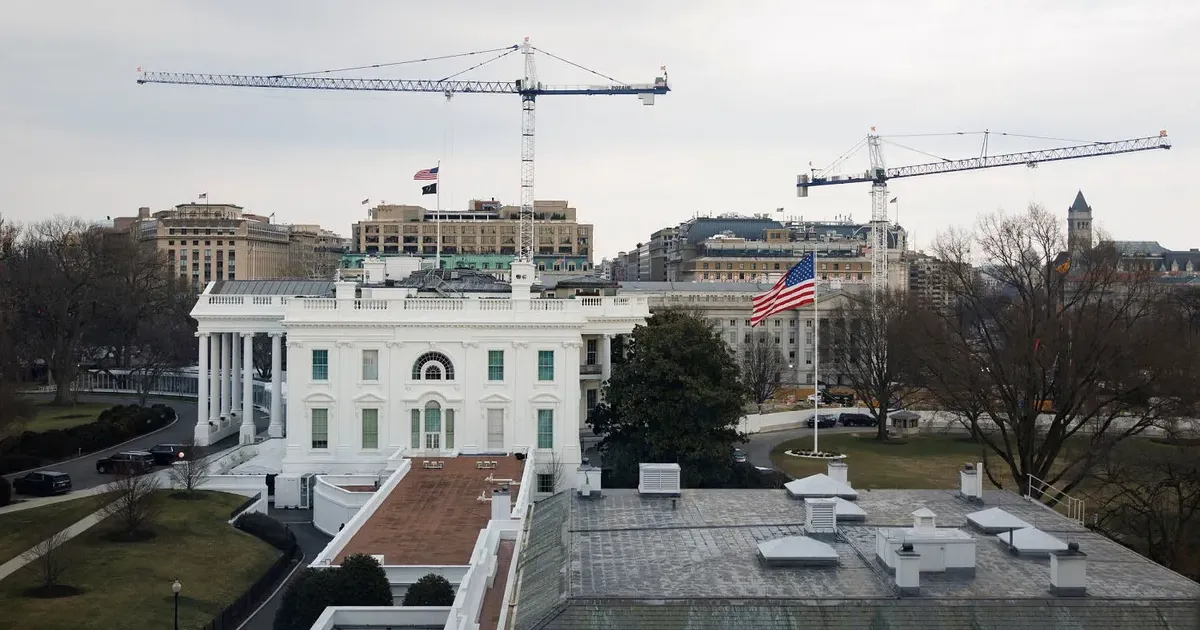
The fight over President Donald Trump's White House ballroom is not really about whether Washington needs another event room. It is about how far a president can go in reshaping a public historic site before Congress, courts and preservation rules force a clearer accounting.
The project became politically explosive because the East Wing was demolished to make room for a large ballroom on the White House campus. Trump has framed the plan as a privately funded gift and a long-needed modernization of the executive mansion. Preservation groups and critics see a different issue: a temporary occupant of the presidency using speed, donor money and executive control to make a permanent change to the People's House.
The East Wing Made the Fight Concrete
Renovation disputes can sound abstract until demolition begins. The East Wing gave this one a visible point of no return. It was not the oldest part of the White House, but it was part of the working complex, the visitor experience and the institutional memory of the building. Once it came down, the argument moved from design preference to authority.
The demolition is why the project drew lawsuits and preservation complaints. The question was not whether the White House can ever change. It has been repaired, expanded, gutted and rebuilt before. The question was who gets to approve a major alteration, what record must exist before work begins and whether a president can rely on private donations to avoid the normal discipline of congressional authorization.
The Legal Question Is About Power
A federal judge's halt order put the core issue plainly: the administration needed a legal basis for continuing major construction after demolishing part of the White House complex. Later appellate movement and continuing litigation kept the project from being a simple stop-or-go story, but the constitutional question remained.
Preservation groups argue that the White House is public property and a national monument, not a personal real-estate asset. The administration argues that the project is needed, privately funded in its brick-and-mortar form and tied to modern White House operations. Those positions collide over separation of powers. If Congress does not clearly authorize the work, can the executive still proceed because the property houses the executive?
Private Money Does Not Remove Public Duties
Trump's funding argument is politically important. He and supporters have said the ballroom itself is being paid for by private money, including donations, rather than ordinary taxpayer funding. Private funding can blunt one line of criticism, but it opens another. Private financing for a public historic site raises questions about donor influence, access, naming expectations and whether outside money is being used to bypass public approval.
The issue becomes sharper beside the broader White House security discussion. Reports have tied the project to a much larger security and modernization package, with lawmakers balking at the scale and timing. Even if one portion is privately funded, surrounding security work, campus changes and operational impacts can still involve public authority and public cost.
Security Is the Strongest Defense
The administration's best argument is not glamour. It is function. White House events require screening, secure circulation, staff space, emergency planning and controlled access for dignitaries, press, guests and workers. A modern event facility can be defended as more than vanity if it reduces road closures, improves protection and gives future administrations usable space.
But security arguments need discipline because they can become a catch-all. A drone-resistant roof, hardened access points or visitor-screening improvements may be legitimate. They do not automatically justify every aesthetic decision, every demolition choice or every funding route. The more the project is sold as a personal Trump improvement, the weaker the neutral-security case becomes.
Preservation Is Process, Not Nostalgia
Critics of preservation lawsuits often treat them as resistance to change. That misses the point. Historic-preservation review is supposed to slow major public decisions enough that records are built, alternatives are studied and the public can see why one path was chosen over another. At a site like the White House, process is the protection.
The review process matters because the building carries multiple identities at once. It is a residence, workplace, museum, command center, tourist site and national symbol. A president can occupy it, but no president owns it. The rules around alteration exist because the consequences last beyond a single term.
The Ballroom Is Now a Precedent Fight
The central issue is precedent. If a president can demolish, rebuild and privately finance a major White House addition with limited congressional control, future presidents will study the same route. If courts or Congress draw a firmer line, the ballroom becomes a warning about the limits of executive renovation power.
The precedent is why this dispute is bigger than taste, gold trim or ballroom size. Trump wants a visible legacy project inside the most recognizable public building in the country. Opponents want proof that the building still belongs to the public system around the presidency, not to the president who happens to live there. The outcome will help define whether White House stewardship is governed by law or by the speed of the contractor already on site.