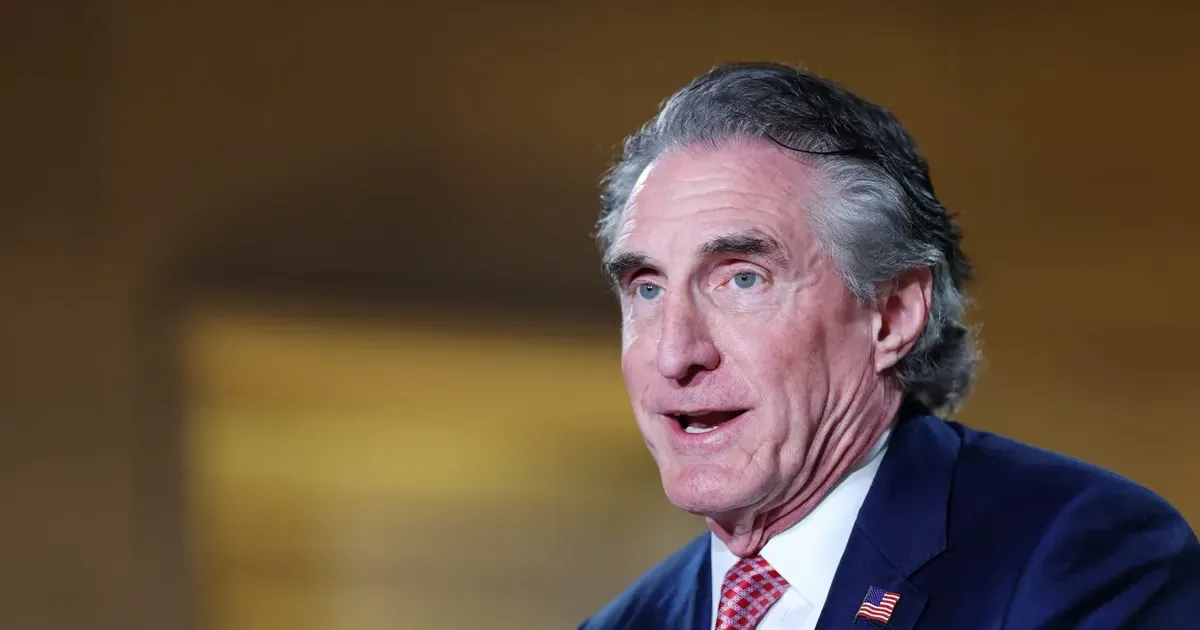
Doug Burgum sat in a quiet conference room in Tokyo on Saturday morning while global energy markets braced for a massive shift in American policy. Interior Secretary Doug Burgum confirmed that the Trump administration has engaged in internal deliberations regarding direct intervention in the oil futures market. These discussions coincide with a drastic move by the White House to combat soaring energy costs. The administration has officially initiated an exchange request for 86 million barrels of crude oil from the national stockpile.
Crude prices have surged more than 40% in the fourteen days since military hostilities between the United States, Israel, and Iran intensified. Iranian coastal batteries and naval maneuvers have effectively sealed the Strait of Hormuz, leaving millions of barrels of oil trapped within the Persian Gulf. American motorists are now feeling the friction of this blockade at the pump. Gasoline prices reached a 22-month high this week, prompting the executive branch to tap into the Strategic Petroleum Reserve with a volume that represents one of the largest drawdowns in its fifty-year history.
White House Liquefies National Energy Stocks
The Department of Energy issued the formal request for the 86 million barrel exchange to provide immediate liquidity to a starving market. Bloomberg reports that this specific mechanism allows the government to release crude now with the requirement that companies replace the oil at a later date, plus a small premium. Such a massive release targets the physical supply deficit created by the shuttering of Middle Eastern shipping lanes. Refiners on the Gulf Coast have struggled to source heavy and medium sour crudes typically transiting through the Arabian Sea.
Still, the logistical hurdles of moving 86 million barrels through the aging infrastructure of the Strategic Petroleum Reserve remain formidable. Storage sites in Louisiana and Texas require significant electrical power and pipeline capacity to hit maximum drawdown rates. The administration expects the first batches of this crude to reach refineries within thirty days. Traders in New York and London have responded with skepticism, as the sheer volume of the release barely covers three days of total American consumption.
Yet, the physical barrels are only one half of the current strategy. Secretary Burgum, speaking from Tokyo ahead of Prime Minister Sanae Takaichi’s upcoming visit to Washington, hinted at a more aggressive financial maneuver. The administration is exploring the use of taxpayer capital to trade oil futures contracts directly. This move would represent a departure from traditional reserve management, effectively turning the Department of the Treasury or the Department of Energy into a sovereign hedge fund.
Market Volatility Follows Persian Gulf Shipping Blockade
Insurance premiums for tankers in the Indian Ocean have tripled since the blockade began. Shipping giants like Maersk and Hapag-Lloyd have rerouted vessels around the Cape of Good Hope, adding twelve days to the journey from the Middle East to Europe and North America. In turn, the cost of crude landed in the United States has disconnected from the spot price seen on paper exchanges. The physical reality of the blockade is driving local shortages in coastal hubs.
“An intervention to try to manipulate and lower prices would require enormous amounts of capital. That is all I will say on that front.”
Burgum’s words, delivered to Bloomberg Television, reflect the internal tension within the administration regarding market manipulation. While the Interior Secretary acknowledged that "smart people" in the administration are studying the energy trading market, he stopped short of confirming any active trades. A direct intervention in the futures market would require the United States to take massive short positions to drive down paper prices. But the capital requirements for such a play could run into the tens of billions of dollars.
Separately, the Treasury Department has placed market intervention lower on its list of priorities compared to the physical release of reserves. Economists at Fortune suggest that a failed attempt to move the futures market could embolden speculators and drive prices even higher. The risk of losing billions in public funds on a bad trade looms over the White House staff. Market participants are watching the Tokyo energy summit for any sign that the U.S. will coordinate this financial attack with Indo-Pacific allies.
Washington Weighs Rare Futures Market Intervention
No American president has ever used the full weight of the Treasury to short-sell oil as a tool of domestic price control. In fact, the legal authority for such a move is currently under debate among White House counsel. Some advisers argue the Defense Production Act provides the necessary cover to stabilize energy markets during wartime. Others suggest that any direct trading would require a specific emergency appropriation from a divided Congress. Domestic producers in the Permian Basin are watching the situation with growing alarm.
Texas and North Dakota oil executives worry that a government-led price crash would destroy the incentive for domestic drilling. If the White House successfully pushes prices down through financial manipulation, the long-term result could be a collapse in American production. Secretary Burgum, the former governor of North Dakota, is well aware of this delicate balance. He must reconcile the need for lower prices at the pump with the necessity of maintaining a profitable domestic oil industry.
The current conflict in the Persian Gulf makes this balance nearly impossible to maintain. Iranian drones have targeted infrastructure near the Strait of Hormuz, making the waterway a dead zone for commercial traffic. This physical reality cannot be fixed by trading paper on the New York Mercantile Exchange. Every barrel removed from the strategic reserve is a barrel that will eventually need to be repurchased at a potentially higher price. The 86 million barrel exchange is a temporary bridge, not a permanent solution to the supply crisis.
Indo Pacific Alliances Target Chinese Supply Chains
Burgum’s presence in Tokyo serves a secondary purpose beyond managing the oil crisis. The White House is using the Indo-Pacific Energy Security Ministerial to pull Japan and other regional allies away from Chinese supply chains. Washington wants to secure exclusive access to critical minerals needed for the next generation of energy storage and military hardware. This strategy involves a $30 billion pledge from Asian partners to develop mineral mines in the United States and allied territories.
Chinese officials in Beijing have already voiced opposition to the Tokyo forum. They view the energy security ministerial as an attempt to create a closed economic bloc. But the U.S. administration is focused on reducing dependence on a nation it views as a strategic competitor. The diversification of supply chains for lithium, cobalt, and rare earth elements is now a matter of national security. Burgum noted that the Indo-Pacific region will be the primary source of these materials for the next decade.
American efforts to isolate Iran have also complicated the relationship with China, which remains the primary buyer of Iranian crude. By attempting to lower global oil prices through a massive reserve release and potential futures trading, the U.S. is indirectly attacking the revenue streams of both Tehran and Beijing. The economic warfare is unfolding in real-time across the computer screens of traders in every time zone. The Tokyo summit will conclude on Sunday with a formal communique regarding energy cooperation and mineral security.
The Elite Tribune Perspective
Will the American taxpayer become the world's largest oil speculator? The Trump administration’s flirtation with trading oil futures is a dangerous evolution of executive power that threatens the very market stability it claims to seek. By dumping 86 million barrels of the nation's emergency supply, the White House is gambling that the war in Iran will be short-lived. It is a reckless assumption given the volatility of the Persian Gulf and the strategic depth of Iranian defenses. The Strategic Petroleum Reserve exists to mitigate physical supply shocks during domestic emergencies, not to serve as a piggy bank for an administration desperate to lower gas prices before an election cycle or a political crisis.
Short-selling crude in the futures market is not an energy policy; it is a desperate financial gimmick. If the government loses billions of dollars in a bad trade, the public will be left with a depleted reserve and a massive bill. The administration should focus on the physical protection of global shipping lanes rather than attempting to outsmart algorithmic traders in London. Manipulating the market through paper trades creates a false sense of security while doing nothing to address the reality of a blocked Strait of Hormuz. Washington needs to stop playing hedge fund manager and start acting like a global power.