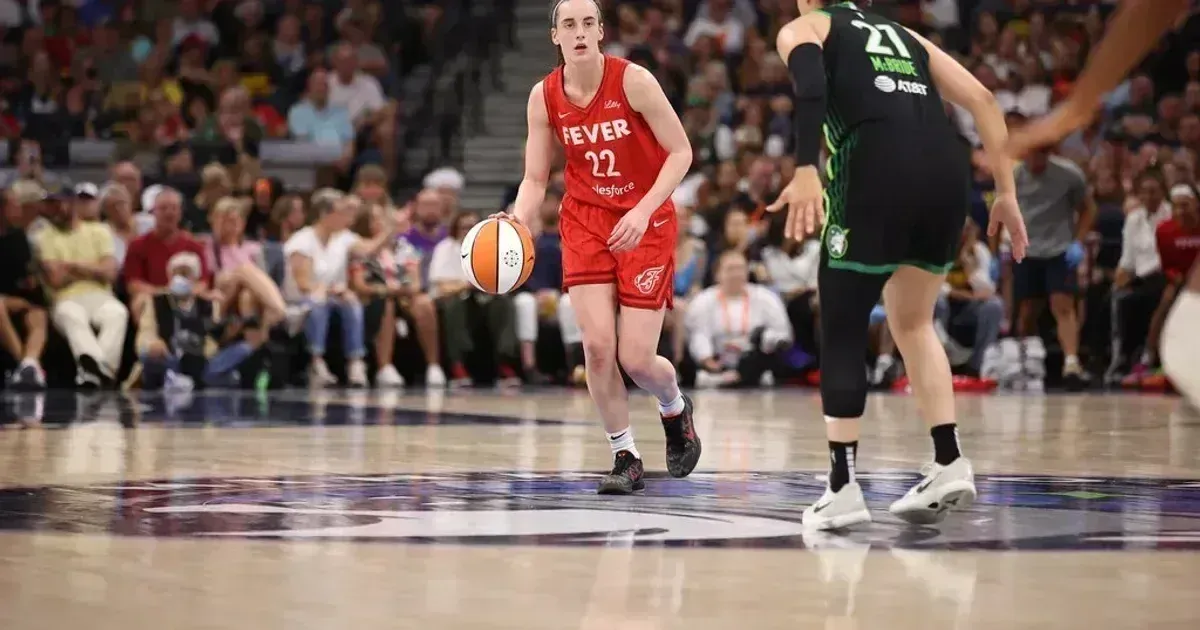
Barstool Sports founder Dave Portnoy criticized the WNBA after a Sunday doubleheader graphic omitted Caitlin Clark from the promotion for an Indiana Fever game. The criticism surfaced on May 17, 2026, after the league promoted two televised matchups with a graphic that featured other stars. Portnoy argued that leaving Clark off a Fever marketing asset made little commercial sense given her role in driving attention to the league.
The graphic promoted a Las Vegas Aces matchup with A'ja Wilson and Angel Reese, then used Fever rookie Raven Johnson for Indiana's game against the Seattle Storm. Portnoy said he liked Johnson but viewed the decision to exclude Caitlin Clark as a major marketing error. His criticism quickly spread across social media because it matched a broader fan complaint about how often the league places Clark at the center of national promotions.
"This is the most idiotic promo I've ever seen in sports," Portnoy wrote.
A separate Newsweek report added another layer to the debate by noting a late statistical correction from Indiana's overtime loss to the Washington Mystics. Clark initially appeared to finish with 32 points, eight assists and four rebounds. The WNBA later awarded her two additional assists, giving her 32 points and 10 assists for the game. The correction mattered because it moved the story from a strong individual performance into a league-record category.
Promotion Decision Draws Sports Marketing Scrutiny
The backlash centers on the difference between roster depth and audience demand. The WNBA has reason to showcase stars across multiple teams, especially as the league expands its national profile. Still, Fever games remain closely tied to Clark's drawing power, and critics argued that a broadcast graphic without her image undercut the league's own sales pitch.
Portnoy framed the omission as a basic promotional failure rather than a basketball evaluation. His comparison was simple: major leagues normally lead with the most recognizable star attached to a game. For Indiana, that star is Clark, even when the team is also trying to introduce new players such as Johnson to a wider audience. Newsweek also noted that Clark's arrival had already helped the Fever set attendance marks and draw larger television audiences, making the promotional choice harder for critics to understand.
The league has not publicly treated the graphic as a formal controversy. The reaction instead reflects how closely fans, media personalities and sponsors now watch the WNBA's presentation choices. Promotional assets that once passed with limited notice can now become part of a larger argument about whether the league is maximizing its new attention. That scrutiny is sharper because the WNBA is adding expansion markets and trying to convert a temporary surge into a broader business base.
Stat Correction Strengthens Clark's Record Case
The corrected Washington box score gave Clark another record tied to scoring and playmaking. According to the Fever, she became the first player in league history with multiple games of at least 30 points and 10 assists. Her first such game came during her 2024 rookie season against the Chicago Sky, when she posted 31 points and 12 assists.
The update also gave Clark a WNBA-record 11 career games with at least 20 points and 10 assists. Through three games this season, she has scored 20, 24 and 32 points while adding at least seven assists in each appearance. Those numbers explain why every Fever marketing decision is now viewed through a larger commercial lens. They also show that the Clark debate is no longer limited to college stardom or rookie-year curiosity; it is now tied to repeat production in the professional record book.
The larger issue for the WNBA is not whether one player should be the only face of the league. It is whether the league can promote its broader roster while still recognizing where the current audience surge is coming from. Clark's corrected stat line and Portnoy's criticism point to the same reality: Indiana games are now national sports-media events, and the marketing around them is judged accordingly. That makes even a single social graphic part of the league's larger business story. It also raises expectations for cleaner promotion around future Fever broadcasts as national attention keeps rising around Clark and the Fever. Sponsor demand will follow.