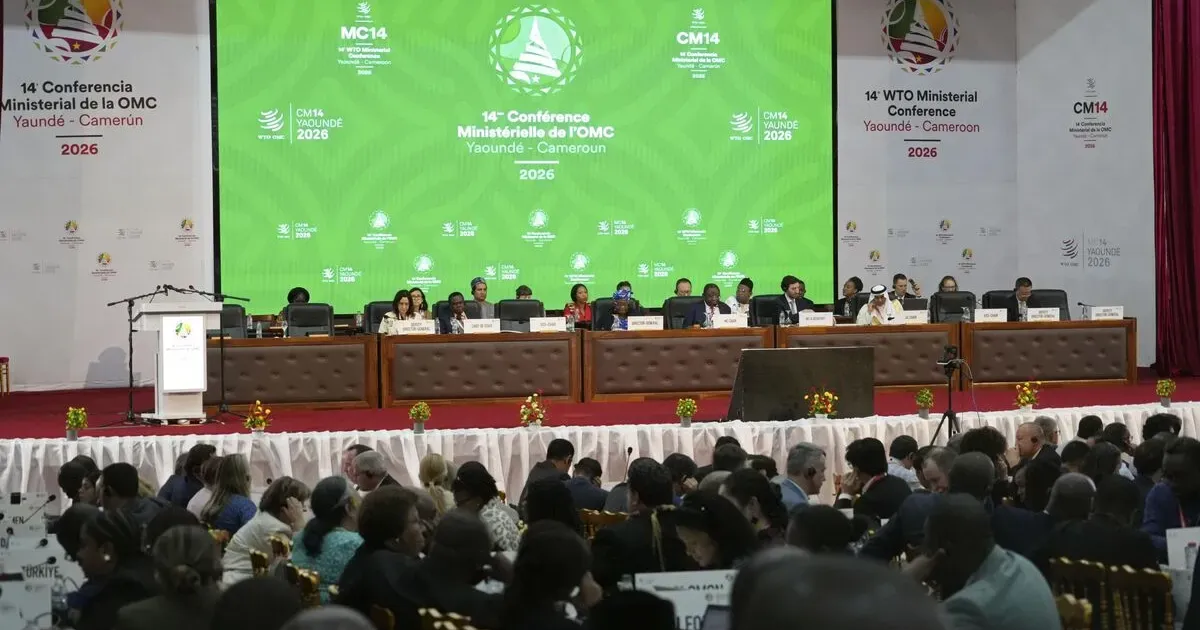
The World Trade Organization's failure to extend its e-commerce moratorium changes the baseline for digital trade. Since 1998, WTO members had renewed a temporary practice of not imposing customs duties on electronic transmissions. At MC14 in Yaounde, that restraint expired after members failed to reach consensus.
The lapse does not mean every government will immediately tax every download, stream, software update or cloud service. It means the common multilateral restraint is gone. Digital trade now moves into a more fragmented world: partial agreements for some countries, national discretion for others and legal uncertainty for companies that built services around the assumption that electronic transmissions would remain duty-free.
A Common Rule Disappeared
The WTO's own MC14 materials noted that the 2024 Abu Dhabi decision had extended the moratorium only until MC14 or March 31, 2026, whichever came first. When ministers failed to agree on a new decision, the Work Programme path and the moratorium lost their multilateral anchor.
The United States said an extension to December 31, 2030 was blocked by Brazil and Turkey. Other governments have long argued that the moratorium limits policy space and may deprive developing economies of revenue as more trade moves into digital channels. The disagreement is therefore not a minor drafting fight. It is a dispute over who benefits from the digital economy and who has the right to tax it.
The 66-Member Deal Is Only A Partial Floor
The expiry did not leave the field completely empty. A separate e-commerce agreement backed by 66 WTO members, led by economies including Australia, Japan and Singapore, creates rules for participating countries and includes a commitment not to impose duties on electronic transmissions. Those members represent a large share of global trade.
But partial coverage is not the same as a WTO-wide baseline. India has already questioned the legal and institutional implications of interim arrangements that move ahead without full multilateral consensus. That objection goes to the heart of the WTO problem: digital trade needs broad predictability, while the institution increasingly produces smaller coalitions inside a larger deadlock.
Valuation Is The First Practical Problem
Customs systems were built for physical goods moving through ports, warehouses and borders. Digital transmissions do not fit that model neatly. A software update, a streamed film, a design file, a game download and a cloud-based service all cross borders differently.
Governments would have to decide what is being taxed, where the value originated, where consumption happened, how the transaction is documented and whether the duty applies to the transmission, the content or the service behind it. Those questions are technical, but the cost of answering them will be commercial. Every new reporting obligation becomes part of the price of selling digitally across borders.
Small Firms Face The Heaviest Compliance Burden
Large platforms can hire trade lawyers, tax specialists and compliance teams. Smaller software vendors, online education providers, app developers, design firms, gaming studios and subscription businesses have less room to absorb country-by-country complexity.
If rules diverge, the burden will not fall evenly. The largest firms may survive the paperwork and even benefit if compliance costs raise barriers for competitors. Smaller exporters may decide that some markets are not worth the risk. That is how a tariff rule aimed at digital imports can become a market-access problem for the very firms global e-commerce was supposed to empower.
Developing Countries Have A Real Revenue Argument
Supporters of the moratorium often stress consumer prices, innovation and frictionless trade. Developing countries that question the moratorium are not simply being obstructionist. Their concern is that as music, films, books, games, software and business services move from physical carriers to electronic delivery, tariff policy and revenue tools may erode.
The policy challenge is that customs duties are a blunt answer to a real distribution problem. Digital taxes, VAT systems, corporate taxation and development support may address revenue needs more cleanly than border duties on transmissions. But without a settled global framework, countries are more likely to experiment alone.
The WTO Credibility Problem Deepens
The moratorium's lapse also sits inside a wider WTO credibility crisis. Dispute settlement has been weakened, reform talks keep stalling and members increasingly turn to regional, plurilateral or sectoral deals when consensus fails. Digital trade is global by design, but its governance is becoming more partial.
The internet is being pulled back into border politics. The risk is not one dramatic tariff bill tomorrow. It is a slower spread of reporting systems, local interpretations and retaliatory measures that make global digital services harder to run. For years, electronic transmissions were treated as if they floated above customs logic. That era is weakening, and even data now has to pass through politics.