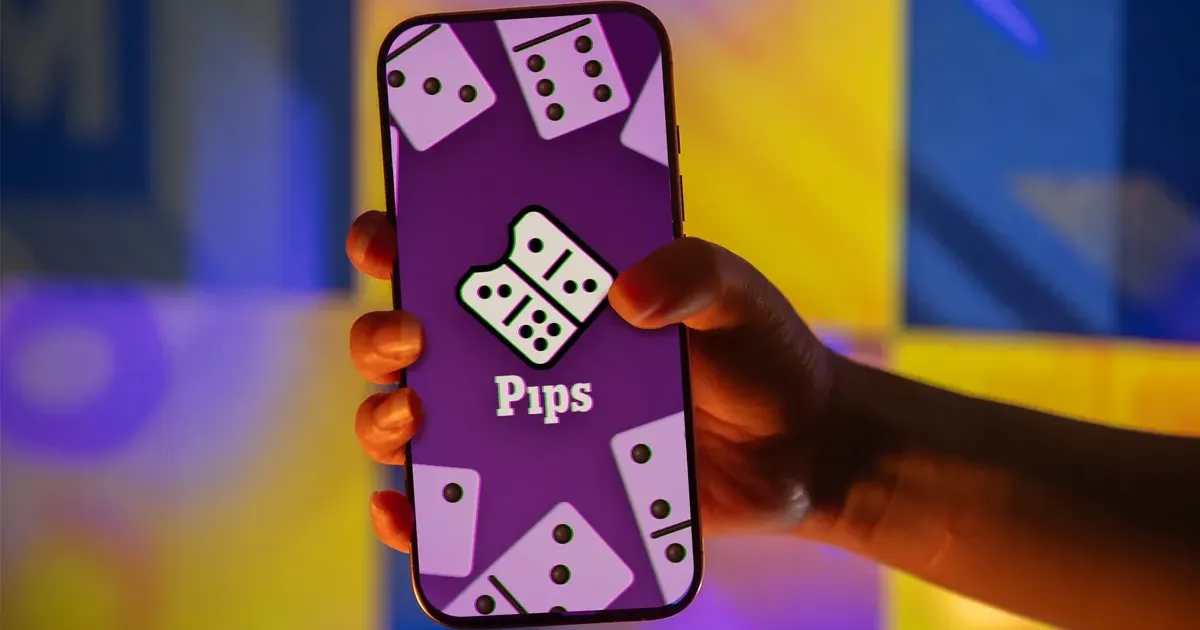
March 22, 2026, marks a major date in the evolution of digital logic for the New York Times as it integrates Pips and Connections: Sports Edition into its core subscription model. Readers waking up in London and New York now focus on these digital grids over traditional headlines. Success for the media giant hinges on this transition from pure journalism to a lifestyle-centric engagement platform. Digital gaming generates a level of habitual interaction that news alone cannot sustain. By focusing on mechanical puzzles and sports trivia, the publication seeks to capture the early morning attention of millions across the globe.

Pips entered the digital ecosystem in August 2025 as a proprietary reimagining of traditional domino logic. It departs from the classic tile-matching game by introducing spatial constraints and mathematical requirements. Players must navigate a grid where tiles connect horizontally or vertically while satisfying color-coded conditions. Today's puzzle specifically focuses on these restrictive zones. For instance, the March 22 board requires a deep understanding of inequality markers and sum-based logic. It is no longer enough to match numbers on a tile side. Instead, players must calculate the total value of pips within designated boundaries to advance through the difficulty levels.

Digital Dominoes Reshape the NYT Games Portfolio

Domino tiles serve as the visual foundation for this specific game. But the complexity lies in the color-coded areas that dictate how those tiles interact with the board. If a space is marked with a single number, every portion of a tile within that space must contribute to a specific sum. Pips mechanics allow for half a tile to sit inside a condition while the other half remains free. This creates a layered difficulty that mirrors the logic found in advanced Sudoku variants. In fact, the March 22 layout utilizes this overlap to prevent simple placement strategies. Every move requires a forward-looking calculation of the remaining tile inventory.

Separately, the game offers various logical conditions like "Equal" and "Not Equal." In an "Equal" zone, every domino half must display the same number of pips. By contrast, the "Not Equal" zones on today's board demand that every tile portion has a unique value. These rules turn the board into a constraint satisfaction problem. Solving it requires the player to isolate the most restricted areas first. Yet, the current software interface remains rigid. If a user becomes stuck, the only option provided by the app is to reveal the full solution. For one, this binary system encourages players to seek external hints rather than trial-and-error within the app.

Mechanical variety keeps the user base from experiencing fatigue.

Less than and Greater than conditions further complicate the March 22 experience. These zones require the sum of all pips in the area to fall below or exceed a specific threshold. Such a system rewards players who can mentalize multiple outcomes simultaneously. Most casual users struggle with the "Greater than" zones because they require high-value tiles that are often needed elsewhere. So, the strategy for today involves conserving high-pip tiles for these specific mathematical hurdles. Experts in the gaming community have noted that this specific release relies on a more aggressive logic than the versions seen earlier this month. Our earlier reporting on Pips drives record digital game engagement covered comparable developments.

Pips Mechanics and March 22 Solving Strategies

Managing the March 22 puzzle requires an initial focus on the uncolored spaces. These areas have no conditions and allow for the placement of tiles that do not fit the mathematical requirements of the colored zones. But ignoring these spaces until the end often leads to a board lock. According to recent user data, the most common failure point occurs when a player runs out of low-value tiles for the "Less than" regions. In turn, a balanced approach to tile distribution is the only way to clear the higher difficulty tiers. Each placement must be weighed against the remaining 16 tiles in the set.

And the difficulty does not end with simple arithmetic. The spatial orientation of the dominoes adds a layer of geometry that many word-puzzle fans find daunting. Because tiles can be placed vertically or horizontally, the number of permutations for a single zone is high. For instance, a four-space "Equal" zone could be filled by two horizontal tiles or two vertical tiles. This choice dictates the available connections for the rest of the grid. In particular, the March 22 puzzle uses a vertical-heavy layout that limits horizontal expansion. Players must adapt to this narrow corridor of logic to find the solution.

Connections can be played on both web browsers and mobile devices and require players to group four words that share something in common.

Precision is the primary requirement for success in these digital environments.

Sports Edition Integration with The Athletic Property

Connections: Sports Edition is a strategic partnership with The Athletic to leverage specialized knowledge. This version of the popular word-grouping game uses the same 16-word grid but focuses exclusively on athletic trivia. Players must identify four categories that link disparate names, teams, or sports-related concepts. Like the original game, this sports variant uses a color-coded difficulty scale. Yellow remains the easiest category, while purple signifies a connection that is often abstract or obscure. For the March 22 grid, the blue and purple categories rely on historical data points that might elude casual observers.

The Athletic provides the editorial depth necessary to keep the categories fresh and challenging. Word pairings today might include names of defunct franchises or specific stadium features. Still, the underlying mechanic remains identical to the standard Connections format. A player gets four mistakes before the game ends. Its limited margin for error forces a cautious approach to selecting groups. Even so, the developers often include red herrings that seem to fit multiple categories. Identifying these traps is the hallmark of an elite player. Today's red herrings involve words that commonly describe both baseball and finance.

Knowledge of professional leagues is not always sufficient. The March 22 puzzle demands an understanding of how sports terminology overlaps with everyday language. In fact, the hardest category today involves words that are parts of different sports equipment. By contrast, the yellow category focuses on a simple list of current NFL team cities. The tiered difficulty ensures that both casual fans and statistics-obsessed readers find value in the daily reset. To that end, the New York Times has successfully created a product that serves two distinct segments of its audience simultaneously.

Digital growth in the games division continues to outpace news subscription growth. The shift has led to a reshuffling of internal resources toward more interactive content. While some critics argue that this distracts from the primary mission of journalism, the revenue figures tell a different story. Games division has become a financial pillar that allows the newsroom to maintain its global reach. Every session in Connections: Sports Edition or Pips contributes to a data profile that helps the company refine its product offerings. The data-driven approach to entertainment is now the standard for the modern media conglomerate.

The Elite Tribune Perspective

Is the pursuit of a daily digital dopamine hit eroding the intellectual rigor of the modern reader? We must ask why a century-old news organization is now primarily defined by its ability to gamify dominoes and sports trivia. The pivot toward Pips and The Athletic branded puzzles is not a diversification of service. It is a surrender to the attention economy. By trapping users in a loop of mathematical sums and word associations, the publication ensures a high volume of traffic at the cost of deep engagement with world events.

We are looking at the final stages of the commodification of the human attention span. The March 22 puzzles are meticulously designed to be just difficult enough to provide a sense of achievement, yet simple enough to be completed during a commute. It is not education. It is managed distraction for a suburban demographic that prefers the comfort of a solved grid to the messy reality of a global crisis. If the most important legacy of a media empire is now a domino variant, the future of informed debate is in a state of managed decline.