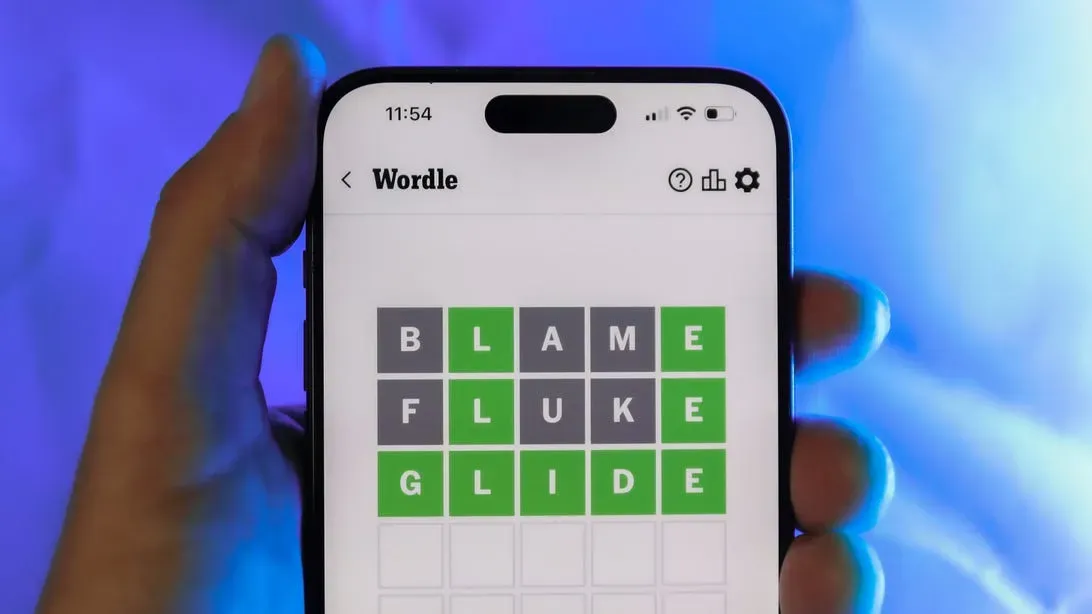
March 21, 2026, the New York Times expanded its digital footprint as millions of global players engaged with the Pips puzzle platform. This growth follows a strategic pivot toward interactive media designed to anchor morning routines. Subscribers seeking more than hard news have turned these daily exercises into a cultural currency that dictates social media debate. Digital engagement metrics show a distinct upward trend since the company introduced its latest domino based mechanics last year.
But the true driver of this momentum is the increasing complexity of the games themselves. Wordle, once a simple five letter guess game, now exists alongside intricate logic puzzles like Strands and Pips. Each new entry into the portfolio aims to capture a specific cognitive niche. Players often spend between ten and thirty minutes on the application before even glancing at the front page headlines. Internal data suggests that puzzle users are 40% more likely to maintain a long term subscription.
Separately, the legacy of Wordle continues to shape the gaming environment four years after its acquisition. The game currently sits at puzzle number 1,737, maintaining a consistency that few digital products achieve in the fast moving mobile market. Casual players often use it as an entry point before migrating to more punishing logic tests. Modern Wordle puzzles have evolved to include more obscure vocabulary and complex phonetic patterns. Strategy guides for the March 21, 2026, session highlight a reliance on vowel heavy starting words to eliminate options early.
New York Times Pips and Domino Logic Mechanics
Pips arrived in August 2025 as a modern interpretation of classic dominoes. It forces users to navigate a grid where tile placement depends on specific numerical and color coded conditions. Unlike traditional dominoes where matching numbers is the sole objective, Pips introduces arithmetic constraints. Players must calculate sums and inequalities in real time to progress through escalating difficulty levels. The game currently lacks a detailed hint system, offering only a total puzzle reveal that resets progress.
Meanwhile, the color coded spaces define the boundaries of each move. A single number in a colored zone requires every side of a tile within that space to add up to that specific figure. This creates a spatial puzzle where only half a tile might be subject to a rule while the other half remains free. Equal zones demand identical values across all domino halves, while Not Equal zones prohibit any repetition. Such mechanical variety prevents the game from becoming a rote exercise in pattern matching.
The main difference between a traditional game of dominoes and Pips is the color-coded conditions you have to address.
For instance, the Greater Than and Less Than conditions introduce a layer of strategic foresight. A player might place a high value tile to satisfy a Greater Than space, only to find they have blocked a subsequent move requiring a low sum. Success requires visualizing the entire grid before committing to the first placement. Daily puzzles on March 21, 2026, featured a particularly dense cluster of sum requirements in the center of the board. Expert players suggest starting from the edges where constraints are often more lenient.
Connections Sports Edition Integration with The Athletic
Connections Sports Edition is a deep vertical integration between the main newsroom and The Athletic. This specialized version of the popular word grouping game targets a demographic that prides itself on encyclopedic sports knowledge. Each 16 word grid requires players to identify four distinct categories of four words each. Mistakes are limited to four per session, adding a layer of tension to every selection. Today's puzzle specifically focused on the details of gymnastics and Olympic history.
According to recent gameplay data, the crossover between sports enthusiasts and puzzle solvers is higher than previously estimated. The Athletic provides the expertise for the categories, while the Games team handles the mechanical balance. The partnership has birthed categories ranging from niche equipment terms to legendary coach names. Many users find the Sports Edition more difficult than the standard Connections because it demands deep domain expertise rather than general lateral thinking. Gymnastics terminology provided the primary hurdle for the March 21, 2026, challenge.
Still, the core mechanics remains familiar to those who play the original version. Words can be shuffled to help players break out of false associations or red herrings. A yellow category typically represents the most straightforward link, while the purple category often involves wordplay or subtle linguistic tricks. The game has become a staple for sports fans who use it to test their recall of historical statistics and roster changes. Today, the connections included specific apparatus and scoring metrics used in international gymnastics competitions.
Wordle Longevity in the 2026 Gaming Market
In fact, Wordle remains the anchor of the entire digital suite despite the arrival of flashier alternatives. Its simplicity is its greatest strength, requiring no tutorial and providing immediate feedback. The March 21, 2026, solution followed the standard five letter format that has remained unchanged since 2021. Most players have developed a rigid starting strategy that they refuse to deviate from regardless of the day's difficulty. The psychological commitment is a factor in the game's endurance.
And the difficulty curve of Wordle has been a subject of intense debate among linguistics experts. Some argue that the pool of recognizable five letter words is shrinking, forcing the editors to choose more obscure terms. Others point to that the game is as much about process of elimination as it is about vocabulary. The social aspect of sharing gray, yellow, and green boxes is still a powerful retention tool. On March 21, 2026, the social media volume for Wordle results showed a 15% increase compared to the previous month.
In turn, the teamwork between these games creates a cohesive ecosystem. A player might start with Wordle, move to Connections, and finish their session with a high difficulty Pips grid. The sequence keeps the user within the company's application for an extended period, increasing the value of their subscription. Advertisers and sponsors have noticed this high intent environment, where users are focused and engaged. The $11 billion valuation of the broader gaming industry highlights why news organizations are pivoting so aggressively toward this model.
By contrast, independent puzzle apps struggle to compete with the sheer distribution power of the New York Times brand. The prestige of appearing in the daily lineup gives these games an air of legitimacy that clones lack. Players feel they are participating in a global event, solving the same riddle as millions of others. The collective experience is a potent antidote to the fragmentation of modern digital media. Every midnight, a new set of challenges resets the clock for a global community of solvers.
Even so, the risk of puzzle fatigue is a constant concern for developers. Introducing a new game like Pips requires careful testing to ensure it does not cannibalize the audience of existing titles. The goal is to provide a complementary experience rather than a replacement. Data from March 21, 2026, indicates that Pips has successfully carved out its own demographic of logic oriented players. Most of these users continue to play Wordle and Connections as well.
So the daily ritual of the digital puzzle persists as a foundation of modern media consumption. It is no longer just about the fun of the game, but about the structure it provides to a busy day. Success in a morning puzzle provides a small but real sense of accomplishment that carries over into other tasks. The New York Times has effectively monetized the human desire for order and resolution. Thousands of players across the United Kingdom and United States now consider these games essential.
Yet the competitive landscape is shifting as other publications attempt to replicate this success. News outlets in London and Washington are currently developing their own proprietary puzzle engines to stem the tide of subscriber losses. They face a steep climb to unseat the incumbent, which has spent years refining its user experience. The March 21, 2026, metrics suggest the New York Times still holds a commanding lead in this sector. Grid based logic and word associations have become the new frontline of the subscription wars.
The Elite Tribune Perspective
Journalism has effectively become the sidecar to a digital casino of cognitive loops. When a venerable news organization derives its primary growth from domino puzzles and word groupings, the definition of a newspaper has fundamentally changed. The New York Times is no longer merely a chronicler of record but a software company that sells dopamine hits disguised as intellectual exercise. The pivot is a survival mechanism, a desperate attempt to stay relevant in an attention economy that has little patience for 5,000 word investigative reports.
Critics might mourn the loss of high-minded priority, but the balance sheet tells a different story. If crossword puzzles saved the print era, then Wordle and Pips are the lifeboats for the digital age. The danger lies in the eventual dilution of the brand where the puzzle page becomes the only page that matters. We are entering an era where the most influential person at a major media outlet is not the Editor-in-Chief but the lead game designer. The shift reflects a broader societal retreat into controlled, solvable problems as the real world becomes increasingly chaotic and irreconcilable.
When the headlines are too heavy to bear, the grid provides a temporary sanctuary where logic still applies and every problem has a definitive answer waiting at the end of four mistakes.