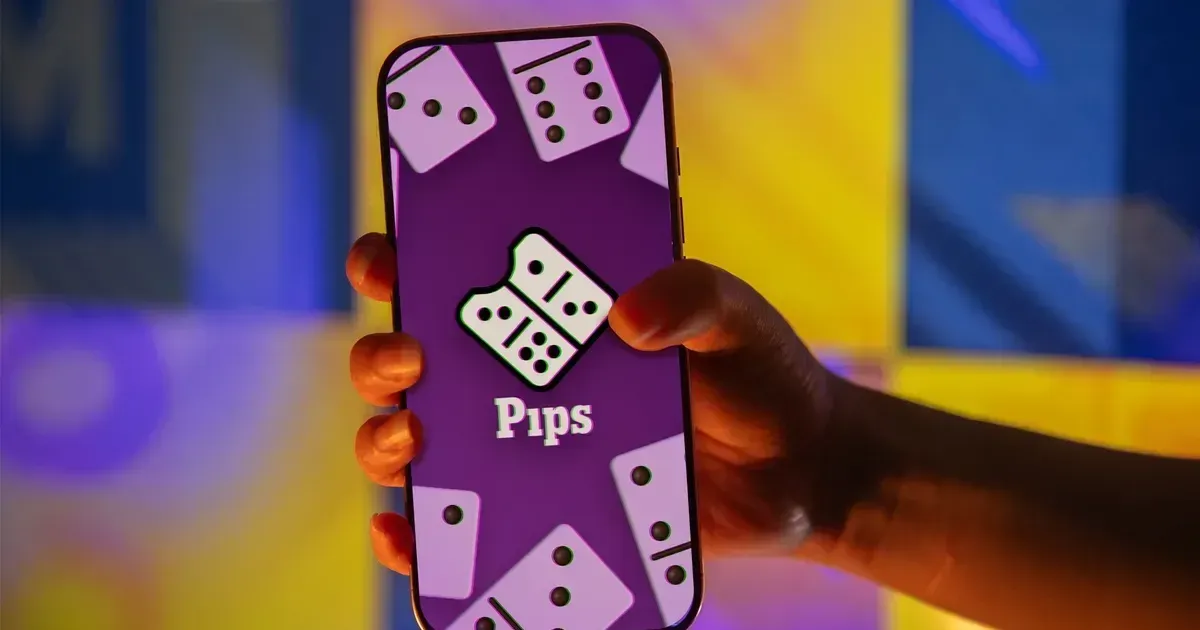
Subscriptions to the legacy publication now rely as much on logic puzzles as they do on investigative reporting. For millions of users, the morning begins not with the front page, but with a series of digital grids and word associations designed to test the limits of cognitive endurance. Pips, the newest addition to the gaming roster, arrived in August 2025 to target fans of spatial reasoning. Unlike the traditional crossword, which relies on a broad vocabulary, Pips demands mathematical precision and an understanding of geometric placement. Players working through the day's games are showing how deeply the New York Times puzzle suite now shapes daily subscription habits. The game provides a single-player spin on dominoes where color-coded conditions dictate how tiles interact across a virtual board. Logic supersedes luck in the modern digital arena. Players often find themselves trapped in the higher difficulty levels of Pips because the interface offers limited assistance. For now, the software only provides an option to reveal the entire puzzle, which terminates the current session and forces a reset. This lack of a detailed hint system has given rise to a secondary market of guides and strategy breakdowns for those unwilling to forfeit their progress.
Pips and Connections Keep Players Busy
Color-coded spaces define the primary challenge within Pips. Each color is a specific rule that must be satisfied by the pips on the domino tiles. If a space is marked with a single number, all sides of the tiles occupying that space must sum to that exact figure. It is common for only one half of a tile to fall within a restricted area, forcing the player to calculate the impact on adjacent, non-coded zones. Specific conditions include "Equal," where every domino half in the space must share the same value, and "Not Equal," which demands total numerical diversity. Users must also handle "Less than" and "Greater than" constraints. These rules transform a simple tile-laying exercise into a complex exercise in arithmetic. Success requires a grasp of both arithmetic and geometry. The touching tiles don't necessarily have to match. But the absence of color coding does not mean a lack of strategy. Blank areas offer a reprieve where any tile can be placed, yet these spaces often serve as essential bridges between highly restricted zones. Professional players suggest that the key to mastering Pips lies in working backward from the most constrained spaces. Solving for an "Equal" requirement first can often reveal the only viable paths for the rest of the board. Standard dominoes used in the game follow the traditional zero-to-six pip format. The New York Times has even experimented with larger tile sets for weekend editions. These extended puzzles increase the mathematical permutations exponentially. A single misplaced three-pip half can cascade through the entire grid, rendering the final segment unsolvable. Meanwhile, the specialized version of Connections continues to use the deep archives of The Athletic. This sports-centric variant of the popular word-grouping game launched to capitalize on the publication's $550 million acquisition of the sports news site. It requires players to find common threads between 16 disparate words, ranging from names of obscure stadiums to historical player statistics. Categories in the March 14 edition lean heavily into professional golf. While the standard version of Connections might group words by linguistic patterns or synonyms, the Sports Edition demands particular historical and technical knowledge. A player might see four words that all look like baseball terms, only to discover they refer to various scoring methods in the Ryder Cup. The difficulty tiers are color-coded, with yellow representing the most straightforward associations. Errors carry a heavy price in this format. Players are permitted only four mistakes before the game ends and the solutions are revealed. This high-stakes environment mirrors the competitive nature of the subject matter itself. Shuffling the board remains the only sanctioned way to break a mental block without risking a strike. The difficulty curve is steep.
Gaming revenue now accounts for a significant portion of the total digital intake for the company. By locking puzzles behind a paywall or using them as lead magnets, the publication has created a daily habit that transcends the news cycle. Pips, Connections, and Wordle form a trifecta of engagement that keeps users within the app system for longer durations. Each new game is a calculated move to capture a different demographic of the puzzle-solving public.
Yet the shift toward gaming has its detractors. Some media analysts argue that the focus on digital distractions dilutes the primary mission of a news organization. The internal gaming studio now rivals the size of some of the smaller reporting bureaus. The investment in Pips alone involved a multi-month development cycle to ensure the mechanics felt native to a touch-screen interface. Revenue figures from the last fiscal quarter show a 12% increase in digital-only subscriptions. Analysts attribute much of this growth to the expanded puzzle suite. When a user fails a Connections board, they are often prompted to share their results, creating a viral marketing loop that costs the company nothing. The social capital of a perfect game is a powerful motivator for daily logins.
Success in the digital space requires constant iteration. The move to include piecemeal hints in third-party guides proves that the demand for these games far exceeds the difficulty most users can handle. By maintaining a high barrier to entry, the New York Times ensures that its games remain a status symbol for the intellectually curious. The March 14 puzzles are proof of this ongoing strategy of high-friction engagement.
Puzzle Habits Are Product Strategy
Why are we pretending that a digital version of dominoes or a sports trivia grid constitutes a meaningful intellectual exercise? The New York Times has perfected the art of the complex distraction, wrapping basic pattern recognition in the cloak of prestige journalism. We are not becoming smarter by solving Pips; we are simply being trained to stay inside a particular system to justify a monthly recurring credit card charge. The transition from the Gray Lady to the Digital Arcade is complete, and the primary casualty is the focused consumption of actual news.
These puzzles are designed as slot machines for the overeducated, providing a hit of dopamine that masks the hollowing out of traditional reporting. If the goal of a newspaper is to inform, then the pivot to gaming is an admission of defeat. It is a confession that the truth is no longer enough to keep the lights on. We should stop celebrating the cleverness of the "Pips" mechanics and start questioning why a world-class newsroom is spending its capital on dominoes while global stability fractures.
The grid is a cage, and we are paying for the privilege of sitting inside it every morning.