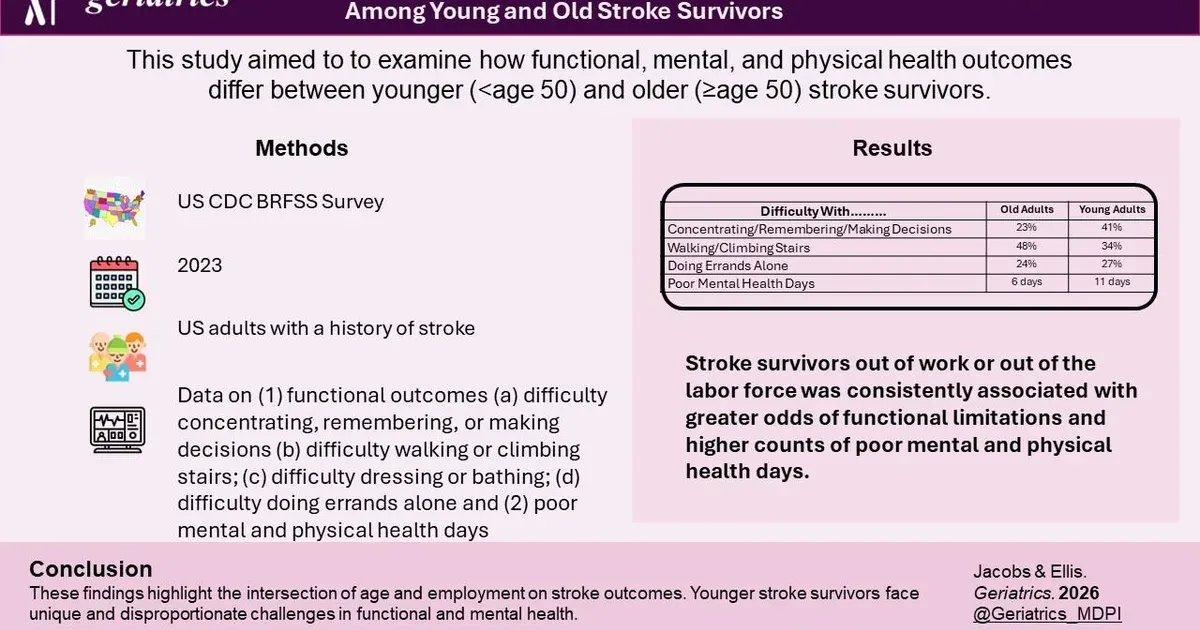
Younger stroke patients often survive the event and then discover that survival was only the first problem. The visible emergency may end in the hospital, but post-stroke cognitive decline can reshape work, parenting, memory, attention and identity for years. Mental health after stroke is not a secondary issue. It is part of the injury burden. By March 11, 2026, the evidence around younger survivors demanded a much wider definition of recovery.
Physical Recovery Can Mislead
A patient who walks out of rehabilitation may still be unable to organize tasks, manage fatigue, process language quickly or regulate mood. Those deficits are easy for employers, insurers and even relatives to underestimate because they are less visible than paralysis or speech loss. That invisibility creates a cruel expectation: the survivor looks better, so the world assumes the crisis is over.
Work Becomes a Second Injury
Younger adults often face mortgages, children, student debt, careers and caregiving duties when stroke interrupts their lives. If they cannot return to work at the same pace, the financial damage can compound the medical damage. Unemployment can deepen depression, reduce access to insurance and isolate people from the routines that once organized their days.
Mental Health Care Is Not Optional
Depression, anxiety and cognitive frustration should be treated as predictable risks, not personal weakness. Screening has to continue after discharge because the emotional crash may arrive when the patient tries to resume ordinary life and realizes ordinary life no longer fits. Families need guidance too. They are often asked to absorb personality changes, fatigue and executive dysfunction with little training.
Rehabilitation Needs a Longer Horizon
Health systems are better at responding to the emergency than supporting the decade after it. Younger survivors need neuropsychological testing, occupational therapy, speech support, return-to-work planning and benefits counseling. A short rehabilitation window may satisfy an insurer, but it rarely matches the complexity of rebuilding a life. Employers also need a better model for return. A younger survivor may need reduced hours, task redesign, memory supports or a phased schedule. Treating those needs as inconvenience rather than rehabilitation can push capable people out of the workforce unnecessarily.
The economic stakes are large because younger survivors may live for decades with the consequences. Weak support turns a medical event into a long-term income, housing and caregiving crisis.
The Policy Failure
The severe conclusion is that stroke care still treats too many younger survivors as medically finished when they are socially and cognitively stranded. Counting survival rates is not enough. The real measure is whether people can think, work, parent, participate and live without being quietly abandoned. A system that saves the brain but neglects the mind, job and family has completed only part of the assignment.
The age of the patient changes the scale of the damage. A younger survivor may have decades of work ahead, children at home and financial obligations that older rehabilitation models never fully considered. Doctors also need to name cognitive symptoms early. Memory lapses, slower processing and mood shifts are not private failures; they are clinical consequences that deserve follow-up, documentation and practical support. Insurers often treat improvement as a reason to end care. For younger stroke patients, improvement should be the start of a longer plan, because returning to a job, a family role and a social life is different from leaving a ward.
Primary care teams also need clearer handoffs after the specialist phase ends. A younger survivor can pass a basic neurological check and still need help with medication routines, driving decisions, childcare strain and the cognitive load of returning to deadlines. Public health messaging has to make younger survivors visible. Stroke campaigns often lean on older-age imagery, which can leave people in their thirties, forties and fifties feeling like exceptions rather than patients with predictable needs. Neurologists can help by treating return-to-work planning as part of the care path rather than a paperwork afterthought. Without that bridge, the patient is left to explain an invisible disability to employers who may only understand visible impairment.
What Real Recovery Requires
Real recovery requires long-term cognitive care, mental health support and work planning, not a discharge summary that treats survival as enough.