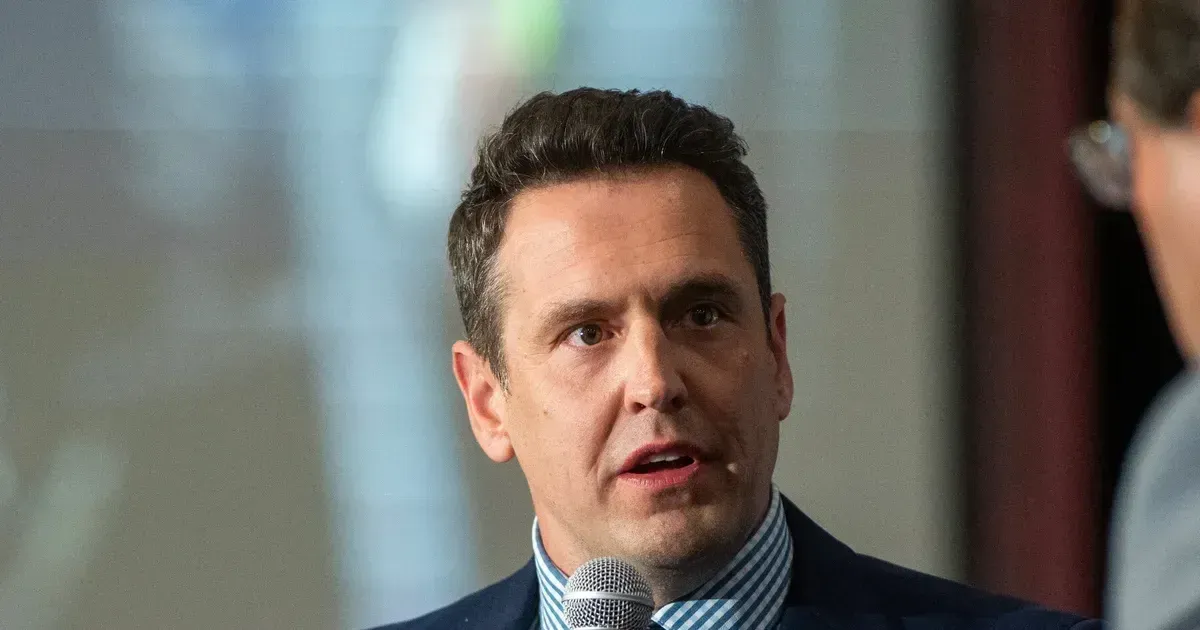
Zach Lahn secured the Republican nomination for Iowa governor by unseating a sitting congressman who carried President Donald Trump's endorsement. The victory provides a rare example of a grassroots-aligned challenger overcoming the institutional weight of a presidential pick. Hawkeye State voters delivered the result on June 2, 2026, during a primary cycle that has otherwise favored candidates with national backing.
Representative Randy Feenstra conceded the election to Lahn after returns showed a consistent lead for the businessman. The outcome is a disruption for the former president, whose endorsement streak has been nearly absolute in recent contests across the Midwest. Local officials noted that turnout in key counties shifted toward Lahn during the final hours of polling.
Lahn based much of his campaign on an alignment with the Make America Healthy Again movement, often referred to as MAHA. This faction of the GOP emphasizes food safety, agricultural transparency, and health policy reform. Voters in rural districts appeared to favor this messaging over the more traditional conservative platform offered by Feenstra. Reports from Des Moines suggest the margin of victory surprised both state and national party leadership.
Trump-backed Rep. Randy Feenstra lost the Republican nod for Iowa governor to businessman Zach Lahn, marking a rare endorsement defeat for the president in a GOP primary this cycle.
Success in this primary places Lahn in a competitive general election against Rob Sand, the Democratic nominee. Sand, currently the state auditor, won his own primary with comfortable margins and has established a reputation for scrutinizing state expenditures. Political analysts expect the contest for the governor's mansion to be unusually competitive for a state that has trended reliably Republican in the last decade.
President Trump had previously maintained a dominant record of picking winners in 2026 Republican primaries. While he remains the influential figurehead of the party, the Iowa result indicates that specific local conditions can still outweigh national directives. Voters in the state have historically shown a streak of independence when faced with outside pressure in gubernatorial races.
Feenstra, who has served in the U.S. House, struggled to reconcile his federal voting record with the populist demands of the MAHA-aligned base. His campaign focused on legislative accomplishments in Washington, whereas Lahn prioritized issues that connected with local farmers and families concerned about industrial food standards. Exit polling indicated that Lahn won a plurality of first-time primary voters.
General Election Stakes
Democrats see the Lahn victory as an opening to reclaim the governorship in November. Sand has already begun tailoring his message to appeal to moderate Republicans who may feel alienated by the shift in the state party's ideological center. The general election will test whether Lahn's specific brand of populism can maintain its momentum when facing a broader electorate. Campaigns for both candidates are already preparing for a series of debates focused on Iowa's agricultural economy.
Republicans at the state level must now unite behind a nominee who campaigned against the party's established leadership. Internal polling within the state GOP suggests that while Lahn has strong support among activists, he still needs to consolidate the donor class that backed Feenstra. Party officials announced they would hold a unity event in the coming weeks to bridge the divide between the two factions.
National Republican Fallout
Iowa became the focal point of national political discussion as soon as the networks called the race for Lahn. The biggest news outlets categorized the result as a setback for the president's influence over state-level executive branches. The final tally confirmed that Lahn carried 62 of Iowa's 99 counties, including several heavily populated suburban areas around Cedar Rapids.
Lahn's Win Weakens the Certainty of Trump Endorsements
A single primary loss in Iowa does not redefine a national political movement. The Iowa result suggests that the former president's influence, while vast, is not a guarantee of victory when a challenger presents a coherent, alternative populist vision. Lahn did not run against the president's supporters; he ran as a more specific evolution of their grievances, focusing on health and agriculture rather than national culture wars.
Institutional power in the Republican Party is currently navigating a period when endorsements are no longer the final word for the base. Feenstra possessed every traditional advantage, including federal experience and the highest possible endorsement, yet he could not hold the line against a businessman with a hyper-local message. The result creates a blueprint for other challengers in the remaining primary states to bypass national hierarchies.
Lahn now faces the difficult transition from a primary insurgent to a general election candidate. He must convince a broader general electorate in Iowa that his MAHA-aligned platform is a viable governing strategy. If he succeeds, the Republican Party may see a structural shift toward health-centric populism. Failure in November would likely be blamed on the rejection of the party's traditional wing.