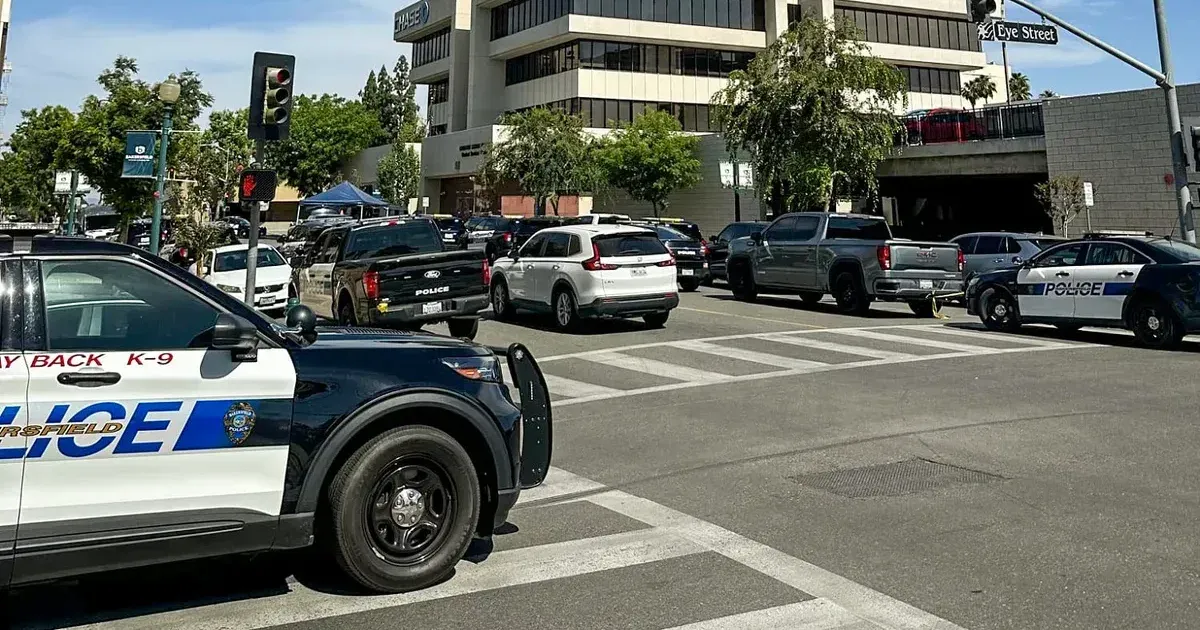
Bakersfield police officers cordoned off several downtown blocks as an armed standoff unfolded inside a financial institution. The bank standoff gave local police a public-safety crisis inside a commercial corridor. Negotiators had to slow the scene down. Nearby businesses also needed clear instructions. A man claiming to possess an explosive device entered a branch of JPMorgan Chase and remains barricaded inside. The incident began on June 2, 2026, when authorities received reports of a potential threat at the location. Police confirmed a man is currently holding an unknown number of people against their will while suggesting he has a bomb strapped to his torso.
Sgt. Eric Celedon of the Bakersfield Police Department stated that the individual has barricaded himself within the facility. Emergency dispatchers received the first calls during the Tuesday afternoon business hours. Officers immediately established a secure perimeter around the building located in the city center. Nearby retailers and offices received orders to evacuate as tactical units moved into position. Public safety remains the primary concern for commanders managing the negotiation process.
Initial reports from the scene described a chaotic environment as patrons fled the area. Investigators confirmed the situation involves a bomb threat that forced the closure of several arterial roads. Both local police and specialized bomb disposal units arrived to assess the validity of the explosive claim. The immediate focus centered on the life safety of those caught inside the branch and the officers positioned around the scene. Communication with the suspect has been intermittent since the standoff started.
Witnesses observed heavy police presence near the intersection where the bank is situated. Officers used social media platforms to alert the public and discourage onlookers from approaching the active scene. Law enforcement officials have not yet identified the suspect or his possible motivations for the seizure. Tactical teams in protective gear were seen staged behind armored vehicles. The department continues to treat the threat of a chest-mounted explosive as a credible danger.
Tactical Response and Downtown Evacuations
Crisis negotiators attempted to establish a stable line of dialogue with the barricaded individual throughout the afternoon. Sgt. Eric Celedon noted that the exact number of hostages has not been finalized by intelligence teams on the ground. Specialized units from various agencies joined the effort to secure the surrounding architecture. Several buildings adjacent to the JPMorgan Chase branch were cleared of all personnel to minimize potential casualties from an explosion. Police K-9 units and drone operators provided overhead surveillance of the bank entry points.
Local businesses suffered immediate disruptions as the security zone expanded to cover multiple city blocks. Municipal transit authorities rerouted buses away from the downtown core to enable emergency vehicle movement. Bakersfield Police Department units maintained a visible presence at every intersection leading to the bank. Command staff established a staging area for family members of those trapped inside the building. Security protocols for the bank branch were bypassed by the suspect during his initial entry.
Law enforcement personnel focused on gathering floor plans and internal camera feeds to monitor the suspect's movements. Footage from within the bank allegedly shows a man with an object strapped to his chest, which supports the earlier bomb threat reports. Officers remained in a defensive posture while awaiting further instructions from the crisis management team. No injuries have been reported among the hostages at this stage of the operation. Command units emphasized that patience is necessary to reach a peaceful resolution.
Threat Assessment and Suspect Status
National news teams, including Carter Evans, reported that at least one person is confirmed to be held by the suspect. The presence of a potential explosive device complicates the standard tactical entry procedures for the Bakersfield Police Department. Every movement near the bank windows is being scrutinized by police sharpshooters positioned on nearby rooftops. Investigators are treating the reported body-worn explosive as a major tactical risk while they work to identify the suspect and verify the device.
"An unidentified man entered the bank and is currently barricaded with an unknown number of people," said Sgt. Eric Celedon during a brief update to reporters.
Nearby residents expressed concern over the length of the standoff as evening approached. Most downtown government offices sent employees home early to avoid the restricted zones. Tactical teams rotated personnel to ensure that those on the front line remained alert during the prolonged negotiation. The suspect has not released any lists of demands to the public or the media. Police have successfully cleared the immediate sidewalk areas of all pedestrian traffic.
Negotiation teams are trained to look for signs of fatigue or erratic behavior from the subject. Each hour the standoff continues increases the psychological pressure on everyone inside the facility. Medical teams and ambulances remain on standby two blocks away from the primary site. The department has refused to speculate on the suspect's mental state until a direct link is established. Final tallies of the bank's internal staff and customers are being cross-referenced with employee records.
A Possible Body-Worn Device Limits Police Options
Urban financial centers present specific challenges for rapid-response tactical teams when explosive threats enter high-traffic areas. The difficulty of neutralizing a suspect with a body-worn device without triggering a detonation limits the options available to law enforcement. Standard standoff protocols often fail when the assailant demonstrates a willingness to remain stationary within a hardened structure like a bank vault or lobby. This particular event highlights the vulnerabilities of open-access retail banking branches to determined individuals. Negotiators must balance the psychological needs of the suspect against the physical safety of the hostages.
Security experts often point to the physical layout of modern banks as a factor in how these standoffs develop. Large glass windows and open floor plans provide suspects with clear lines of sight but offer little cover for responding officers. The integration of real-time video surveillance into police command centers has improved the situational awareness for teams outside. High-resolution feeds allow for the assessment of the explosive's construction from a distance. Future safety mandates may require more stringent entry screening in high-density urban branches to prevent the introduction of hazardous materials. The standoff in Bakersfield is a data point for national security agencies reviewing bank protection strategies.