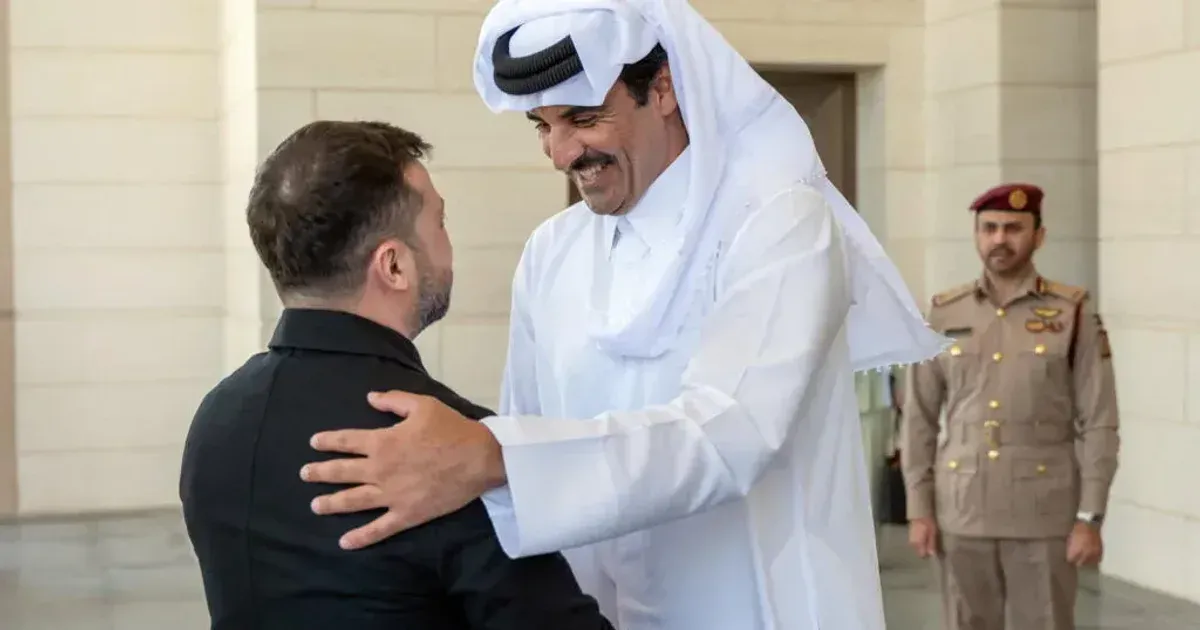
Zelensky is trying to sell Ukraine's battlefield knowledge as a diplomatic asset. The Gulf trip gives Kyiv a way to talk about drones, air defense and Russian pressure with governments that also watch Iran closely. That pitch turns wartime experience into a foreign-policy product. President Volodymyr Zelensky arrived in the Persian Gulf to market Ukrainian military intelligence and defense strategies to regional powers. This diplomatic tour began on May 3, 2026, highlighting a shift in how Kyiv leverages its battlefield experience. Senior officials in the delegation indicated that Gulf monarchies are specifically interested in Ukraine’s success against Iranian-manufactured loitering munitions. For Kyiv, the pitch is also an attempt to convert battlefield credibility into diplomatic leverage with governments that have previously balanced ties between Washington, Moscow and Tehran. The Gulf audience matters because those governments buy advanced defense systems and maintain working relationships with both Western capitals and Moscow. Zelensky is asking them to treat Ukraine as a source of operational lessons, not just a country seeking aid. That message also helps Kyiv answer a diplomatic weakness: Ukraine needs partners outside Europe to see the war as relevant to their own security calculations. Gulf states may not align fully with Kyiv, but they understand drone warfare, air defense and energy risk.
Intelligence reports suggest that the widening war involving Iran has forced Tehran to prioritize its own domestic defense needs. Dwindling shipments of drones and ballistic missiles once destined for Russian front lines have shifted the tactical balance. Military analysts in Kyiv observe that supply disruptions limit Moscow’s ability to sustain high-intensity aerial bombardments.
Gulf States Seek Ukrainian Expertise in Drone Defense
Strategic partnerships are evolving as Ukraine provides real-time data on drone swarm patterns. These technical briefings offer Gulf states a blueprint for countering similar threats in their own airspace, specifically focusing on the Shahed series loitering munitions. Regional defense officials met with Zelensky to discuss training programs and practical lessons from Ukraine's air-defense experience. Electronic warfare specialists who have spent years disrupting the navigation systems of Iranian-made hardware lead these initiatives.
Russian military leaders have long relied on Iranian drones to overwhelm Ukrainian air defenses. Low-cost assets allowed the Kremlin to conserve its more expensive cruise missiles for high-value targets. Tehran, however, is now retaining these units for its own defense against regional rivals. Any sustained disruption in those deliveries could reduce the pressure on Ukrainian cities and frontline air defenses.
Logistical voids are forcing Moscow to rethink its frontline strategy, while Ukrainian delegates emphasize that their military experience is grounded in battlefield experience. Records show three years of data on how Iranian hardware performs under heavy electronic jamming. Sharing this information allows Kyiv to secure financial and political support from nations that were once neutral in the Eastern European conflict.
Diverted Russian Resources and the Path to Negotiation
Diplomatic circles in Riyadh and Abu Dhabi are buzzing with talk of potential de-escalation. Some observers believe the reduction in Russian offensive capabilities could force a more realistic negotiation stance from President Vladimir Putin. Zelensky hinted during a press briefing that the pressure on Russia’s military industrial complex is mounting daily. Diplomatic circles, however, remain cautious about the timeline for peace.
Ukraine holds unusual insights into modern attrition that few governments can offer right now, and that expertise is a real asset in negotiations for long-term security guarantees. This depth of knowledge allows Ukraine to focus on high-tech defense rather than traditional attrition.
Energy markets are also reacting to the shifting dynamics in the Gulf. Zelensky’s presence in a region historically dominated by Russian energy interests suggests a bold move to realign energy security with military cooperation. Defense officials are discussing how Ukrainian electronic-warfare lessons could inform future interceptor purchases, sensor networks and training programs. The practical value is strongest against low-altitude threats that have already shaped the war over Kyiv and Kharkiv.
Prospects for a ceasefire persist despite the ongoing intensity of ground operations in the Donbas. Moscow faces a strategic deficit if it cannot replace the Iranian loitering munitions; its tactical advantage in the East could evaporate. Peace talks, which stalled in early 2026, are now being discussed in back-channel communications between international mediators. Diplomats believe the loss of Iranian support is a major factor in shifting the Kremlin's calculation. Western observers are monitoring the situation to see if the Kremlin will pivot toward a negotiated settlement, though future weeks will determine whether Russian vulnerability leads to formal talks.
Zelensky Is Trading Drone-War Experience for Gulf Influence
Can a secondary conflict in the Middle East provide the primary solution for Eastern Europe? The current realignment of military resources suggests that the war in Ukraine is no longer an isolated European struggle but a node in a global logistical network. As Iran hoards its drone technology for domestic security, Russia is stripped of the cheap, expendable ordnance that allowed it to conduct a war of attrition without depleting its high-end cruise missile stocks. The shift forces a moment of vulnerability for Moscow that diplomats must exploit before new supply lines, perhaps through other proxy states, are established.
Zelensky’s pivot to the Gulf is more than a sales pitch; it is a strategic attempt to isolate Russia from its few remaining defense partners. By offering proven electronic warfare data, Ukraine creates a benefit that outweighs the benefits of maintaining neutral ties with a distracted Kremlin. If Ukraine can successfully trade its military experience for Gulf political influence, the resulting pressure on Moscow could finally break the diplomatic stalemate. The tactical void left by Iranian hardware is the clearest opening for a ceasefire since 2024.