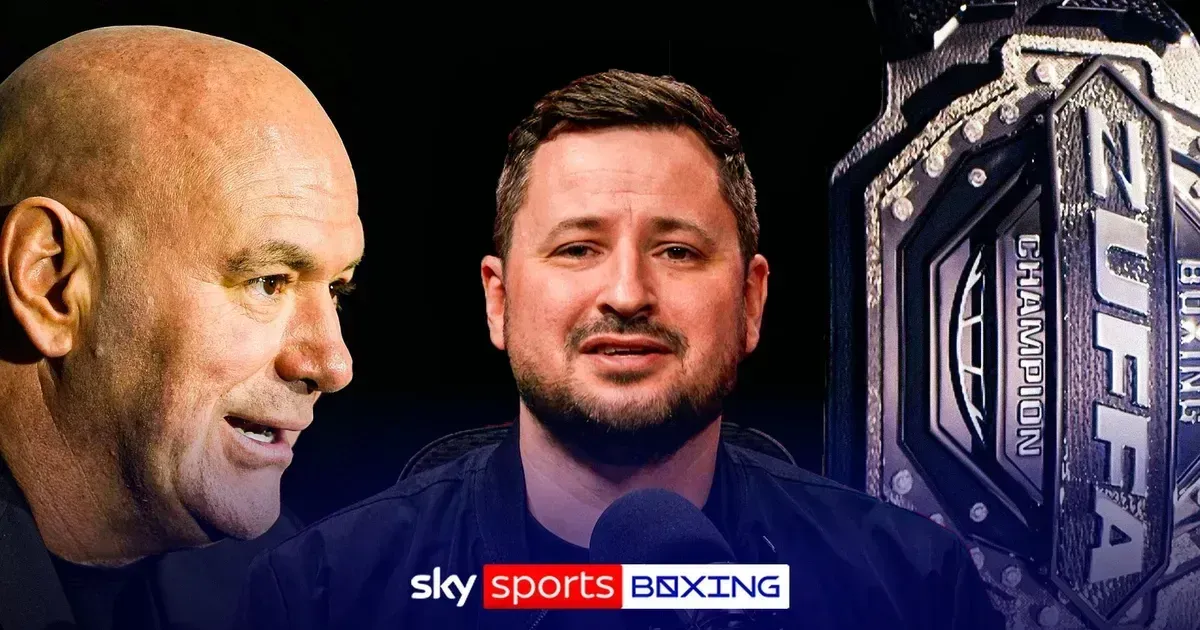
Sky Sports executives finalized a multi-year partnership with Zuffa Boxing on March 18 to dominate the combat sports market in the United Kingdom and Ireland. Leaders from both organizations gathered in London to sign an agreement that effectively merges the production expertise of the UFC with the massive reach of Britain's largest sports broadcaster. Many observers view this as a direct response to the fracturing of the boxing industry over the last five years. But the real impact lies in the technical integration of Zuffa's centralized promotional model into a traditional television structure. Zuffa Boxing's broadcast deal changed the combat-sports distribution map. Sky Sports Boxing previously leaned on independent promoters like Matchroom and BOXXER to fill its calendar. Under this new structure, Dana White and his team will exercise direct control over matchmaking, production, and fighter branding. The initial contract length spans five years and includes a commitment to twelve primary events annually. Andy Scott led the coverage for the network, explaining that the deal involves not only broadcasting fights. In fact, Zuffa plans to rely on its modern facilities in Las Vegas to provide supplementary content that mimics the successful UFC Embedded series. Broadcasters often struggle to maintain audience engagement between major pay-per-view cards. Zuffa intends to solve this by flooding the Sky Sports digital platforms with 24-hour access to training camps and weigh-ins. This strategy mirrors the one that transformed the UFC into a multi-billion-dollar enterprise. It removes the reliance on external agents to promote the athletes. Every fighter signed under the Zuffa Boxing banner will effectively become an employee of a unified system. Sky Sports will provide the platform while Zuffa provides the operational engine. British boxing has long been defined by fierce rivalries between promoters like Eddie Hearn and Frank Warren. Even so, the entry of Zuffa Boxing introduces a level of capital and production value that these independent outfits rarely match. Industry analysts estimate the deal is worth approximately $100 million in guaranteed rights fees and production subsidies. Sky Sports is betting that fans are tired of the constant delays and failed negotiations that plague traditional boxing. By contrast, the UFC model ensures that the best athletes face each other on a predictable schedule.
Fighters who sign with Zuffa will likely lose some of the autonomy they enjoyed under the old guard. Yet they gain access to a global marketing machine that few can rival. London will serve as the European hub for these operations. Sky Sports Boxing has maintained a presence in the ring for decades despite losing key partners to rival streaming services. To that end, the network is framing this partnership as a continuation of its legacy rather than a desperate pivot. Meanwhile, the integration of Zuffa's data-driven approach will change how viewers consume the sport. Real-time striking statistics and biometric data will likely become standard features of the broadcast. For instance, advanced camera angles and immersive sound design from the UFC Apex facility will be adapted for the boxing ring.
These technical upgrades seek to lure a younger demographic that has largely migrated to social media highlights. The goal is to make every round feel like a high-stakes cinematic event. Boxing is a difficult business to centralize due to the various sanctioning bodies and conflicting interests.
Dana White and the UFC Model Adaptation
Dana White has spent the better part of a decade teasing a move into the boxing world. Separately, his success with the UFC provides a blueprint for how a singular authority can stabilize a volatile sport. Critics often point to the Ali Act in the United States as a barrier to this kind of centralization. However, the United Kingdom has different regulatory requirements that allow for more simplified promotional control. Zuffa plans to use this regulatory flexibility to create a league-style format for its roster. In turn, this could lead to a world rankings system that actually dictates who fights whom. No longer will champions be able to cherry-pick opponents to protect their undefeated records. The Zuffa Boxing rankings will be the ultimate arbiter of value. White has expressed a desire to bring order to what he frequently describes as a broken industry.
Production quality remains the primary selling point for the new partnership. For one, the Sky Sports broadcast team will work alongside Zuffa's award-winning editors to create a cohesive visual style. This collaboration will likely result in a faster-paced show with fewer lulls between bouts. UFC fans are accustomed to a relentless pace that keeps viewers from changing the channel. Boxing has historically suffered from long delays between the undercard and the main event. Zuffa Boxing intends to eliminate these gaps by using a strict timing protocol. Producers will have the power to move bouts along to fit tight television windows. The broadcast will start and end with military precision.
"Zuffa Boxing and Sky Sports are ready to revolutionize the way people watch and experience this sport in the UK and beyond," Scott said.
Strategic Impact on Matchroom and DAZN Rivalry
Sky Sports lost its exclusive deal with Matchroom Boxing in 2021 when Eddie Hearn moved his stable to DAZN. Still, the network was still a major player through its partnership with BOXXER. This Zuffa deal puts Sky back in a position of perceived dominance over its streaming rivals. DAZN has burned through billions of dollars to secure top-tier talent. By contrast, Sky Sports uses its existing satellite and fiber infrastructure to reach millions of households without the need for additional apps. The battle for the British boxing fan is now a fight between traditional television scale and tech-led disruption.
Zuffa Boxing provides the brand recognition that Sky needs to reclaim its title as the home of boxing. Most insiders believe this will trigger a new round of bidding wars for high-profile free agents. Competition for the attention of casual fans is fiercer than ever. And the arrival of a UFC-backed product in the boxing ring creates a massive problem for smaller promoters. These independent groups cannot compete with the cross-promotional power of a company that also owns the largest mixed martial arts organization in the world. Sky Sports will likely use its Premier League broadcasts to drive traffic toward Zuffa Boxing events. That kind of horizontal integration is something that niche boxing promoters simply cannot replicate.
For instance, a heavyweight title fight could be promoted during the halftime show of a Manchester United match. The sheer volume of eyeballs available to Sky is its greatest weapon. Traditional boxing business models may not survive this onslaught.
Future Production Standards for Sky Sports Combat Coverage
Investment in virtual reality and augmented reality is expected to follow the initial launch phase. In fact, Sky Sports has already experimented with 360-degree cameras in its football coverage. Zuffa Boxing events will likely serve as the testing ground for similar innovations in combat sports. Viewers might soon be able to choose their own camera angles from their mobile devices. Separately, artificial intelligence to generate real-time betting odds during the fight is also on the horizon. Betting companies have long sought deeper integration with live sports broadcasts. Zuffa's existing relationships with major gaming firms will enable this transition smoothly. The broadcast will be an interactive experience rather than a passive one.
Sponsorship revenue is another area where Zuffa expects to see significant growth. Yet the shift toward a corporate-heavy aesthetic might alienate some purists who prefer the gritty atmosphere of old-school boxing gyms. Zuffa events often feel like high-gloss entertainment spectacles rather than sporting contests. The polish is exactly what Sky Sports advertisers are looking for. Brands prefer the predictability of a well-run organization over the chaos of independent promotions. In turn, the increased revenue from blue-chip sponsors will fund higher purses for the athletes. While the top stars may earn less than they would on a one-off pay-per-view, the average fighter will likely see a more stable income. Financial stability has been a rare commodity in professional boxing.
Success will be measured by subscription growth and pay-per-view buy rates.
Combat Sports Distribution
The deal gives Zuffa Boxing distribution, but distribution is not legitimacy. Boxing audiences have seen enough launch promises to know that a broadcast partner cannot fix weak matchmaking, confusing titles or thin undercards. If the Sky agreement becomes another rights package without a clear sporting ladder, the brand will have bought visibility without earning trust.