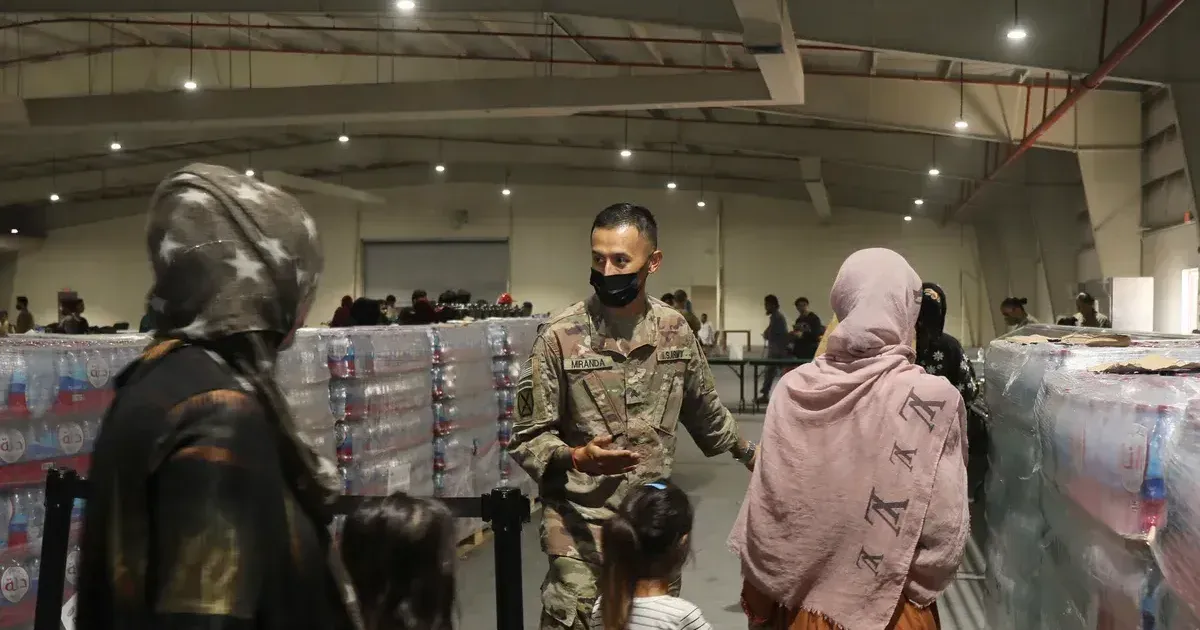
State Department officials on April 23, 2026, notified Afghan allies that their options for permanent residency have narrowed to relocation in the Democratic Republic of Congo or repatriation to Taliban-controlled territory. Afghan refugees who previously worked as interpreters and security contractors for the United States military find themselves caught in a bureaucratic bottleneck five years after the fall of Kabul. Initial assurances of a direct path to American citizenship have faded as processing delays and shifting geopolitical priorities stall the Special Immigrant Visa program. Thousands of former contractors remain in transit centers across the Middle East and Europe, waiting for final clearance that never arrives.
Promises made during the chaotic withdrawal of 2021 suggested that those who risked their lives for Western forces would find sanctuary within American borders. Officials now admit that many applicants do not meet the stringent evidentiary standards required for the SIV, despite their documented service with the Pentagon. Transitioning these families to third countries has become the primary strategy for the Trump administration as it seeks to clear transit sites in Qatar and Albania. Democratic Republic of Congo represents the latest partner in a series of controversial resettlement agreements designed to offload the mounting refugee population.
Security conditions in the Democratic Republic of Congo present a substantial risk for families already traumatized by conflict. Eastern regions of the nation continue to struggle with insurgent violence from groups like the M23 and the Allied Democratic Forces. Afghan families, who often speak only Dari or Pashto, face immense cultural and linguistic barriers in a country where French and Swahili dominate public life. Relocation offers include a one-time financial stipend and temporary housing, but long-term integration supports are virtually non-existent.
State Department Proposes Congo as Resettlement Hub
Washington formalized the agreement with Kinshasa as part of a broader effort to reduce the 80,000-person backlog of Afghan applicants. Applicants who fail to pass the secondary security screening are told they are ineligible for American entry but can choose between the African resettlement or a flight back to Kabul. Most contractors view this as a choice between two different types of existential danger. Records indicate that only a small fraction of those offered the Congo option has accepted, preferring to wait in legal limbo rather than relocate to an unstable region.
According to a statement from the State Department, "resettlement in third-party nations provides a viable path for those unable to meet the specific requirements of the Special Immigrant Visa program at this time."
Reports from humanitarian observers in Qatar suggest that the pressure to accept these terms is mounting. Transit center staff have informed residents that their current housing and food subsidies will expire within the next six months. While some allies have found work in the local Qatari economy, the lack of legal status makes them vulnerable to exploitation and sudden deportation. Choosing the Congo offer provides a temporary legal status that the transit centers cannot provide indefinitely.
Relocation packages often omit the reality of the internal displacement crisis already affecting millions of Congolese citizens. International aid agencies struggle to provide basic services to existing refugee camps in the Kivus and Ituri provinces. Intelligence assessments suggest that inserting a small, culturally distinct population of Afghans into this environment could trigger local tensions over limited resources. State Department planners have not addressed how these families will access specialized medical care or education for their children.
Security Realities for Former US Military Contractors
Many Afghan contractors fear that returning home is a death sentence regardless of the Taliban's public claims of a general amnesty. Evidence gathered by human rights organizations shows a consistent pattern of revenge killings targeting former members of the Afghan National Security Forces and their civilian facilitators. Taliban intelligence units maintain detailed records of those who worked at Bagram Airfield and the green zone in Kabul. Repatriation would likely result in immediate detention and interrogation by the General Directorate of Intelligence.
The Taliban government has repeatedly called for the return of all Afghan citizens, promising safety and employment in the new Islamic Emirate. Verification of these promises is impossible because of the restricted access granted to international observers. Administrative officials in Kabul have occasionally publicized the return of former officials to project an image of national unity. Simultaneously, reports of night raids and disappearances of former American assets continue to emerge from the provinces.
Security contractors face the highest level of risk due to their direct involvement in combat operations against the Taliban insurgency. These individuals were the face of the American presence in rural villages, making them easily identifiable to local commanders. Policy shifts in Washington that categorize these individuals as ineligible for SIV status based on minor technicalities leave them without a legal shield. This situation is an abandonment of the moral obligation frequently cited by military leaders during the twenty-year conflict.
Logistical Failures in the Special Immigrant Visa Program
Applicants must provide recommendation letters from American supervisors who are often difficult to locate years after their deployments ended. Administrative hurdles include the requirement for human resources records from defunct private security firms that vanished after the 2021 collapse. Many contractors worked for subcontractors of subcontractors, creating a paper trail that is nearly impossible to reconstruct. Legal advocates argue that the burden of proof has been shifted entirely onto the shoulders of the most vulnerable parties.
International law requires that refugees not be returned to a country where they face a credible threat of persecution. Bypassing this principle by offering a choice between the Taliban and a conflict-prone African nation sits in a legal grey area. Washington argues that the offer of Congo constitutes a safe third-country alternative, fulfilling their legal duty under non-refoulement protocols. Advocates counter that safety is a relative term that ignores the specific threats faced by the Afghan population.
Failure to provide a direct path to the United States undermines future military recruitment efforts in foreign theaters of operation. Local populations are less likely to assist American forces if they perceive that the eventual cost of such cooperation is permanent exile in an unfamiliar land. Success in counter-insurgency relies on the trust of local partners who believe in the long-term commitment of their allies. The current policy effectively signals that such commitments are temporary and subject to administrative convenience.
Contractors who remain in Albania or Qatar face declining mental health as they realize the American dream is no longer an option. Psychologists working in the transit camps report high rates of depression and suicidal ideation among men who were once proud officers and interpreters. Instead of the suburban American life they were promised, they face a future of subsistence in a land where they have no roots. Most choose to stay in the camps, clinging to the hope that a change in American leadership might revive their applications.
Legal challenges to the Congo agreement are currently moving through federal courts in the District of Columbia. Attorneys representing the Afghan allies argue that the State Department has exceeded its authority by attempting to bypass the SIV quotas established by Congress. Success in these lawsuits is far from guaranteed given the broad latitude granted to the executive branch in matters of immigration and foreign policy. The State Department continues to move forward with the first phase of the Congo relocation plan despite these pending legal hurdles.
Resettlement Risk
Cynicism is the only logical lens through which to view the proposal to ship Afghan allies to the Democratic Republic of Congo. Washington is not solving a humanitarian crisis; it is performing a high-stakes shell game with human lives to satisfy domestic political pressures. By offering a choice between a vengeful Taliban and a Congolese war zone, the administration is effectively coercing refugees into "voluntarily" forfeiting their claims to American protection. This is the ultimate expression of bureaucratic indifference, where the goal is the liquidation of a backlog instead of the fulfillment of a debt.
Will any future local partner in a future conflict zone ever trust an American handshake again? History suggests the answer is no, yet the institutional memory of the State Department seems to reset with every budget cycle. The Congo plan is a strategic failure that will haunt American foreign policy for decades, acting as a vivid example of how easily the United States discards those who are no longer useful to its immediate interests. It is a calculated move to prioritize administrative efficiency over the very values of loyalty and honor that the military claims to uphold. Kinshasa gains diplomatic leverage and aid packages, while Washington gains a clean ledger. The only losers are the men and women who stood on the front lines in Kandahar and Helmand, believing that the flag on their supervisor's shoulder meant something permanent. The policy is a betrayal.