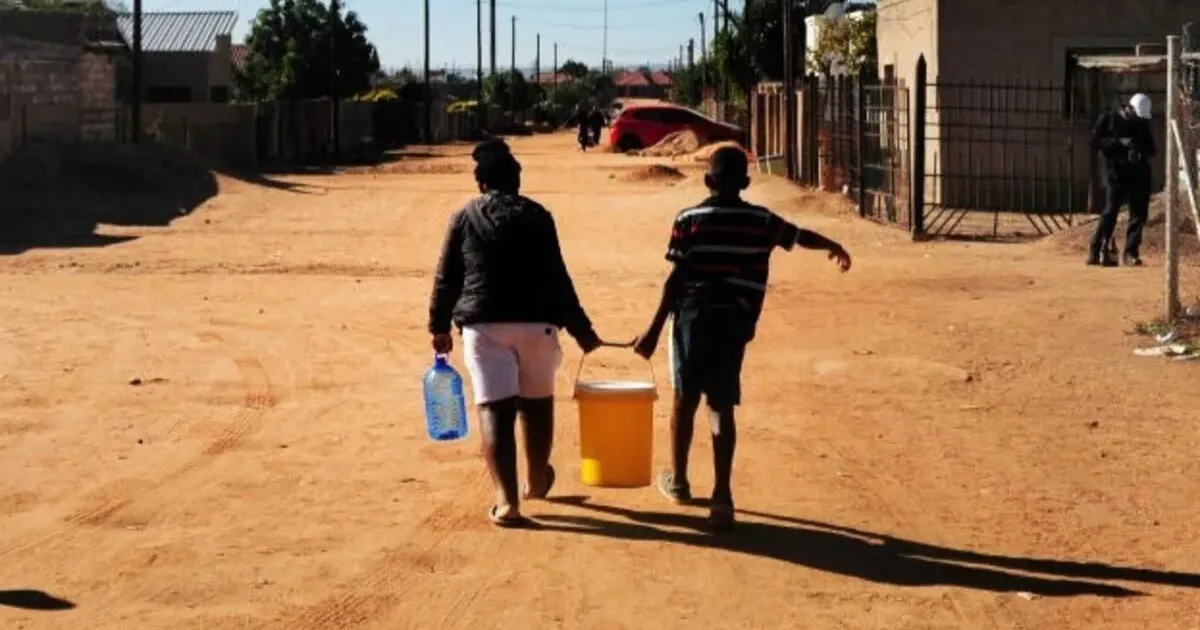
Soma Moulik of the World Bank warned that Sub-Saharan Africa's water funding gap is becoming a direct economic and public-health risk. The warning, made on April 5, 2026, centered on a region where nearly one in three people still lacks reliable access to safe drinking water. The problem is not only drought or distance from rivers. Fast population growth, weak utility balance sheets, high borrowing costs and aging infrastructure all make water systems harder to finance. Governments often know what has to be built but cannot assemble capital on terms that poor households can afford. Water access therefore becomes an economic input, not only a humanitarian measure, because unreliable systems reduce work time and raise health costs.
Population Growth Outruns Water Systems
Urban growth is placing enormous pressure on networks designed for smaller populations. Informal settlements often expand faster than pipes, treatment plants and drainage systems. Rural areas face a different problem: long distances make maintenance and last-mile delivery expensive. That mismatch turns water access into a productivity issue. Children miss school, women and girls spend hours collecting water, and businesses face higher costs when supply is unreliable. A weak water system becomes a hidden tax on development.
Moulik warned that public budgets alone cannot close the water infrastructure gap.
Private Capital Needs Better Guarantees
Investors are not absent because water is unimportant. They are cautious because many utilities cannot guarantee repayment, tariff increases are politically sensitive and currency risk can damage long-term projects. That makes water harder to finance than power or telecom assets with clearer revenue models.
Blended finance can help when public money absorbs early risk and gives private lenders confidence. Development banks can also support local-currency financing so projects are not crushed by exchange-rate swings. The challenge is designing deals that protect poor households. Water systems need revenue, but steep tariffs can punish the people the projects are meant to serve. Subsidies have to be targeted, transparent and tied to service improvements.
Health Costs Raise the Stakes
Unsafe water drives disease, hospital costs and lost work time. Climate stress adds another layer because floods can contaminate supplies while droughts leave utilities with less water to distribute.
The funding gap therefore cannot be treated as a distant infrastructure problem. It affects health systems, food production, urban growth and migration pressure at the same time.
The World Bank's warning is ultimately about execution. Countries need bankable projects, credible utilities and financing structures that match local realities. Without that combination, water access targets will keep slipping even as demand rises.
The region does not lack need. It lacks affordable capital, durable maintenance systems and political room to price water responsibly. Closing that gap will require governments, lenders and donors to treat water as core economic infrastructure, not only as a humanitarian service.
The financing problem is also a governance problem. Lenders want proof that projects can be maintained after ribbon-cutting, not only built with donor money. That means better billing systems, lower leakage, transparent procurement and utilities that can show where revenue goes. Without those basics, even generous financing can disappear into systems that fail again after a few years.
Climate pressure makes delay more expensive. Droughts can reduce available supply, while floods can contaminate wells and damage treatment plants. Cities need resilient pipes, storage and drainage before emergencies hit, yet those are exactly the projects that struggle to attract patient capital. The World Bank warning is therefore not a plea for charity alone; it is a warning that water underinvestment will limit growth across health, agriculture, education and industry.
For households, the issue remains immediate. A family without safe water pays through illness, time and missed opportunity. Closing the gap would not only reduce disease; it would free labor, support girls in school and make urban growth less fragile. Water finance therefore belongs near the center of economic planning.
The financing gap also shapes regional inequality. Wealthier districts can sometimes rely on private boreholes, bottled water or local storage, while poorer households pay more per liter through informal vendors. That reverses the logic of public infrastructure: the least secure residents often face the highest effective cost. A credible water plan must therefore link pipes, treatment, billing and targeted support rather than treating each piece as a separate donor project. The strongest projects will be those that can prove service gains after construction, because lenders and households both need confidence that the system will still work years later. Governance, maintenance and affordability therefore sit at the center of the World Bank warning.
The financing question also affects regional security because water stress can intensify local conflict and accelerate movement toward cities. When systems fail, governments are forced into emergency trucking, short-term repairs and crisis spending that cost more than planned investment. A durable water plan therefore has to be preventive. It must fund treatment, storage, leakage control and maintenance before shortages become political emergencies. The gap is large, but the cost of waiting is larger. Donor timing now matters as much as totals.