Alon Chen, founder of the generative AI platform Tastewise, is prioritizing zero experience over corporate longevity in a radical recruitment shift. The hiring philosophy treats old workflows as a liability rather than an asset. On April 6, 2026, his argument landed inside a broader debate over AI, entry-level work and delivery robots in public space. Entry-level vacancies often vanish when automated systems demonstrate higher efficiency at lower costs. Data from recent industry surveys indicates that 40% of chief executives plan to reduce graduate hiring because software now executes basic tasks with greater precision. Employers increasingly favor seasoned staffers for complex oversight, yet Chen is moving in the opposite direction.
Tastewise operates as a predictive analytics powerhouse for the global food and beverage sector. Its platform currently supports industry giants including PepsiCo, Nestlé, and Mars. Chen argues that traditional professional backgrounds can actually hinder innovation in a world dominated by large language models. He believes that unlearning old habits is more difficult than training a novice who views digital automation as a primary language. The company has secured $71.6 million in venture capital to date.
“There are some positions where you actually want people that do not have the prejudice or the old way of working, because it’s just not relevant anymore.”
Tastewise Recruitment Strategies and Labor Shifts
Experience is no longer the currency it once was. Chen knows how to bet on unconventional talent because his own trajectory defied standard expectations. He started his first business at age 15 and eventually became the chief marketing officer at Google by age 28 without a marketing degree. During his tenure, he developed the $2 billion product line known as Google Partners. These credentials give him the authority to challenge the traditional reliance on resumes and institutional pedigree in favor of raw adaptability.
New job functions require a lack of boundaries that older workers often struggle to maintain. Chen views younger candidates as AI natives who grew up in an era of digital opportunities that did not exist a decade ago. Fresh perspectives allow for the creation of workflows that are not tethered to legacy software or outdated bureaucratic structures. This hiring philosophy suggests that the value of a four-year degree is plummeting in sectors where technical tools evolve every six months. Practical curiosity stays more relevant than a static diploma.
Public Friction in the Robotics Delivery Sector
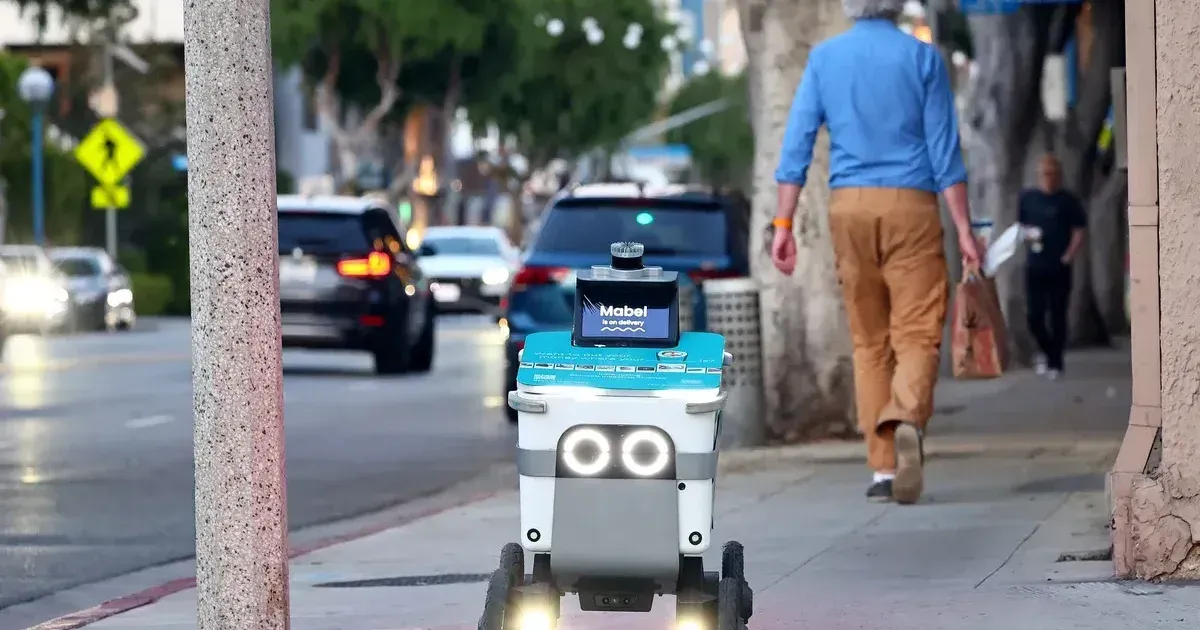
While software replaces white-collar tasks, physical robots are claiming the pavement in major metropolitan areas. Companies like Serve Robotics, Starship Technologies, and Coco Robotics have deployed thousands of autonomous units across US cities and college campuses. Sidewalks in Hollywood and Manhattan now feature four-wheeled machines navigating pedestrian traffic to deliver meals. Reactions from the public vary from passive indifference to active hostility. William Gude, a Los Angeles resident, has turned this friction into a social media phenomenon.
Gude operates a TikTok account titled Film The Robots LA where he documents the mechanical failures of these autonomous couriers. He frequently films robots named Shelby and Lance as they struggle with curbs or block wheelchair ramps. His content highlights the logistical chaos that occurs when silicon-based logic meets the unpredictable nature of urban life. Gude boasts nearly half a million followers on TikTok. His videos demonstrate that the integration of automation into public spaces is far from seamless. Pedestrians often find themselves competing for space with machines that lack human intuition.
Enterprise Adoption of Generative AI Solutions
Corporate leaders at firms like PepsiCo use Tastewise to analyze billions of data points across social media and restaurant menus. Software can now predict which flavors will trend in the next quarter with higher accuracy than human focus groups. This predictive power allows food conglomerates to shorten product development cycles from years to months. The role of the traditional market researcher has transitioned into a prompt engineering task. Junior employees who understand how to query these models effectively are becoming essential to the executive suite.
Efficiency gains are driving the exclusion of mid-level management in many tech-centric organizations. If a single AI-native worker can perform the output of a three-person team using generative tools, the incentive to hire middle managers evaporates. Chen maintains that the best ideas often come from those who have not yet been socialized into the limitations of the traditional job market. He seeks individuals who do not ask if a task is possible but rather how the machine can be pushed to execute it. Traditional hierarchy is still a barrier to this level of speed.
Urban Logistics and Pedestrian Safety Concerns
Robot manufacturers insist that human interference with their machines is statistically minimal. The CEOs of Starship Technologies and Coco Robotics claim that most people are helpful, occasionally righting a robot that has tipped over or clearing a path. Despite these optimistic reports, the physical presence of robots creates new legal and safety questions for local governments. Los Angeles officials are forced to consider whether a robot has the same right of way as a disabled citizen or a parent with a stroller. Tensions persist in high-density neighborhoods where sidewalk space is a finite and valuable resource.
Shared environments require a level of social cooperation that algorithms are still learning to simulate. While a robot can identify a red light, it cannot always interpret the subtle gestures of a frustrated commuter. The push for autonomous delivery remains a high-stakes gamble for venture-backed startups looking to solve the last-mile delivery problem. Labor costs for human drivers continue to rise, making the one-time capital expenditure of a robot fleet increasingly attractive to investors. The sidewalk is the newest theater of the automation war.
Automation Workforce Reset
Does the professional world truly need the baggage of the experienced worker? Conventional wisdom suggests that decades in the trenches provide a perspective that no machine can replicate, yet Alon Chen is making a strong case for the opposite. The institutional knowledge that once was a shield against obsolescence is rapidly transforming into a set of handcuffs. In a landscape where the underlying technology shifts every fiscal quarter, the ability to forget may be more valuable than the ability to remember.
Veteran employees are often the most expensive and the most resistant to structural change. By targeting Gen Z workers with zero experience, Tastewise is not just saving on salary costs; it is building a workforce that lacks the reflex to say how things used to be done. This is a cold, calculated bet on the total replacement of the traditional office worker. If the experiment succeeds, the very concept of a career ladder will be dismantled. Progress will no longer be measured by years of service but by the depth of one's integration with the algorithm. The era of the expert is over. Welcome to the era of the native user. Adopt or vanish.