Saudi Arabia raised the price of its main oil grade for Asian markets as a widening Middle East war disrupted supply chains through the Strait of Hormuz. Crude markets responded with immediate volatility as traders weighed the impact of a blockaded Persian Gulf against dwindling global inventories. State-owned Saudi Aramco increased the premium for its flagship Arab Light grade to historic levels, reacting to the physical constraints of shipping through contested waters. The April 6, 2026 move showed how quickly the blockade was feeding into contract prices for refiners across the region.
Donald Trump set a strict Tuesday deadline for Tehran to lift its naval blockade, heightening fears of a full-scale kinetic escalation. Markets now brace for a Tuesday showdown.
Israeli and American forces carried out an enormous wave of aerial bombardments across Iran on Monday, resulting in the deaths of at least 25 people according to early battlefield reports. Explosions vibrated through the streets of Tehran as low-flying jets maintained a presence over the capital for several hours. Local witnesses described thick black smoke rising near Azadi Square, a landmark that has become a visual marker for the intensity of the strikes. One air strike hit a site near the square, leading to immediate localized panic and a surge in emergency response activity.
Trump Deadline and the Strait of Hormuz Crisis
Donald Trump maintains that his administration will not allow the Iranian government to hold global energy markets hostage. US allies in Europe and Asia are simultaneously pressing for a last-minute diplomatic resolution to prevent a total shutdown of the world’s most essential oil transit point. The Strait of Hormuz remains the primary choke point for nearly twenty percent of the global petroleum supply. Any prolonged closure would likely trigger a systemic shock to the international banking and logistics sectors. Negotiators have begun circulating a draft proposal for a 45-day ceasefire, hoping to provide a window for de-escalation and humanitarian relief. Tehran has yet to formally respond to the draft, even as retaliatory missile fire targets Israel and its Gulf Arab neighbors. Defense analysts suggest the Iranian strategy involves using the threat of a permanent blockade to force concessions on economic sanctions. Washington, by contrast, appears committed to a policy of maximum pressure regardless of the short-term cost to oil futures.
The draft ceasefire proposal, currently circulating among negotiators in the Middle East, suggests a 45-day pause in hostilities to enable the reopening of critical shipping lanes and the withdrawal of naval assets from sensitive corridors.
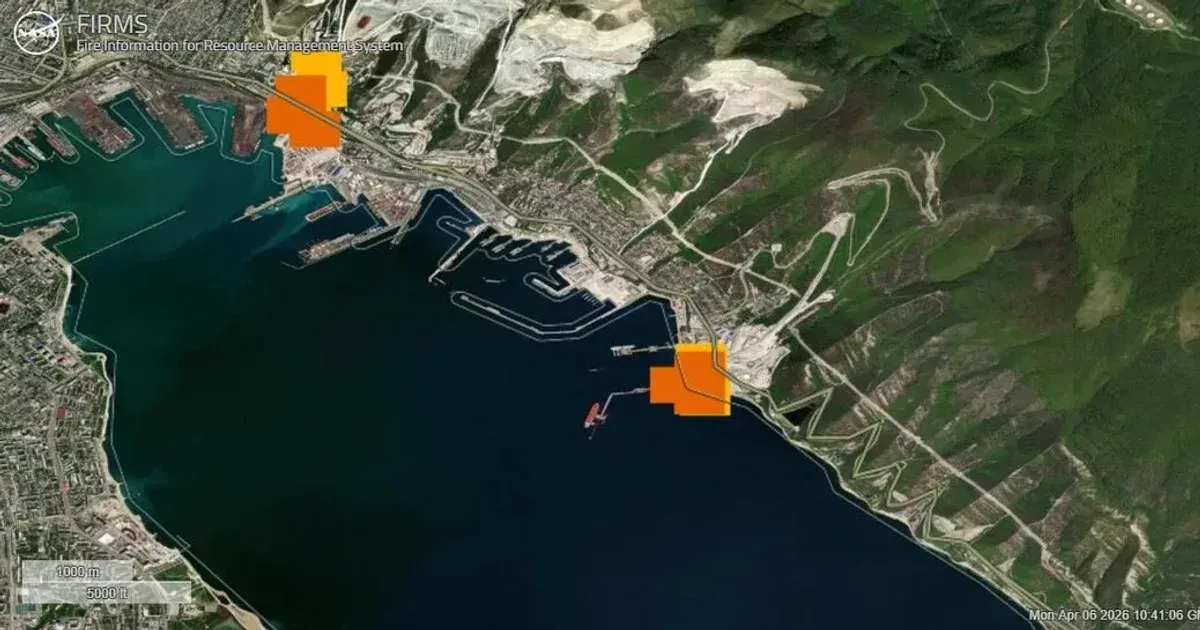
Military activity has not been limited to the Persian Gulf, as the conflict begins to bleed into other theaters of energy production. Russia saw its key Black Sea oil terminal catch fire during the overnight hours, an event confirmed by high-resolution NASA satellite data. Thermal anomalies detected from orbit indicated multiple points of ignition across the facility. This fire complicates the global supply picture by removing a critical export hub from the Black Sea market at a time when alternatives are increasingly scarce.
Naval Blockades and Global Supply Disruptions
Riyadh’s decision to raise Asian premiums reflects a hard reality of maritime logistics. Shipowners are demanding higher insurance rates to traverse the Indian Ocean, and many tankers are now opting for the longer, more expensive route around the Cape of Good Hope. Asian refineries, which rely heavily on Saudi crude, face the prospect of reduced margins and potential fuel rationing if the premium continues to climb. Some Japanese and South Korean buyers have already begun searching for West African or US Permian Basin alternatives to fill the gap.
China, the largest importer of Gulf crude, has expressed serious concern over the record-high premiums. Beijing normally maintains a strategic reserve, but a prolonged blockade of the Strait of Hormuz would deplete these stocks within months. As a result, the geopolitical focus has shifted toward whether China will intervene as a mediator or simply adjust its procurement strategy to favor Russian or Central Asian pipelines. The cost of crude for May delivery has already incorporated a meaningful war risk premium.
Russian Oil Infrastructure Under Fire
An overnight drone attack targeted the Russian terminal, causing major damage to storage tanks and loading piers. NASA satellite images captured the heat signatures of the blaze, which burned for several hours before being brought under control by local fire crews. While Moscow has not officially attributed the attack to a specific state actor, the timing suggests a coordinated effort to stretch the energy defense capabilities of major exporters. Black Sea exports provide a necessary cushion for European markets, and their disruption adds another layer of complexity to the global crisis.
Traders in London and New York have noted that the synchronicity of these events is unlikely to be accidental. Simultaneously, the threat to Russian infrastructure and the blockade in the Middle East create a pincer move on global energy stability. Prices for Brent crude spiked nearly four percent following the news of the Russian terminal fire. Energy analysts at several major investment banks have revised their year-end price targets upward, citing the loss of redundancy in the global supply chain.
Tehran Bombardment and Civilian Impact
Tehran residents reported hearing the distinct sound of anti-aircraft fire throughout the night of April 6. The intensity of the Israeli-US strikes suggests a systematic targeting of command-and-control centers rather than just military manufacturing sites. Heavy smoke remained visible over several districts as day broke, and government offices in the capital stayed closed. Despite the strikes, the Iranian leadership has not indicated a willingness to retreat from its naval positions in the Strait. Humanitarian organizations have raised alarms regarding the impact of the bombardment on civilian infrastructure. Power outages were reported in several northern Tehran neighborhoods following the hit near Azadi Square. Still, the primary focus of the international community remains fixed on the Tuesday deadline. If the deadline passes without a reopening of the shipping lanes, the military operations are expected to expand into the southern provinces and along the Iranian coastline.
Market Fallout
Brinkmanship in the Persian Gulf historically functions as a high-stakes auction for global influence where the currency is measured in barrels and blood. President Trump’s Tuesday deadline is more than a diplomatic ultimatum; it is a calculated bet that the Iranian economy will fracture before the global energy market collapses. By forcing the issue now, the administration seeks to resolve a decades-old maritime dispute through sheer kinetic dominance. It is a strategy that ignores the fragility of the Asian manufacturing core, which cannot sustain record-high premiums indefinitely.
Riyadh is playing a double game that serves its own fiscal interests while appearing to support Western security goals. By raising premiums to record levels, the Saudi leadership ensures that even if volume drops due to the blockade, revenue stays high enough to fund their ambitious domestic projects. This cynical maneuvering highlights the reality that in an energy war, the exporters always win the first round while the consumers pay for the privilege of a shortage. The 45-day ceasefire proposal is likely a hollow gesture designed to buy time for military positioning instead of a genuine path to peace.
Western allies must realize that the current trajectory leads to a permanent restructuring of global trade routes. If the Strait of Hormuz can be shuttered at will, the era of cheap, reliable Middle Eastern energy is over. The fire at the Russian terminal confirms that no energy hub is safe in this new paradigm of drone-led attrition. Washington is doing more than defending shipping lanes; it is fighting to maintain the relevance of the petrodollar system. Total economic realignment.