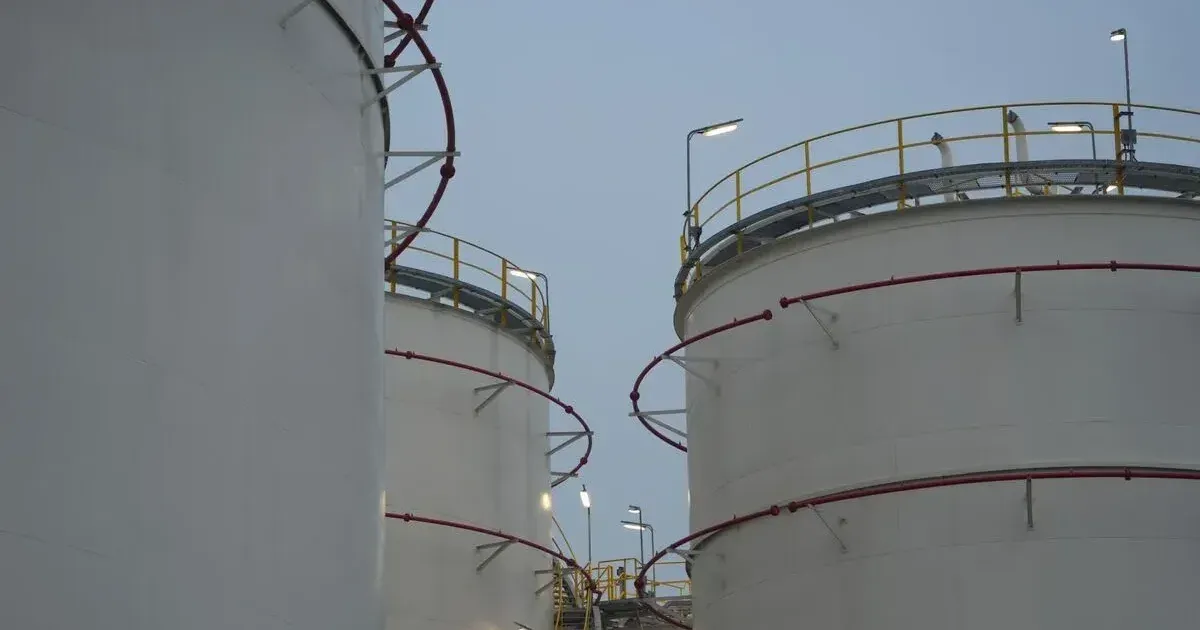
The Hormuz exemption gives oil markets a narrow relief channel without ending the blockade risk. Asian refiners were told that Basra crude cargoes could receive safe passage through the Strait of Hormuz under Iranian guarantees. Shipping firms remain cautious because insurance premiums and naval risk have already risen. Baghdad also has to balance proximity to Tehran with the budget dependence created by oil revenue. Iraqi oil officials informed refiners of the exemption on April 6, 2026.
Baghdad maintains a delicate position, balancing its proximity to Tehran with an absolute dependence on oil revenue to fund its national budget. Revenue shortfalls have crippled Iraqi public services over the last thirty days, forcing the government to negotiate for this specific maritime corridor. Tanker tracking data confirms a shift in vessel behavior near the Omani coast. Iraqi tankers are no longer idling in the Gulf of Oman but are instead preparing for northern transit toward the Basra Oil Terminal.
Bloomberg reports that Iraq has told Asian traders and refiners they can load its crude because vessels carrying the country’s oil are now able to transit the Strait of Hormuz. Iranian officials reportedly issued the exemption to ensure the economic stability of their neighbor, though the geopolitical cost of this agreement is not yet public. Buyers in South Korea and Japan are weighing the risks of sending multi-million dollar vessels into a combat zone based on a verbal guarantee from a belligerent power. Shipping lanes remain littered with the wreckage of previous skirmishes.
Information regarding the specifics of the exemption suggests it only applies to ships flying neutral flags or those explicitly registered to Iraqi state entities. Buyers must still contend with the refusal of major Western insurers to provide coverage for any hull entering the Persian Gulf. Insurance costs for a single voyage have risen by 400 percent, making even exempted oil much more expensive than Brent crude benchmarks. Security experts at the International Maritime Bureau warned that a single misidentification by Iranian coastal batteries could lead to a catastrophic escalation.
Iraq Oil Exports Challenge Hormuz Blockade
Two tankers carrying liquefied natural gas from Qatar are currently maneuvering toward the narrow chokepoint as well. An exit from the Persian Gulf would mark the first export to buyers outside of the region since the war started. Ships identified as the Al Ghariya and the Al Khuwair are currently making their way toward the Musandam Peninsula at a cautious 12 knots. Global gas markets reacted to the movement with a slight dip in futures prices, though the volatility persists.
European energy ministers are monitoring the progress of these vessels with intense scrutiny. Liquefied natural gas supplies in the European Union have reached critical lows, triggering rationing protocols in industrial sectors across Germany and northern Italy. Successful transit of the Qatari ships would provide a needed injection of fuel for the spring heating season. Gas prices at the Dutch TTF hub surged 14 percent last week on fears that the naval siege was becoming a permanent fixture of the conflict.
Qatar LNG Tankers Test Iranian Naval Restraint
Cambridge Professor Helen Thompson argues that the current disruption is fundamentally altering the architecture of global energy security. Disruptions triggered by the US-Israel attack on Iranian infrastructure have exposed the fiction of a resilient global supply chain. Thompson observes that the era of secure maritime commons is effectively over for the foreseeable future. Nations that previously relied on the stability of the Persian Gulf are now scrambling to secure long-term contracts with North American and West African producers.
"The current energy disruption triggered by the US-Israel attack on Iran is exposing deep vulnerabilities that cannot be solved by traditional market mechanisms," said Professor Helen Thompson of Cambridge University.
Disruptions once considered temporary are now viewed by market analysts as structural shifts. Dependence on the Strait of Hormuz, which handles roughly 20 percent of the world’s oil supply, appears increasingly unsustainable for risk-averse national treasuries. While Bloomberg suggests that some traders are willing to test the Iranian guarantees, the majority of the shipping industry is seeking alternative routes that bypass the Middle East entirely. Building new pipeline infrastructure to the Red Sea or the Mediterranean will take years and billions in capital investment.
Global Energy Vulnerabilities Exposed by Conflict
Financial Times analysis indicates that governments and central banks are currently devoid of the policy ammunition used in previous energy crises. Unlike the 1970s or the 2008 price spikes, current inflationary pressures prevent aggressive interest rate cuts. Many nations are still struggling with the debt loads accumulated during the 2020 pandemic and the 2022 energy shock. Governments cannot simply spend their way out of this supply-side catastrophe without triggering a currency collapse.
Inflationary pressures forced the Bank of England and the European Central Bank to hold rates steady despite a slowing manufacturing sector. Households face the prospect of unmitigated price increases at the pump and in utility bills as the summer cooling season approaches. Debt-to-GDP ratios in the G7 have reached levels that preclude the huge fiscal subsidies used during previous shocks. Energy poverty is becoming a primary political concern for voters in the United Kingdom and the United States.
Central Banks Lack Policy Ammunition for Oil Shock
Economic fallout from the blockade extends far beyond the energy sector. Global shipping companies have rerouted thousands of vessels around the Cape of Good Hope, adding twelve days to transit times for consumer goods. These delays have re-sparked supply-chain bottlenecks that were supposed to be a relic of the past. $11 billion in daily trade passes through the Strait, a figure that highlights the scale of the economic threat facing the global economy. Port congestion in Rotterdam and Singapore is beginning to mirror the worst days of the 2021 logistical crisis.
Middle Eastern producers like Saudi Arabia and the United Arab Emirates are exploring land-based alternatives, but their capacity is limited. Pipeline systems that exit at Yanbu on the Red Sea are already operating at maximum throughput. Experts at the International Energy Agency suggest that only a total cessation of hostilities can restore the flow of crude to levels required for global economic growth. Market participants are now pricing in a long-term risk premium that could keep oil above $120 per barrel for the remainder of the decade.
Selective Oil Transit Relief
Energy independence has evolved from a political slogan into a brutal survival requirement for the industrialized West. For decades, the global economy functioned on the assumption that the US Navy would maintain the freedom of the seas, yet the current conflict proves that a determined regional power can nullify that protection through asymmetric warfare. Tehran is doing more than blocking a waterway; it is dismantling the post-Cold War energy order. By granting Iraq a selective exemption, Iran is using energy as a tool of refined diplomatic coercion rather than a blunt instrument of total destruction.
Western leaders remain trapped in a 1990s mindset where market forces eventually correct supply shocks. This perspective is dangerously obsolete. We are entering an era of fragmented energy blocs where access to fuel is determined by ideological alignment instead of the ability to pay the highest price. Central banks are powerless because they are trying to solve a kinetic, geopolitical problem with monetary tools designed for a stable world. If the Qatari LNG tankers are seized or attacked, the last remnants of the old energy architecture will vanish. Realism is the only viable path forward. Prepare for scarcity.