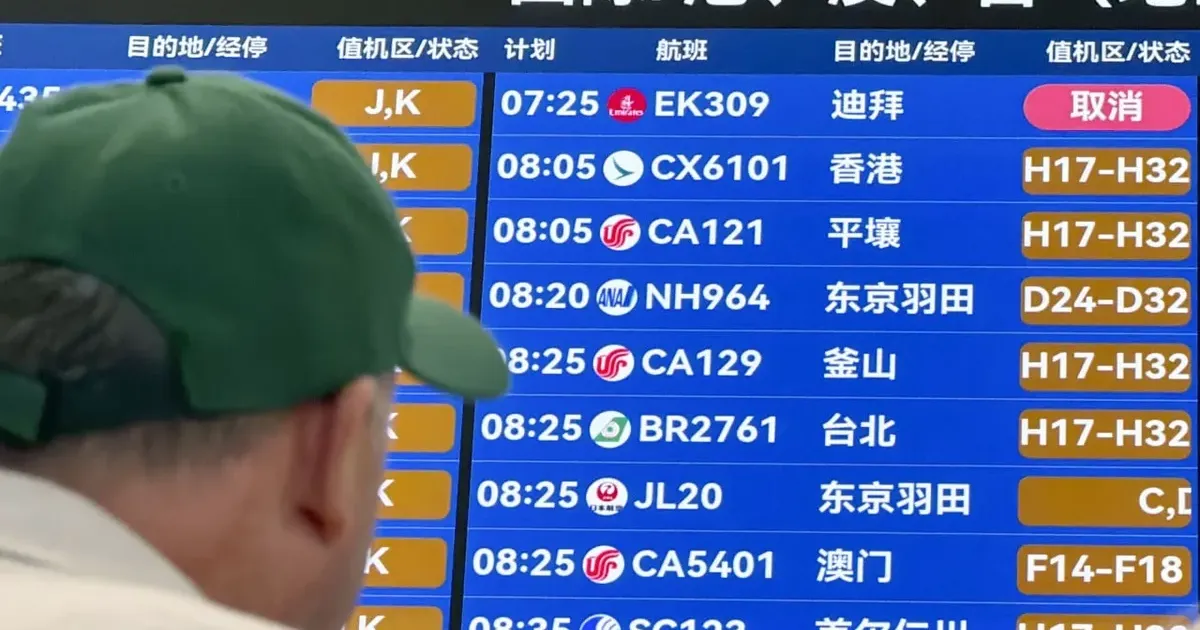
Air China's return to the Beijing-Pyongyang route is a transport story with diplomatic weight. The service restarted on March 30, 2026 after a six-year pause, following the restoration of passenger trains between China and North Korea. On paper, it is one airline bringing back one route. In practice, it reopens a managed corridor between North Korea and the outside world.
The defining word is managed. North Korea is not reopening like a normal tourism market. Passenger categories, visas, official approval, demand and political risk still decide who can move. Air travel gives Pyongyang utility and prestige, but it does not mean the border has become loose.
The Route Restores A Visible Link
AP reported before the launch that Air China's website listed Monday flights from Beijing to Pyongyang from March 30 until May 18, with a reduced June schedule. The restart followed the return of passenger train services between the two countries and came years after North Korea's pandemic-era border closure halted ordinary movement.
The sequence shows how connectivity is being rebuilt. Rail service is slower but deeper; it carries the old rhythm of official travel, cross-border contact and controlled passenger movement. Air service is faster and more symbolic. Together, the two links show a careful rebuild of connectivity after an unusually severe period of isolation.
Air Koryo Had Already Opened A Door
The Air China return did not come out of nowhere. North Korea's Air Koryo had already resumed flights between the two capitals in 2023, and Pyongyang had begun accepting limited foreign visitors, including Russian tourists, before broader Chinese tourist flows returned at scale. Air China's presence still changes the signal.
A North Korean carrier can show Pyongyang's willingness to move. China's flag carrier shows Beijing's willingness to participate. The distinction is consequential because China remains North Korea's main trade partner, main diplomatic shield and most practical gateway, even as Pyongyang has deepened military and political ties with Russia.
Beijing Is Reasserting Its Corridor
For Beijing, transport is leverage. Flights and trains allow officials, technicians, approved business figures and selected visitors to move while reminding Pyongyang that China remains the most useful route out. The corridor can be expanded, slowed or narrowed without dramatic public confrontation.
That became clearer when Xi Jinping visited Pyongyang in June. Guardian reporting on the visit noted that Xi called for expanded economic and trade cooperation and pointed specifically to the reopening of border ports, civil aviation and international passenger trains. The March flight restart was therefore not an isolated scheduling decision. It was part of a wider effort to keep China at the centre of North Korea's controlled external access.
Russia Makes The Signal More Sensitive
The route also lands inside a changing regional balance. North Korea's relationship with Russia has grown more important since Moscow's war in Ukraine, including military cooperation and a mutual-defence pact. China does not want that relationship to outpace its own influence over Pyongyang.
Transport links are a quiet way to manage that problem. Beijing can avoid public competition with Moscow while making itself indispensable in daily movement. A weekly or twice-monthly flight may look small, but in North Korea policy, small channels can carry large diplomatic meaning.
Tourism Is Still The Wrong Measure
The route's future will be judged by more than leisure bookings. Flight frequency, seat availability, passenger categories, official delegations and whether Chinese tour groups return at scale will matter more than the first landing. Sanctions, banking risk, insurance caution and North Korea's own controls still limit what ordinary commercial travel can become.
The service should therefore be read as a valve, not a normalisation breakthrough. It can carry elite travel, diplomatic maintenance, carefully approved business contact and some tourism. It can also be tightened quickly if politics shift.
Reversibility Gives The Route Its Value
The Beijing-Pyongyang air route is valuable precisely because it is reversible. North Korea can accept the prestige of restored flights without accepting openness. China can support movement without surrendering leverage. Outside observers can watch schedules, passengers and route frequency for clues that official statements will not provide.
The restored flight does not make North Korea less isolated in any ordinary sense. It makes the isolation more adjustable. Beijing and Pyongyang have reopened a channel they can control, measure and close. In a relationship built on dependence, caution and strategic mistrust, that is the real meaning of the route.