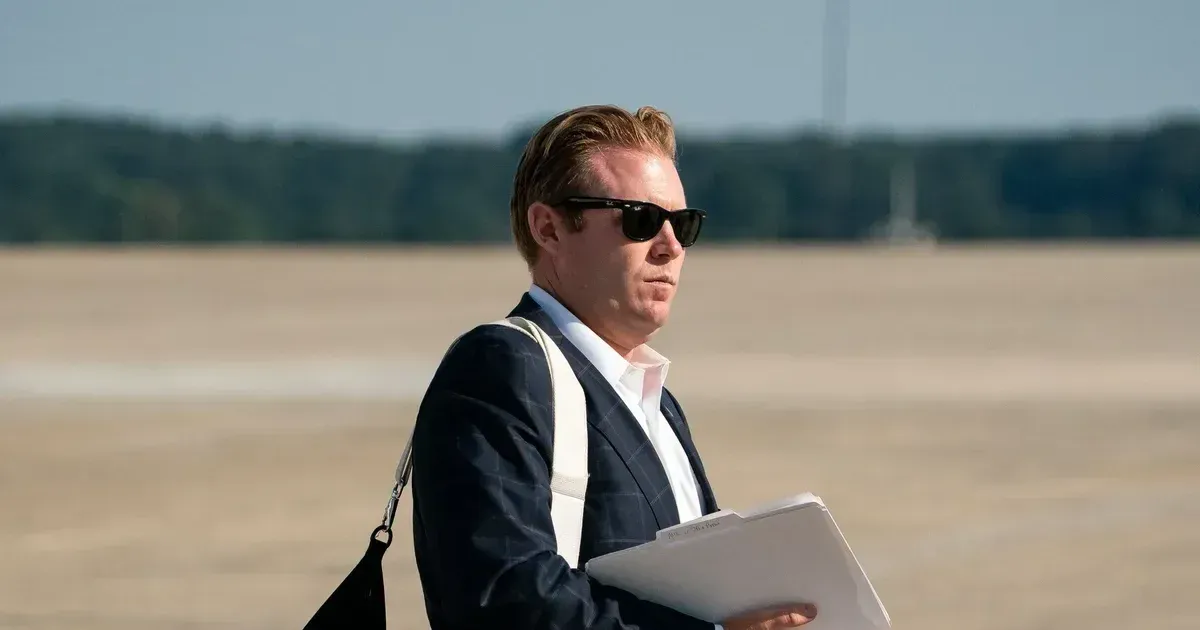
Andrew Giuliani, the son of the former New York City mayor and a dedicated Trump administration alumnus, is leading federal hosting work for the 2026 FIFA World Cup. White House task force records reviewed on May 19, 2026 list him as executive director for the tournament effort, a role President Donald Trump announced in May 2025. The assignment places Giuliani inside the complex logistical machinery of global sport as the tournament prepares to launch in June. He is managing the intersection of federal security, transportation and international coordination for the United States portion of the event.
Donald Trump has frequently leaned on long-term loyalists to manage high-visibility projects, and the World Cup oversight role follows that established pattern. Giuliani previously served as an associate director in the White House Office of Public Liaison, where he specialized in coordinating outreach to professional sports teams and athletes. His familiarity with the intersection of public policy and major league operations provided a foundation for this transition. Critics and allies alike have noted the weight of this assignment, given that the 2026 tournament features an expanded field of 48 teams competing across three nations.
A Promotion Rooted in Longtime Loyalty
Rudy Giuliani’s legacy in New York often overshadowed his son’s early political career, yet the younger Giuliani has carved a distinct path within the Trump inner circle. His new role involves liaising between the United States government and FIFA officials to ensure host cities are prepared for the large influx of international visitors. The elder Giuliani’s legal and political challenges have not deterred the administration from placing Andrew in this critical oversight capacity. Loyalists within the administration view the move as a reward for his steady presence during previous election cycles and his steady defense of the president’s agenda. His duties will specifically focus on the eleven American host cities that will enable the majority of the 104 scheduled matches.
Managing the logistical requirements for cities like New York, Los Angeles, and Miami involves substantial federal resources. Giuliani is expected to coordinate with the Department of Homeland Security to finalize safety protocols for venues ranging from MetLife Stadium to SoFi Stadium. Federal officials have already designated the tournament as a Special Event Assessment Rating Level 1, which triggers the highest level of federal security support. Giuliani’s office will serve as the primary conduit for these agencies as they deploy personnel and surveillance technology to secure the games. His previous experience navigating the federal bureaucracy is intended to streamline communication between disparate agencies.
Coordinating the Largest World Cup in History
Preparation for the 2026 event involves more than stadium readiness. Giuliani must also manage the diplomatic complexities of hosting a tournament shared with Canada and Mexico, ensuring that visa processing and border logistics do not impede the movement of fans and teams. Recent reports indicate that the administration is prioritizing expedited entry for official delegations and media members. Giuliani’s team is working to finalize these procedures before the opening whistle blows next month.
The scale of the expansion to 48 teams has placed additional pressure on transportation networks, which require careful federal oversight to prevent localized gridlock. Expectations for the event continue to grow as federal agencies move to finalize their operational blueprints. Giuliani has already held several high-level meetings with the governors of host states to discuss infrastructure grants and local police funding.
These discussions are critical because federal law restricts how certain funds can be used for security at private sporting events. Giuliani’s role is to ensure these legal boundaries are respected while still providing the necessary support to keep the public safe. The tournament is a test case for how the United States manages large-scale international gatherings in a period of heightened global scrutiny.
International observers are watching the appointment closely to see how the administration handles the influx of foreign press and spectators. Giuliani has indicated that his office will maintain a transparent relationship with FIFA to resolve any late-stage disputes regarding venue operations. The tournament schedule is grueling, with games occurring almost daily for over a month. This timeline leaves little room for administrative error or logistical delays. Giuliani is currently stationed in Washington to oversee the final rollout of the federal security plan. The first match on American soil is scheduled to take place in less than thirty days.