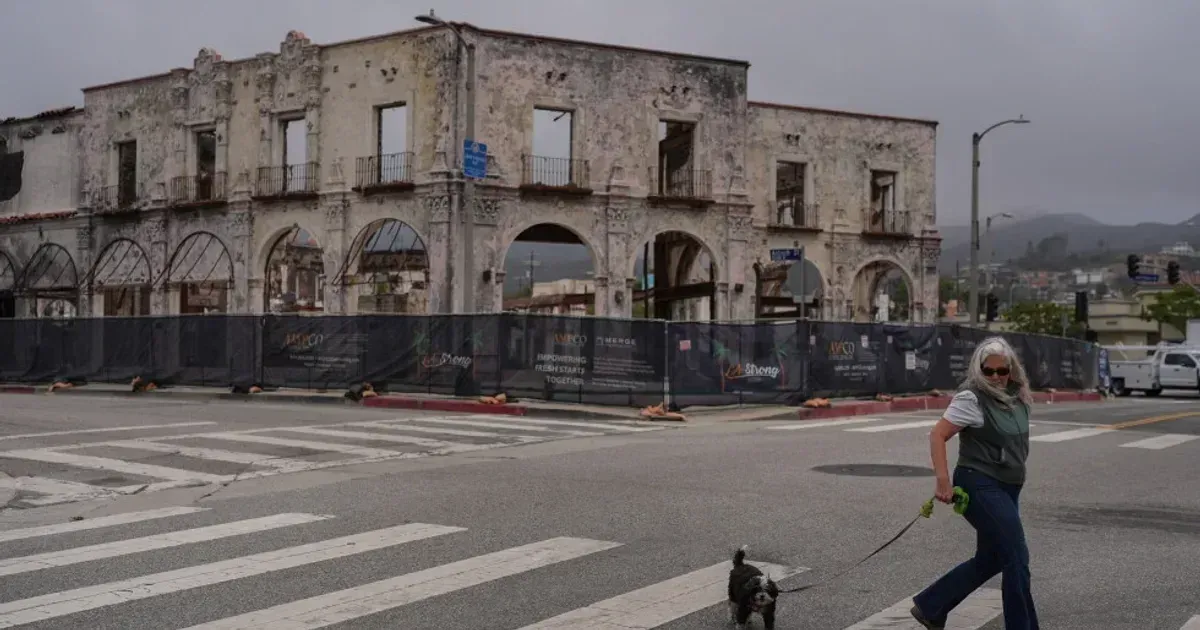
The federal trial of the man accused of starting the Palisades Fire has opened in California, shifting one of Los Angeles' most traumatic recent disasters from burned neighborhoods to a courtroom fight over evidence, intent and causation.
AP identified the defendant as Jonathan Rinderknecht, who is accused of setting the initial fire that prosecutors say eventually led to the Palisades disaster. The trial will test whether prosecutors can connect the fire timeline to a clear act of arson. The trial began on June 10, 2026, with jurors expected to hear technical evidence about ignition, weather, terrain and how a smaller blaze can become a catastrophic wildfire. The case matters because wildfire prosecutions are rarely simple. A jury will not be asked only whether the fire was devastating. It will be asked whether the government can prove the defendant caused the legally relevant fire beyond a reasonable doubt, a standard that can be difficult when flames move through dry canyons, shifting wind and later flare-ups.
Prosecutors must prove more than public outrage after destruction. They have to connect a defendant's conduct to the fire path, explain delays or flare-ups and show the jury why the legal chain remains intact even when wind, dry vegetation and firefighting conditions all shaped the outcome.
What Prosecutors Have to Prove
Federal arson cases depend on a clear narrative of origin. Investigators typically rely on burn patterns, witness accounts, device evidence, phone location data, video, weather analysis and expert testimony. In a wildfire case, that record must be strong enough to survive the defense argument that natural conditions, not one person, drove the scale of the disaster. The Palisades Fire also carries enormous emotional weight. In neighborhoods where families lost homes or watched familiar streets reduced to shells, a criminal trial can feel like the one public forum where the disaster is given a name and a timeline. That emotional force may be unavoidable, but the judge will still have to keep the case focused on admissible proof.
Homes, businesses and landmarks were damaged or destroyed, and the images of hillside neighborhoods burning became part of a wider California debate over evacuation planning, insurance and climate-amplified fire risk. That backdrop can make the trial feel larger than the specific charges. The defense is likely to press on uncertainty. Wildfire origin evidence can depend on scientific reconstruction, but jurors may hear competing explanations about where the fire began, how it spread and whether suppression decisions or weather conditions broke the chain prosecutors need. That does not make an arson case impossible; it makes clarity essential.
If the government cannot clearly explain how the alleged act led to later destruction, or if there were gaps in containment, monitoring or flare-up timelines, jurors may be asked to separate suspicion from proof. That is why expert testimony will likely become the center of the case.
Why the Case Reaches Beyond One Defendant
For Pacific Palisades residents, the trial is also a search for accountability. The legal process moves slowly compared with recovery. Insurance claims, debris removal, rebuilding permits and school or business disruptions can last long after opening statements, leaving many victims to follow the trial while still negotiating the practical aftermath of the fire.
Criminal law can answer who caused a fire, if prosecutors meet their burden. It cannot rebuild neighborhoods, restore insurance markets or resolve whether public agencies had enough tools to limit the damage once flames moved through dry terrain.
That distinction is important. A conviction would give victims a legal finding, but it would not end policy questions about vegetation management, warning systems, rebuilding rules or how California should handle high-risk development in fire corridors. An acquittal would not mean the disaster was less real; it would mean prosecutors failed to prove the criminal case beyond a reasonable doubt.
The court will therefore operate on a narrower standard than the public conversation. Judges and jurors will focus on admissible evidence. Residents and officials will continue to focus on what the fire exposed about preparedness, response and recovery.
Legal Stakes for Wildfire Accountability
The strategic importance of the Palisades trial is that it tests how far the justice system can go in assigning individual blame for disasters shaped by climate, infrastructure and land-use risk. Prosecutors want to show that complex conditions do not erase personal responsibility. The defense will argue that complexity creates reasonable doubt.
If the government proves its case, the trial may become a marker for future wildfire prosecutions in high-loss disasters. It would show investigators and prosecutors can translate complex fire science into a narrative jurors accept.
If it struggles, California policymakers may face renewed pressure to answer a harder question: when a fire becomes a regional catastrophe, accountability cannot rest only on one defendant. It must also reach the systems that decide where people build, how they evacuate and how fast public agencies can respond.