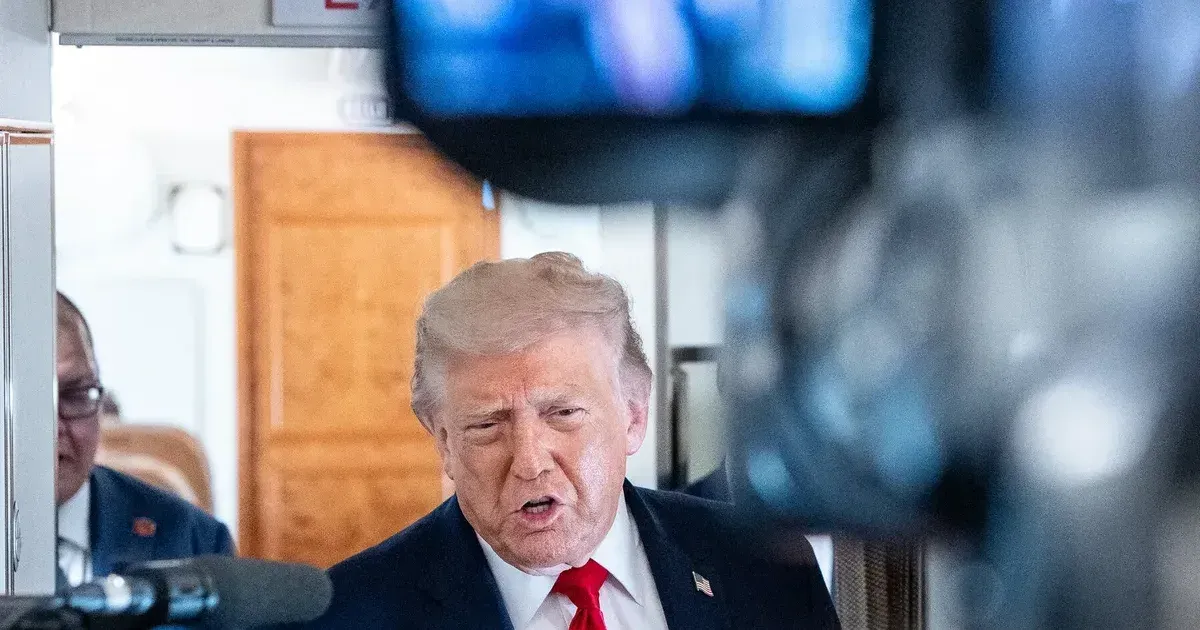
Donald Trump signaled a return to his previous election-integrity rhetoric by targeting the pace of ballot counting in California. The claim also revives a familiar dispute over whether slow ballot counting is evidence of misconduct or simply election administration. These comments, made public on June 9, 2026, focus on the standard administrative delays associated with processing mail-in ballots in the nation's most populous state. Trump asserted that the slow tabulation process suggests a lack of transparency or potential misconduct, though state records indicate the timeline complies with existing statutes.
California election officials manage a system designed to maximize voter participation, which naturally extends the certification period. Under state laws refined in recent years, every registered voter receives a mail-in ballot by default. County offices must verify signatures on every envelope before counting the votes inside. This procedural requirement ensures that only valid ballots enter the final tally, but it requires considerable time for manual review by trained staff.
Critics of the president’s messaging point to a lack of evidence supporting any claims of widespread fraud. Historically, the transition from early precinct reporting to final mail-in tabulation often results in shifts in candidate lead. Experts frequently refer to this phenomenon as a red or blue shift depending on the voting patterns of specific demographics. Election administrators emphasize that a slow count is a sign of a secure and thorough process rather than a failure of the system.
Procedural Delays and State Law
Sacramento mandates that mail-in ballots postmarked by election day be accepted for up to seven days after the polls close. This specific provision accommodates delays in the postal service and ensures that voters are not disenfranchised by logistical issues outside their control. As a result, the total number of ballots to be processed remains unknown until a full week after the initial voting window concludes. The state also provides a curing period during which voters can correct issues with their signatures.
Signature verification acts as the primary security layer for the universal mail-in system. Election workers compare the signature on the ballot envelope with the one on the voter’s registration record. If a discrepancy exists, the voter is contacted and given an opportunity to verify their identity. These steps are time-intensive but are legally required to maintain the integrity of the democratic process. California law provides counties up to 30 days to complete this exhaustive canvass and report final results.
Legal challenges regarding the 2026 cycle have yet to produce any documentation of systemic errors. Courts in previous years have consistently rejected claims that slow counting constitutes evidence of illegality. Instead, judicial findings have reinforced that state legislatures possess the authority to set their own canvassing timelines. California officials continue to report that their systems are functioning exactly as intended under the AB 37 legislation passed in 2021.
Rhetorical Patterns and Campaign Strategy
Trump is using these claims to establish a narrative for the upcoming autumn campaign season. By questioning the legitimacy of the process in a heavily Democratic state, he creates a baseline for his supporters to view future outcomes with skepticism. Analysts suggest this approach mirrors strategies used in 2020 and 2024 to mobilize a base that feels the electoral system is rigged against their interests. The focus on California specifically serves to highlight a state with some of the most expansive voting access laws in the country.
Public trust in election results often correlates with the speed at which a winner is declared. When the counting process stretches into weeks, it creates a vacuum of information that can be filled by unverified assertions. Trump’s strategy exploits this interval to suggest that the delay itself is a form of malpractice. Data from the California Secretary of State show that the percentage of mail-in ballots has climbed steadily, making the older expectation of election-night results increasingly obsolete.
Local registrars in counties like Los Angeles and Orange County have increased their staffing levels to handle the volume of paper ballots. Despite these investments in personnel, the sheer scale of the electorate makes an immediate count impossible. There are over 22 million registered voters in California, a figure that outweighs the population of many independent nations. These administrative realities dictate the pace of the count regardless of political pressure from any candidate or party.
Election Administration Stakes
The recurring tension between administrative thoroughness and political messaging may force states to change how they communicate their progress. California’s commitment to universal mail-in voting is a settled policy, but the communication gap during the 30-day canvass period remains a vulnerability. National figures continue to use these windows of silence to project their own narratives onto the data. Until federal or state authorities can find a way to accelerate signature verification without compromising security, the transition period will stay a theater for partisan conflict.
The real risk is not the speed of the count, but the erosion of public confidence in the basic machinery of the vote. California’s experience is a template for other states considering expanded access, highlighting the necessity of resilient public education to counter claims of fraud that lack a factual basis. Hard data must eventually overcome the rhetoric if the system is to stay stable. California officials are likely to answer by pointing to chain-of-custody rules, signature checks and statutory certification deadlines. Those details are dry, but they are the basis for rebutting fraud claims. The dispute may also affect local election workers, who often absorb threats when national figures question routine counting. Their ability to process ballots without harassment is part of the system’s resilience. County officials may also ask state leaders for stronger protection against harassment if national claims continue to target ordinary ballot workers. That local burden is why election administrators often ask campaigns to challenge procedures through courts and public records rather than broad accusations. County clerks also have to explain that slow certification can protect valid ballots rather than conceal the count from observers.