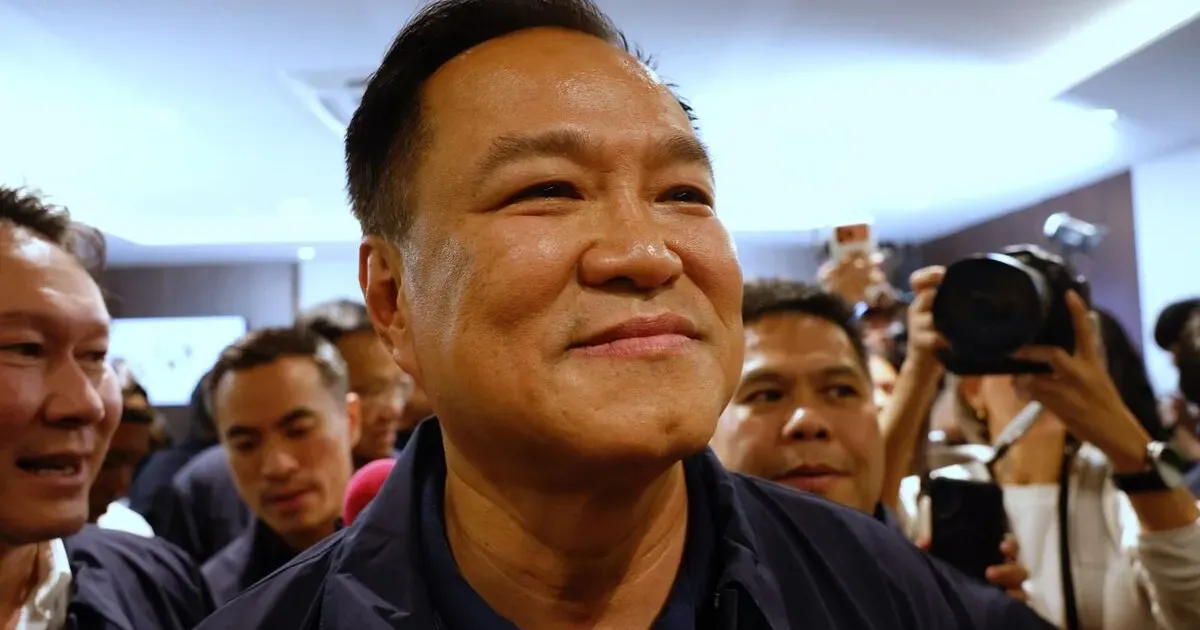
Prime Minister Anutin Charnvirakul secured formal royal approval for his new cabinet signaling a commitment to policy continuity. King Maha Vajiralongkorn endorsed the list of ministers in a decree that confirms the survival of the existing economic leadership. Maintaining the same team of advisors and ministers suggests a focus on stability over structural reform. Observers in Bangkok spent the day analyzing the list of thirty-five officials who will guide the administration. The Anutin Charnvirakul Secures Royal Approval for New Cabinet report carried a March 31, 2026 time marker for readers following the latest account. Financial markets showed little volatility once the announcement reached the public domain. Official documents released by the palace show that the transition occurred without changes to key portfolios.
Anutin Charnvirakul Secures Stability in Bangkok
Royal endorsement is the final procedural hurdle for any new government in the kingdom. Anutin Charnvirakul moves into the premiership with a mandate to address immediate fiscal pressures. By keeping his core economic team intact, he avoids the friction often associated with bureaucratic reshuffling. Political analysts note that this cabinet configuration preserves the influence of the Bhumjaithai Party within the broader coalition. Loyalty to current fiscal frameworks appears to be the primary objective for the prime minister. Foreign investors generally prefer this predictable approach to personnel management. Consensus among the business elite indicates a desire for uninterrupted infrastructure spending.
Continuity provides a sense of security for the domestic banking sector. Major lenders have expressed cautious support for the decision to avoid radical shifts in monetary or fiscal direction. Bank of Thailand officials anticipate that the current leadership will maintain existing inflation targets. One senior economist noted that changing the finance ministry leadership during a period of currency fluctuation would have been risky. Political stability remains a rare commodity in Southeast Asian governance. The administration now holds the legal authority to pass the upcoming national budget. Parliament will likely convene within two weeks to hear the official policy statement.
Core Economic Team Manages Export Slump
Weakening demand from major trading partners has slowed the pace of industrial production. Anutin Charnvirakul must now contend with a contraction in the electronics and automotive sectors. These industries serve as the backbone of the national economy, accounting for a notable part of total employment. Global supply-chain disruptions have complicated the recovery of the manufacturing base. Lower consumer confidence in Europe and the United States has reduced the volume of outbound shipments. Government data indicates a 4.2 percent drop in electronic components exports during the previous quarter. Reversing this trend requires more than personnel stability.
Thailand’s new cabinet has secured royal approval, with Prime Minister Anutin Charnvirakul retaining his core economic team.
Export-led growth models are facing notable headwinds across the region. Many neighbors are competing for the same pool of foreign direct investment in the semiconductor space. Anutin Charnvirakul has instructed his team to seek new bilateral trade agreements. Diversifying trade routes might reduce the impact of slowing demand from traditional partners. Trade officials are currently prioritizing negotiations with Gulf nations and South American markets. Local manufacturers have requested tax breaks to offset the rising cost of raw materials. Economic planners estimate that export growth will struggle to exceed 2 percent this year.
Energy Policy and Rising Fuel Costs
Rising fuel costs have become the most pressing challenge for the newly approved cabinet. Thailand relies heavily on imported liquefied natural gas to power its electrical grid. Global energy prices have stayed elevated, placing immense pressure on the national electricity subsidy fund. Anutin Charnvirakul faces a difficult choice between raising utility rates or increasing the public debt. Transportation costs are filtering through to the price of basic food items. Household debt levels are already hovering near 90 percent of the gross domestic product. Inflationary pressures have reduced the purchasing power of the middle class in urban centers.
Energy subsidies currently cost the treasury millions of dollars every month. Maintaining these price caps is politically necessary but fiscally unsustainable. The Ministry of Finance has hinted at a gradual phase-out of some fuel rebates. Such a move would likely trigger protests from the logistics and trucking industries. Small business owners have already reported shrinking profit margins due to high overheads. Solar energy initiatives have been proposed as a long-term solution to energy dependency. However, the initial capital requirements for such projects are prohibitive for many citizens. Private-sector leaders are calling for a careful national energy master plan.
The cabinet approval also matters because Thailand is trying to protect investor confidence while exports slow across Asia. A familiar economic team can reassure markets, but it can also delay harder choices.
Fuel prices remain the most immediate external pressure on the government. Any prolonged Gulf disruption would raise import costs and complicate subsidy planning for Bangkok.
Tourism, manufacturing and agriculture are all watching the cabinet lineup for signals on spending priorities. Stability is useful only if it produces decisions quickly enough to offset weaker global demand.
Cabinet Continuity Test remains one useful lens for the next phase.
The new cabinet will be judged by how quickly it turns royal approval into decisions on growth, coalition management and public services. Continuity helps only if ministries can show visible progress before weaker demand becomes a political problem.