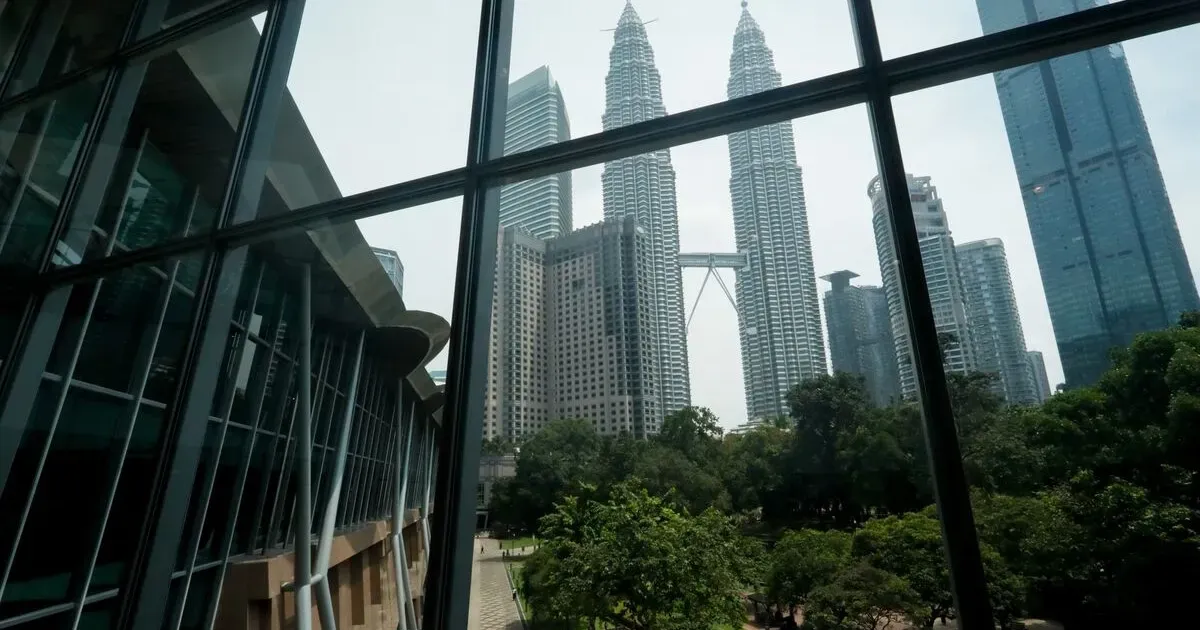
Malaysia raised its economic growth projections to account for stronger domestic spending and a surge in foreign direct investment. Government officials in Kuala Lumpur indicated that the nation possesses sufficient internal momentum to weather the volatility currently gripping global energy and shipping markets. Their revised estimates suggest that the national economy is decoupling from some of the more severe shocks originating in the Levant and the Red Sea. The Malaysia Boosts 2026 Growth Forecast Despite Mideast War report carried a March 31, 2026 time marker for readers following the latest account.
High-level data released by the Ministry of Finance indicate a shift in the primary drivers of the Gross Domestic Product. While previous quarters relied heavily on external trade, the upcoming fiscal year will see a heavier reliance on internal consumption and state-led infrastructure projects. This transition seeks to insulate the local population from the inflationary pressures often associated with prolonged overseas conflicts. Consumption levels rose by 4.2 percent in the first-quarter of the year.
Domestic Demand Resilience in Malaysia
Consumer spending continues to exceed analyst expectations as wage growth stabilizes across the urban centers of Selangor and Johor. Bank Negara Malaysia has maintained a monetary policy that supports liquidity while keeping a tight rein on core inflation. These conditions allowed the retail and service sectors to expand even as global sentiment wavered. Local banks report a steady increase in small business loan applications, which signals confidence in the medium-term outlook.
Public works projects also provide a notable floor for economic activity through the end of the decade. Renewed commitment to the East Coast Rail Link and various urban transit expansions in the Klang Valley has generated thousands of technical roles. Investment in these sectors ensures that the construction industry remains a net contributor to the national accounts. Spending on these projects is expected to exceed $110 billion over the next five years.
Economic planners have prioritized food security and energy independence to further reduce external risks. By reducing reliance on imported commodities, the government hopes to maintain a stable consumer price index. Local agricultural output increased by 3.1 percent according to the latest departmental census.
Energy Exports Stabilize Malaysian Fiscal Outlook
Global energy markets have remained volatile, but the position of Malaysia as a net exporter of liquefied natural gas provides a notable strategic advantage. Petronas, the state-owned energy firm, has capitalized on the disruption of traditional supply lines by securing long-term contracts with North Asian partners. These agreements provide a reliable stream of foreign exchange reserves that support the ringgit. Export volumes for natural gas reached record highs in February.
Malaysia lifted its economic growth forecasts for 2026, expecting strong domestic demand and investment to cushion the impact of the escalating war in the Middle East, according to Bloomberg Economics.
Refinery margins have also improved as the country improves its downstream capabilities. New facilities in Pengerang are now operating at near-full capacity, processing crude for regional markets. This vertical integration allows the energy sector to capture more value per barrel than in previous cycles. Revenue from these operations flowed directly into the federal budget during the last reporting period. Hydrocarbon production remains a foundation of the national strategy. Deepwater projects off the coast of Sabah have entered new phases of extraction, adding to the daily output. These assets provide the fiscal space necessary for the government to subsidize essential goods if global oil prices spike beyond manageable levels.
Semiconductor Industry Growth Supports 2026 Goals
Manufacturing remains the backbone of the export economy, specifically within the electrical and electronics sector. The industrial clusters in Penang and Kulim have seen a resurgence in orders as global tech firms seek to diversify their supply chains away from more vulnerable geographic zones. Multinational corporations have committed to expanding their testing and packaging facilities within the country. Recent permits for new factory construction increased by 15 percent compared to last year.
Technology giants are increasingly viewing the region as a safe harbor for high-tech production. The existing ecosystem of skilled labor and specialized logistics makes it difficult for competitors to replicate the Malaysian model. Government incentives for high-value manufacturing have successfully attracted firms specializing in next-generation chipsets. These companies are investing in local talent through university partnerships and vocational training centers.
Shipments of semiconductors now account for a larger share of the total export pie than they did two years ago. This growth helps offset the slower demands for traditional commodities like palm oil or rubber in certain Western markets. Logistics providers have reported a 10 percent increase in air freight volume originating from the northern manufacturing corridor.
Malaysia’s confidence also rests on the assumption that domestic demand can absorb external volatility. Household spending, infrastructure work and investment pledges now carry more weight in the forecast than export momentum alone. The semiconductor sector remains the most important bridge between local growth and global demand, so any weakening in electronics orders would test the revised forecast quickly and expose how much of the upgrade depends on factories running at planned capacity. Energy policy is another vulnerability. Malaysia benefits from some commodity exposure, but higher shipping and insurance costs can still raise prices for manufacturers and consumers. Officials in Kuala Lumpur are therefore betting that diversification will matter more than geography; the forecast is less a declaration of immunity than a claim that the economy has more buffers than peers.
Officials also have to manage expectations carefully because a stronger forecast can become a political liability if fuel or food costs rise. The government is presenting resilience, not immunity, and that distinction will matter if households feel imported inflation before headline growth improves.
Foreign direct investment remains the hinge. If new projects arrive on schedule, Malaysia can absorb trade turbulence; if they slip, the revised forecast will look optimistic. That is why ministries are watching not only signed pledges but land approvals, power connections and hiring timelines that show whether announced projects are actually turning into production.
Malaysia Growth Resilience
Malaysia now has to show that stronger forecasts are backed by investment, exports and household demand that can withstand war-driven cost pressure. The next data releases will matter more than the headline growth target.