Donald Trump saw a primary foundation of his border enforcement strategy dismantled on April 24, 2026, when a federal appellate court declared his suspension of asylum access illegal. D.C. Circuit Court of Appeals judges determined that the executive branch lacks the statutory authority to override specific protections passed by Congress. This decision aligns with a previous lower court ruling that found the administration’s efforts to block migrants from seeking protection violated the Refugee Act. Legal experts suggest the ruling forces a return to standard processing for thousands of individuals currently waiting in northern Mexico.
Three judges on the appellate panel focused their analysis on the friction between presidential emergency powers and established immigration law. Lawyers for the administration argued that Section 212(f) of the Immigration and Nationality Act grants the president broad discretion to restrict entry to any class of aliens. Judges, however, found that such discretion does not permit the wholesale erasure of asylum rights granted under Section 208 of the same act. Statutory clarity often outweighs executive preference in matters of humanitarian law.
Court records indicate the decision was unanimous. This three-judge panel emphasized that while a president manages border security, the legislative branch defines the scope of who may apply for legal status. Government data shows that the executive order had effectively halted nearly 90% of claims at certain ports of entry since its implementation. Processing centers must now prepare for a surge in applications that had been held in a state of indefinite suspension. Customs and Border Protection officials received notification of the ruling within hours of its release.
D.C. Circuit Court Upholds Lower Court Decision
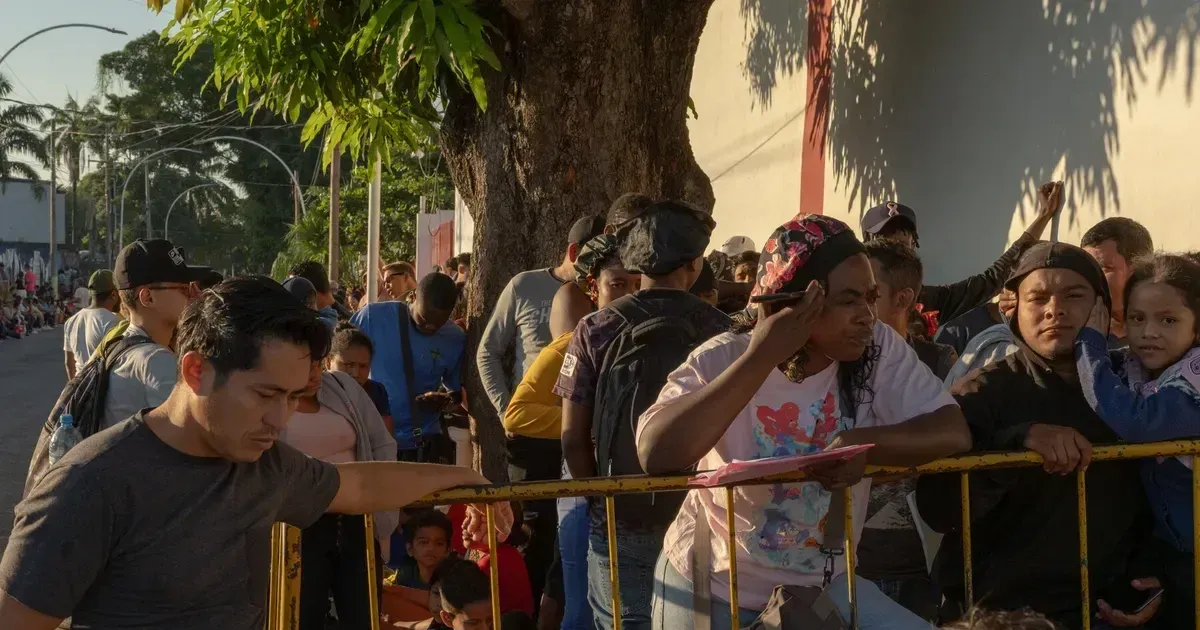
Judges stated that the government could not use administrative maneuvers to bypass the Refugee Act of 1980, which mandates that any person who reaches U.S. soil may apply for asylum. Federal law explicitly states that arrival at a port of entry or crossing between ports does not negate the right to seek protection. Prior attempts to funnel all claims through limited, pre-arranged appointments were deemed insufficient to satisfy these legal requirements. Evidence presented in the lower court showed that the restrictive policy resulted in dangerous conditions for migrants forced to wait in high-crime border cities. Thousands of families remained in temporary encampments throughout the duration of the legal challenge.
The appellate panel found that the president could not circumvent laws allowing people to apply for asylum at the US-Mexico border.
Attorneys representing civil rights groups celebrated the decision as a victory for the rule of law. They contended that the administration attempted to rewrite decades of humanitarian policy through an executive memo. Internal documents from the Department of Homeland Security revealed concerns among staff about the legality of the ban before it was even signed. These memos suggested that career officials anticipated a swift defeat in the court system. Critics of the policy pointed to these documents as proof of a calculated disregard for established norms. The ruling restores the status quo for the time being. This ruling follows previous judicial scrutiny regarding the legality of the CBP One app for processing asylum claims.
National security advisors within the White House expressed frustration with the judicial intervention. Trump’s legal team argued that the influx of migrants constitutes a national emergency that justifies extraordinary measures. Such arguments failed to move the D.C. Circuit, which maintained that an emergency does not grant the executive branch legislative powers. Judicial oversight acts as a check on the expansion of administrative authority in times of political tension. Records from the hearing show the judges questioned why the administration did not seek a formal change in law from Congress. The lack of legislative backing proved fatal to the government's defense.
Executive Power Limits and Asylum Law Conflict
Constitutional scholars view this case as a defining boundary for executive reach in the 21st century. While Donald Trump has successfully used Section 212(f) to restrict travel from specific nations in the past, those cases did not involve the direct contradiction of a separate congressional mandate. Asylum laws are unique because they involve international treaty obligations that Congress codified into domestic law. Diverging from these standards requires a new act of Congress rather than a presidential directive. Legal scholars at the University of Oxford noted that the U.S. remains bound by the 1967 Protocol Relating to the Status of Refugees. Violation of these principles often leads to diplomatic friction with neighboring states.
Mexico City officials have monitored the case closely due to the logistical burden of the Remain in Mexico policy. Changes in U.S. processing rules directly affect the population density of border cities like Tijuana and Juarez. State Department cables suggest that Mexican authorities have struggled to provide security for the thousands of migrants caught in legal limbo. Increased pressure on local resources has led to public protests in several Mexican states. Stability at the border depends on a predictable and lawful processing system. The current ruling provides a clear, albeit temporary, framework for both nations.
Supporters of the administration’s policy warned that the ruling will encourage more illegal crossings. They believe that any opening in the asylum system is exploited by cartels and human traffickers. Republican lawmakers in Texas called for immediate emergency legislation to codify the ban into federal law. Legislative gridlock in Washington makes such a prospect unlikely in the current session. Migration patterns often respond to judicial rulings within 48 to 72 hours of a public announcement. Patrol agents in the Rio Grande Valley reported an immediate uptick in inquiries from migrant groups following the news.
Border Agency Response to New Asylum Requirements
Logistical challenges for the border patrol include a shortage of asylum officers and detention space. Current staffing levels were designed for a more restrictive environment, not a sudden reopening of the claims process. Budget requests for 2026 already reflect a $1.2 billion shortfall in processing capabilities. Federal agencies must now reallocate funds from enforcement to administrative processing to comply with the court's order. Field offices in San Diego and El Paso are expected to see the highest volume of new applicants. Training programs for new agents will now include refreshed modules on the 1980 Refugee Act.
Advocacy groups are preparing to deploy hundreds of volunteer lawyers to assist migrants with their initial screenings. These credible fear interviews are the first step in the asylum process and must be conducted by trained professionals. Previously, the administration had sought to set a higher standard for what constitutes a credible fear of persecution. The court ruling reverts these standards to their pre-2024 levels. Simplified procedures mean that more applicants will likely pass the initial stage and move toward a full court hearing. This change shifts the burden from the border to the immigration court system. Backlogs in immigration courts currently exceed 3 million cases.
Judicial precedent suggests the administration will seek an emergency stay from the Supreme Court. A stay would allow the ban to remain in place while the highest court decides whether to hear the case. Analysts at Reuters note that the Supreme Court has previously been more sympathetic to executive power arguments than the D.C. Circuit. If a stay is granted, the current victory for migrants will be short-lived. If denied, the administration must dismantle its restrictive infrastructure immediately. The legal battle appears far from over despite this substantial setback for the White House. Judges scheduled a follow-up hearing for next month to ensure compliance with the order.
Executive Shortcuts Leave US Asylum Policy Trapped in Court
Judicial activism or constitutional necessity? The D.C. Circuit Court of Appeals has once again positioned itself as the last line of defense against an executive branch that treats statutory law like a mere suggestion. By striking down the Trump administration's asylum ban, the court has exposed the intellectual laziness of a policy built on the assumption that emergency declarations can vaporize established legislation. This is not just a disagreement over border security; it is a fundamental clash over the hierarchy of power in the American system. When a president attempts to use a broad travel ban statute to nullify a specific humanitarian act, the judiciary is obligated to intervene regardless of the political optics.
Trump’s legal strategy relies on the hope that the Supreme Court will prioritize executive discretion over the plain text of the Refugee Act. The gamble ignores the growing skepticism among even conservative jurists toward the expansion of the administrative state. If the White House continues to bypass Congress to achieve its immigration goals, it risks a series of stinging defeats that will leave the border more chaotic than when they started. Effective policy requires a legislative foundation, not just a teleprompter and a pen. The administration’s refusal to engage in the difficult work of lawmaking has led them into this cul-de-sac of litigation.
Voters are left with a system that operates via judicial fiat instead of democratic consensus. The persistent failure of both parties to update immigration laws has forced the courts to become the de facto immigration ministry of the United States. The situation is unsustainable and breeds the very instability it claims to solve. Until the legislative branch finds the courage to address the 1980 Refugee Act directly, the border will remain a theater of the absurd where the law of the land changes with every appellate ruling. The D.C. Circuit has done its job, but the real failure lies in the Capitol. Lawlessness wins when laws are left to rot.