Bernard Arnault warned that the widening war between Israel and Iran now threatens the survival of the global financial recovery. He made the warning on April 23, 2026, as investors reassessed energy exposure and trade-route risk. Speaking from the headquarters of his luxury conglomerate, the billionaire chairman warned that the current geopolitical instability is no longer a localized issue. Capital markets across the West have begun to price in the possibility of a prolonged disruption to trade routes in the Strait of Hormuz. LVMH shares dropped 4.2 percent in early trading following his remarks. Investors reacted with visible anxiety to the prospect of a luxury sector contraction. Demand for high-end goods in the Middle East has already vanished.
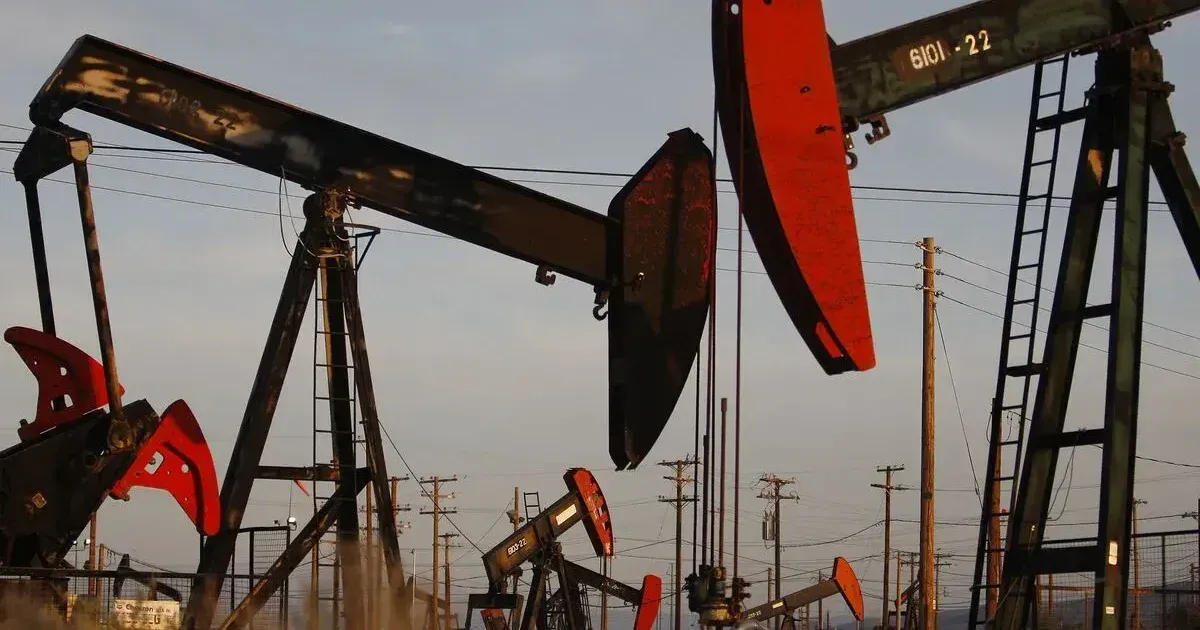
Executives at major American energy firms shared this sense of dread in the latest quarterly energy survey released by the Federal Reserve Bank of Dallas. These shale bosses characterized the current environment as one of pure chaos. Volatility in the crude markets makes long-term capital expenditure planning nearly impossible. Uncertainty prevents firms from committing to new drilling projects in the Permian Basin. Higher interest rates are already squeezing the margins of mid-sized producers. Most companies are choosing to return capital to shareholders rather than reinvesting in an unstable market. Production growth in the United States has flattened as a result of these conditions.
Dallas Fed Survey Reveals Shale Industry Frustration
Respondents to the Dallas Fed inquiry expressed deep frustration with the lack of clarity regarding US foreign policy in the region, a concern echoed in later analysis of the US-Iran clash at the United Nations. One anonymous executive noted that the risk of a full-scale regional war has added a permanent risk premium to every barrel of oil. Risk premiums fluctuate wildly with every diplomatic failure. Energy producers require a predictable price floor to justify the large costs of hydraulic fracturing and infrastructure development. Current fluctuations prevent such stability. The survey indicated that 65 percent of respondents see geopolitical risk as the primary headwind for the 2026 fiscal year. Capital remains trapped in conservative assets.
Drilling activity across Texas and New Mexico has slowed to a crawl. The cost of labor and equipment continues to rise despite the broader cooling of the domestic economy. Many independent operators fear that a sudden de-escalation would lead to a price collapse that would bankrupt over-leveraged firms. By contrast, a major escalation could push prices so high that it triggers a global recession. This dilemma forces producers into a defensive posture. The Federal Reserve Bank of Dallas reported that business activity indexes have fallen for three consecutive months. Debt servicing costs for energy companies reached a ten-year high last month.
LVMH Financial Recovery Hinges on Regional Stability
Luxury retail performance depends heavily on the confidence of the ultra-wealthy, a demographic that is currently retreating from discretionary spending. Bernard Arnault highlighted that the psychological impact of a potential global catastrophe is as damaging as the physical disruption of trade. Discretionary spending requires a sense of future security that is currently absent. LVMH reported a substantial decline in foot traffic at its flagship boutiques in Dubai and Doha. High-net-worth individuals in these regions are shifting their focus toward capital preservation and physical safety. Consumer sentiment in the Eurozone has also plummeted due to rising energy costs.
“The recovery of the luxury group hinges on the conflict being resolved quickly or we face a global catastrophe that will spare no sector of the economy,” Bernard Arnault said.
Market analysts in London observe that the luxury sector often is a leading indicator for broader economic health. When the wealthiest consumers stop spending, the middle class follows shortly thereafter. LVMH owns dozens of brands ranging from fashion to fine wines, all of which are sensitive to shifts in global trade. Shipping costs for luxury goods have doubled since the onset of the naval skirmishes in the Red Sea. Insurance premiums for air freight have also seen double-digit increases. These logistical hurdles erode the profit margins of even the most prestigious brands. Corporate guidance for the second half of 2026 has been withdrawn.
Crude Oil Market Volatility Impacts Consumer Spending
American households are feeling the secondary effects of the energy chaos through higher prices at the pump and increased utility bills. The price of Brent crude sat at $110 per barrel during the London close. High energy prices act as a regressive tax that saps the purchasing power of the average consumer. When fuel costs rise, the demand for non-essential services and products inevitably falls. That cycle is particularly dangerous for the hospitality and travel industries. Major airlines have already announced surcharges to offset the rising cost of jet fuel. Ticket sales for international flights are down 15 percent compared to the same period last year.
Regional banks in the United States are monitoring their exposure to the energy sector with increasing concern. Federal Reserve Bank of Dallas officials noted that credit conditions are tightening for small-to-mid-sized oil field service companies. Those firms are the backbone of the domestic energy industry. If they cannot access affordable credit, the long-term energy security of the nation is at risk. Iran continues to threaten the closure of essential shipping lanes, which would remove millions of barrels of oil from the daily global supply. Such a scenario would likely push prices past $150 per barrel. Inflationary pressures would become impossible for central banks to ignore.
Geopolitical Risk Factors and Global Supply Chains
Supply-chain managers are scrambling to find alternative routes for goods traveling between Asia and Europe. Cargo vessels have once again turned to the Cape of Good Hope, adding weeks to delivery times. Delays tie up capital and increase the risk of inventory shortages. Manufacturing plants in Germany have already reported delays in receiving critical components. The interconnected nature of the modern economy means that a conflict in the Levant can shutter a factory in Bavaria. Bernard Arnault pointed out that LVMH relies on a global web of suppliers who are all currently under stress. Resilience is being tested to its absolute limit.
Technology companies are also monitoring the situation as the cost of data center operations rises alongside electricity prices. AI development requires huge amounts of power, and any spike in energy costs slows the pace of innovation. Investors are beginning to question the valuations of tech giants if the cost of their core infrastructure continues to climb. The correlation between the energy sector and the digital economy is more pronounced than ever. Any disruption to the flow of hydrocarbons has an immediate cooling effect on the digital frontier. Global trade volumes fell by 3.4 percent in the first quarter. Economic output in the Pacific Rim is also showing signs of stagnation.
Iran Conflict Spreads Across Luxury and Energy Markets
Western elites often ignore the relationship between high-end fashion and high-octane fuel until both markets collapse simultaneously. Warnings from Bernard Arnault and the data from the Federal Reserve Bank of Dallas are more than industry complaints. They are the death rattles of a globalized system that assumed geopolitical stability was a permanent fixture. For decades, the luxury sector thrived on the expansion of a global nouveau riche, while the energy sector bankrolled the very regimes now threatening that stability. We are entering a period when the cost of maintaining the status quo exceeds the profit generated by it. Is the world prepared for the reality that the post-1945 economic order has finally reached its breaking point?
Paralysis in the Permian Basin is a choice. Shale executives are refusing to drill because the political and economic risks have become unquantifiable. They are choosing dividends over national security because the market rewards caution and punishes growth during periods of war. It is a rational response to an irrational global situation. LVMH and its peers are similarly paralyzed by a consumer base that is finally realizing that wealth cannot buy an escape from a global catastrophe. The intersection of luxury and energy reveals the true fragility of our financial systems.
Modern civilization is a house of cards built on cheap oil and expensive handbags. One of those pillars is currently on fire. The other is simply waiting for the smoke to arrive.