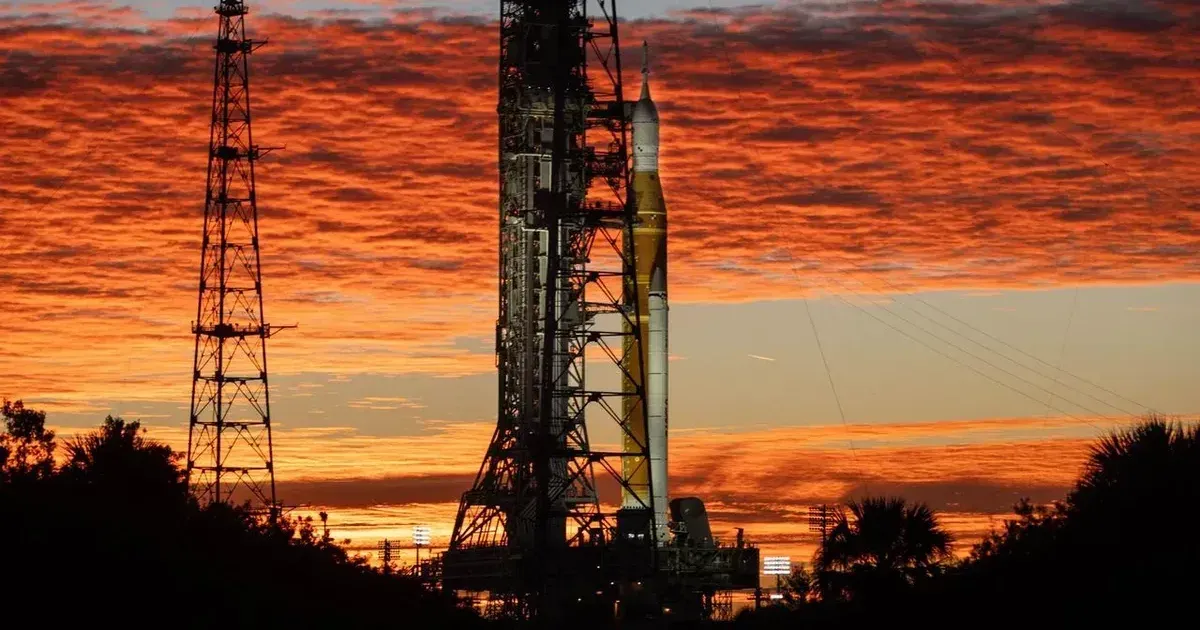
NASA is moving Artemis II toward a crewed lunar flyby while unresolved risk questions remain central to the schedule. The mission places four astronauts on a trajectory that will test Orion, SLS and the agency's tolerance for uncertainty before any lunar landing attempt.
Crew Risk Moves Beyond Training
Wiseman takes the commander seat with a background in naval aviation and a previous long-duration stay on the orbital laboratory. Joining him is Victor Glover, who will serve as the pilot for the Orion spacecraft. Glover became the first Black astronaut to join a long-term station crew during the SpaceX Crew-1 mission. His experience with automated docking systems and manual flight controls is considered essential for the lunar slingshot maneuver. The report was published March 13, 2026. The crew also includes Christina Koch, the record holder for the longest single spaceflight by a woman. Koch will function as a mission specialist, overseeing the scientific payloads and biological monitoring systems.
Jeremy Hansen occupies the fourth seat as the first Canadian to travel to the vicinity of the moon. His inclusion follows a treaty between the United States and Canada regarding the contribution of the Canadarm3 robotic system to the future Gateway station. Hansen has spent years in the Canadian Armed Forces and was selected for the astronaut corps in 2009. Training for this specific mission has involved hundreds of hours in high-fidelity simulators. These sessions replicate every possible failure mode from cabin depressurization to communications blackouts.
Four individuals are now the face of an international effort to establish a permanent presence on another celestial body. But the training regimen extends beyond the astronauts to the ground control teams in Houston. Controllers must learn to manage the significant time delay in communications once the capsule passes behind the lunar far side. Signal latency can reach several seconds, making real-time troubleshooting impossible. The mission profile requires the crew to be largely autonomous during the most critical burns.
Heat Shield Questions Remain Central
Engineers are currently obsessing over data from the Artemis I flight, which revealed unexpected charring on the heat shield. During the uncrewed 2022 mission, pieces of the protective ablative material wore away differently than predicted by computer models. Re-entry speeds for a lunar mission reach Mach 32, creating temperatures around 5,000 degrees Fahrenheit. If the shield loses too much material, the underlying structure could fail. NASA managers have spent the last year analyzing these erosion patterns to ensure the safety of the human crew.
NASA's Artemis 2 mission, which will launch astronauts to the moon for the first time in more than 50 years, comes with undeniable risk.
Separately, the life support system inside Orion has undergone extensive modifications. Scrubbing carbon dioxide and managing humidity in a small volume for four people requires a highly efficient recirculating system. Unlike the Apollo command module, Orion uses a more advanced nitrogen-oxygen mix. Failure of the pressure valves or the waste management system would force an immediate mission abort. Still, the spacecraft is designed with multiple redundancies to prevent a total loss of life support functionality.
In fact, the primary heat shield is composed of Avcoat, a material that has been used since the 1960s. While the chemistry is proven, the application process is manual and prone to tiny voids. X-ray inspections of the current shield revealed several areas requiring repair before the capsule could be mated to the rocket. Technicians spent months filling these gaps to ensure a uniform thermal barrier. The thermal protection system is the only thing standing between the crew and the plasma of re-entry.
Why the Launch Window Matters
Detailed risk calculations for the flight remain largely internal at the space agency. Historically, NASA used a Loss of Crew (LOC) metric to determine if a mission was safe enough to fly. For the Space Shuttle, the risk was often cited as 1 in 90, though later analysis suggested it was much higher in the early years. Artemis II is expected to have an LOC probability closer to 1 in 75 or 1 in 100. Still, the agency has not publicly released the finalized number for the 2026 launch window. Analysts suggest the lack of transparency stems from the complexity of the new hardware. By contrast, commercial partners like SpaceX are often more vocal about their safety tolerances. NASA must balance the political fallout of a potential tragedy against the need for scientific progress. Each component of the SLS rocket has a failure probability that contributes to the overall mission risk profile. The solid rocket boosters, for example, cannot be turned off once they are ignited. They provide the majority of the initial lift but represent a single point of failure during the first two minutes of flight.
Calculations also account for the risk of Micrometeoroid and Orbital Debris (MMOD) strikes. Orion will spend significant time in a high Earth orbit where the density of space junk is at its peak. A pebble-sized piece of debris traveling at orbital velocity can puncture the pressure vessel easily. Protective shielding covers the service module, but the crew cabin remains vulnerable to high-angle impacts. Ground tracking stations will monitor the flight path to provide debris avoidance maneuvers if necessary.
NASA Faces a Credibility Test
National prestige is driving the aggressive schedule as other nations announce their own lunar ambitions. China has stated a goal of landing taikonauts on the moon by 2030, putting pressure on the United States to maintain its lead. The $4.1 billion cost per launch makes any delay a significant financial burden for the American taxpayer. Congressional oversight committees have questioned whether the February date is realistic given the heat shield concerns. Yet, the White House has pushed for a visible victory in the second space race. International partners are watching the progress closely to see if the Artemis Accords will hold. More than thirty nations have signed the agreement to cooperate on lunar exploration and resource management. If Artemis II succeeds, it validates the architecture for the Gateway station and the eventual lunar base. Failure would likely lead to a multi-year hiatus and a potential withdrawal of international funding. The European Space Agency provided the service module, making this a truly global technical endeavor.
February marks a deadline that many insiders find optimistic but necessary for momentum. Testing the integrated systems in a deep-space environment is the only way to prove the hardware works. Theory and simulation can only go so far in the vacuum of space. The rocket stands 322 feet tall on the launch pad. NASA spent $11.8 billion on the development of the Orion spacecraft alone.
Human Spaceflight Carries Real Risk
National prestige remains the most expensive fuel in the NASA inventory. We are being asked to accept a level of ambiguity regarding astronaut safety that would be intolerable in any other industry. The agency's refusal to provide a transparent, quantified risk assessment for the Artemis II mission is a bureaucratic shield, not a safety protocol. By withholding the Loss of Crew probabilities, administrators are insulating themselves from future criticism rather than informing the public. The four individuals strapped into that capsule are not just explorers; they are political capital in a high-stakes game of orbital chicken with Beijing.
We must ask if the rush to beat a 2030 Chinese deadline has compromised the rigorous engineering standards that were supposedly learned after the Challenger and Columbia disasters. Space is hard, but honesty should be easy. If the heat shield erosion issues from Artemis I are not fully understood, the February launch is a reckless gamble. We are subsidizing a $4.1 billion pyrotechnic display that prioritizes a calendar date over the lives of the crew. True leadership in space is defined by the courage to delay a mission when the engineering case remains incomplete.
Anything less is just expensive theater.