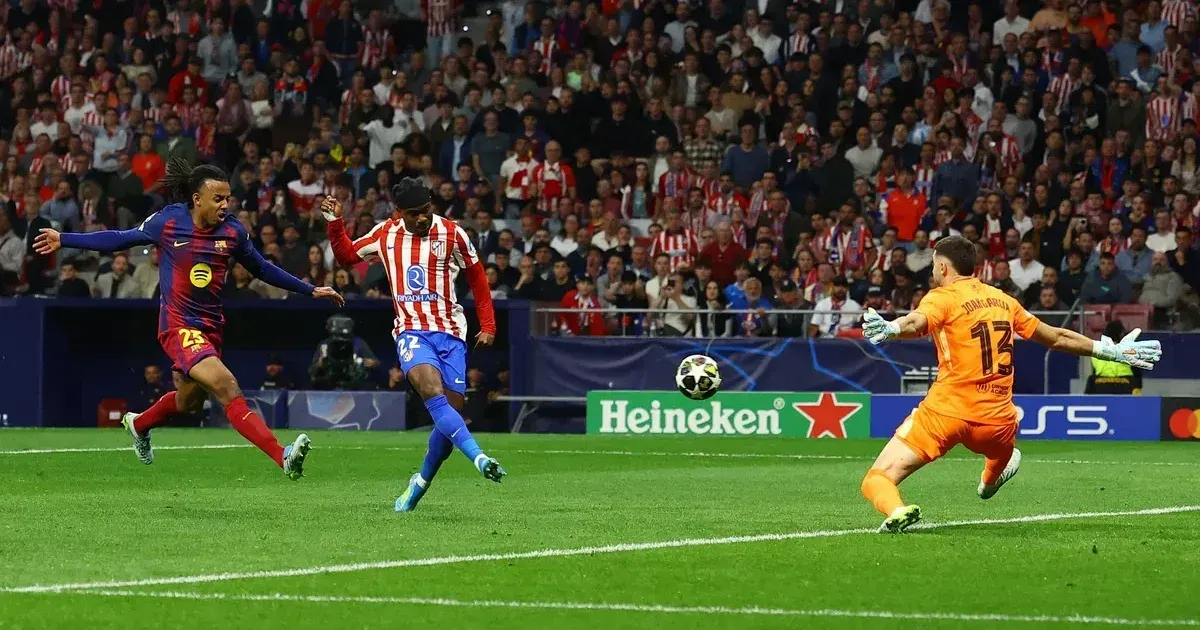
Atlético Madrid reached the Champions League semifinals after surviving a tense second leg against Barcelona, turning a narrow defeat on the night into a winning aggregate result. Simeone's side treated the night as a scoreboard problem before anything else. Atlético advanced on April 15, 2026, by protecting the advantage it had built in the first match.
The result fit Atlético's identity under Simeone. Barcelona controlled long spells, pushed the tempo, and forced the home side deep, but Atlético managed the tie rather than chasing style points. In knockout football, that kind of resistance can matter as much as attacking fluency.
Barcelona's pressure made the final stretch uncomfortable. The visitors needed another goal to change the shape of the tie, and Atlético spent much of the second half defending space, clearing crosses, and slowing the match whenever possible.
Simeone's Side Protects the Tie
Atlético entered the match with a cushion and treated game management as the priority. That did not mean the plan was passive from the start. The home side tried to disrupt Barcelona's buildup, but the tie gradually became a defensive test as Barcelona pushed more players forward.
For Simeone, the semifinal place reinforces a long-running European pattern. Atlético may not always dominate possession, but they remain difficult to eliminate when the aggregate situation favors them. The team understands how to defend a lead, absorb pressure, and turn frustration into a tactical asset.
Barcelona will view the tie differently. A strong second-leg performance still left them short because the first-leg deficit was too costly. Knockout football punishes slow starts, and Barcelona's late urgency could not fully repair earlier damage.
Barcelona Pressure Falls Short
The match also showed the promise and limits of Barcelona's younger attacking core. Creative wide play and aggressive pressing gave Atlético problems, but the final ball and finishing did not produce enough separation. Atlético's deeper block forced Barcelona to attempt difficult entries through crowded areas.
For Atlético, the performance was less about beauty than control. The players understood the scoreboard, accepted long defensive stretches, and avoided the kind of mistake that would have sent the tie into chaos. That discipline is why the celebration at the final whistle felt earned.
The semifinal brings a new level of pressure, especially against opponents with more varied attacking routes. Atlético will need more than resistance against the strongest remaining sides, but the Barcelona tie proves they can survive elite attacking pressure. For Simeone, that is a familiar formula: make the opponent uncomfortable, keep the tie alive, and trust the group to endure.
Barcelona leave with regret, not embarrassment. They created enough pressure to make the night dramatic, but Atlético owned the aggregate story. In Europe, that is the only story that decides who moves on.
The result also gives Atlético a psychological lift before the semifinal. Teams that survive a tie like this often carry more than tactics into the next round; they carry proof that the group can suffer without losing its shape. Barcelona will focus on the missed chances and the first-leg damage, while Simeone can point to collective discipline. That contrast explains why one side left with frustration and the other with a familiar European identity reinforced. The tie also underlined the difference between winning a match and winning a European series. Barcelona could point to possession, pressure, and the emotional force of the second leg, but Atlético could point to the aggregate score and the discipline that protected it. That is the ruthless math of the Champions League. A team can be uncomfortable for long stretches and still be in control if it understands the wider scoreboard. Simeone's players did not need to impress neutrals. They needed to deny Barcelona the one moment that would have turned pressure into panic, and they did enough to keep that moment from arriving. For Atlético supporters, the night also revived a familiar emotional pattern: anxiety during the match, vindication after the whistle. Simeone's teams have often asked fans to endure long defensive spells in exchange for European relevance. That bargain can be exhausting, but it keeps working when the side advances. The semifinal will demand more attacking ambition, yet the Barcelona tie proved that Atlético still know how to protect a result when the pressure rises. Atlético will also need to recover physically and mentally because defending a lead for long stretches carries a cost. The semifinal opponent will study where Barcelona found space and where Atlético looked stretched. Simeone can accept that scrutiny because his side advanced, but the next round will require sharper exits and more possession relief. That is the standard Atlético have set for themselves again. That next version of Atlético will need both resilience and cleaner possession. The win over two legs gives them that chance, even if the second leg exposed problems to solve before the next opponent. The broader lesson is that survival in Europe often depends on managing ugly minutes well.