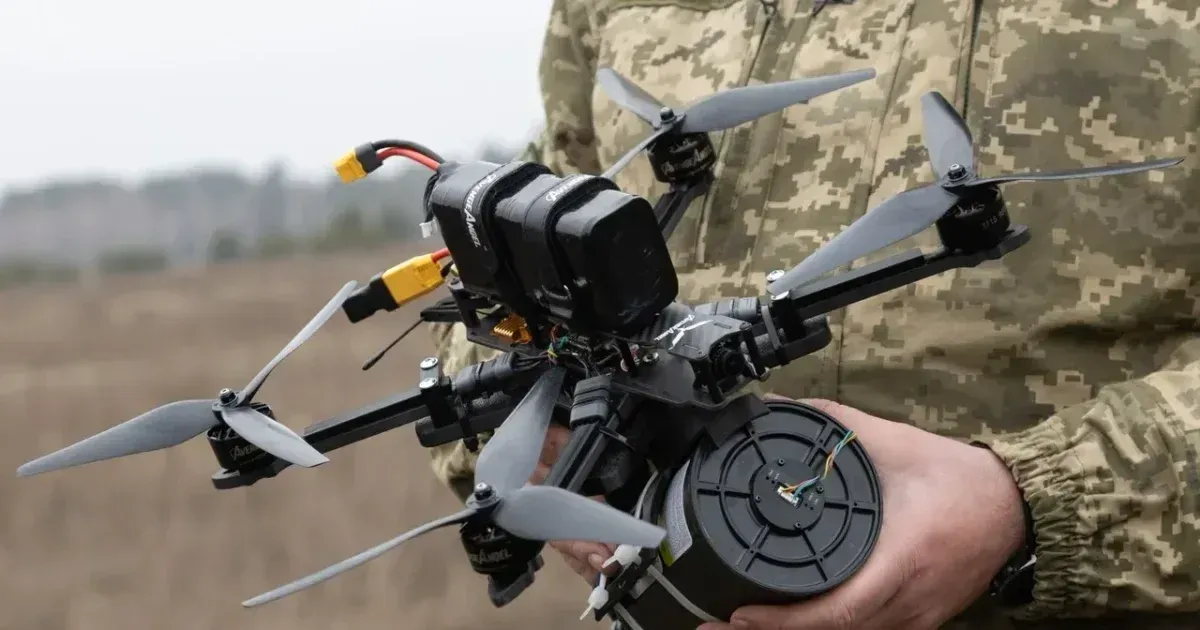
April 15, 2026, marked a shift in frontline dynamics as Volodymyr Zelensky confirmed that a unit of Russian soldiers surrendered to an unmanned ground vehicle during a direct assault. Ukrainian forces deployed several autonomous robotic systems into the most dangerous sectors of the contact line to minimize human casualties while maintaining offensive pressure. Germany provided the technical backbone for this transition through a series of high-level military agreements signed in Berlin. These machines now patrol the jagged trenches of eastern Ukraine, performing tasks once reserved for elite infantry squads.
Video footage released by the Ukrainian Ministry of Defense shows the robotic units approaching enemy dugouts with loudspeakers blaring instructions for capitulation. Success in this engagement validates the long-term investment in domestic drone production that Kyiv prioritized since the early stages of the invasion.
President Volodymyr Zelensky emphasized that these mechanical assets are specifically designed for high-risk zones where artillery saturation makes human presence unsustainable. Mechanical reliability and remote-operator precision allowed the robots to pin down the opposition without sustaining a single personnel injury. Reports from the 110th Mechanized Brigade suggest the enemy unit laid down their weapons after five hours of continuous suppression by a tracked machine equipped with a 7.62mm machine gun. Combat data shows that the sheer psychological impact of facing an unfeeling, armored adversary often breaks the will of conscripted troops.
Russian positions, often under-equipped and suffering from low morale, find few effective countermeasures against these agile ground drones. Military intelligence suggests the surrender took place near the Avdiivka sector, a region notorious for its high attrition rates.
Automated Warfare Reshapes the Contact Line
Unmanned ground vehicles (UGVs) operate with a level of persistence that human soldiers cannot match. They do not require sleep, food, or emotional support, allowing them to maintain a twenty-four-hour vigil over contested territory. Kyiv has integrated these systems into its broader tactical network, linking ground robots with overhead surveillance drones for a multi-layered reconnaissance and strike capability. Operators sit in reinforced bunkers miles away from the kinetic action, guiding the steel frames through mud and debris.
This distance allows for a more calculated approach to engagement, as pilots are not under the same immediate biological stress as a soldier in a foxhole. Sensor suites on the latest models include thermal imaging and laser rangefinders that pierce through smoke screens. Field commanders report that the presence of even a single robotic platform can freeze enemy movements across an entire 500-meter front.
Autonomous units now lead the clearance of minefields and the breaching of physical barriers. Historically, these tasks resulted in the highest casualty percentages for Ukrainian sappers and engineers. Robots equipped with flails or explosive charges can neutralize obstacles while infantry remains safely behind the second line of defense. Volodymyr Zelensky told reporters during his visit to Western Europe that these technologies are the only way to overcome the vast manpower advantage held by the Kremlin. The efficiency of these machines has forced Russian commanders to reconsider their reliance on massed infantry charges.
Each successful robotic operation reduces the demand for medical evacuations and long-term veteran care. Data indicates a 30% reduction in frontline fatalities in sectors where UGVs are the primary tools of engagement.
Germany Solidifies Drone Supply to Kyiv
Chancellor Olaf Scholz and Volodymyr Zelensky finalized a major defense pact in Berlin on April 14, 2026, aimed at scaling up the production of sophisticated unmanned systems. This agreement includes the transfer of advanced AI software that improves the target recognition capabilities of Ukrainian drones. Germany has committed to providing specialized microchips and sensor arrays that remain resilient against Russian electronic warfare efforts. The deal ensures a steady stream of hardware for the remainder of the fiscal year, totaling billions in military aid.
Berlin is now the primary hub for European drone manufacturing, shifting its focus from traditional heavy armor to agile, tech-driven solutions. Ukrainian engineers will work alongside German specialists to refine the chassis designs for diverse terrains. Local production facilities in Ukraine will also receive German-made components to assemble units closer to the battlefront.
The deployment of ground robots into the most dangerous areas of the frontline has saved lives and forced the enemy into a position where they must choose between surrender and certain destruction.
Volodymyr Zelensky made this statement while addressing a joint press conference in Berlin, highlighting the shift toward a more technological approach to the conflict. He noted that the cooperation with Germany is a structural change in how European powers support the Ukrainian defense. This partnership aims to bridge the gap between Western industrial capacity and Ukrainian battlefield experience. Military analysts believe this deal will make Kyiv the global leader in operational drone tactics within the next two years. The agreement also includes training programs for Ukrainian pilots to master the details of the new German sensor packages. Cooperation between the two nations has reached an all-time high as the war enters this automated phase.
Russian Resistance Fails Against Unmanned Systems
Russian infantry units frequently lack the electronic jamming equipment necessary to disrupt the low-frequency signals used by the robots. While the Russian military has attempted to develop its own ground drones, these efforts have been hampered by international sanctions on critical electronics. Moscow continues to rely on bulkier, less sophisticated armor that falls prey to Ukrainian kamikaze drones before ever reaching the contact line. Captured Russian soldiers have expressed a deep sense of helplessness when targeted by machines that they cannot talk to or negotiate with in the heat of battle.
The absence of a human face on the other side of the barrel creates a unique form of combat fatigue. Psychological warfare specialists in Kyiv are now tailoring their broadcasts to emphasize the futility of fighting a robotic army. Defectors report that rumors of the "unstoppable iron soldiers" have spread rapidly through the Russian barracks.
Kremlin officials have largely remained silent regarding the surrender incident, though state media has dismissed the reports as Ukrainian propaganda. Despite the denial, satellite imagery shows Russian forces digging deeper, more complex trench systems to hide from robotic patrols. These fortifications do little to stop the smaller, more nimble UGVs that can navigate narrow passages. The Russian logistics chain is also under pressure, as robotic units are increasingly used to interdict supply trucks on rural roads. It creates a feedback loop where frontline soldiers are left without the fuel or ammunition needed to counter the mechanical threat.
Morale continues to plummet as the disparity between Western-backed technology and Russian industrial stagnation becomes more apparent. Units that once held firm now melt away at the first sound of an approaching electric motor.
Technical Specifications of Ukrainian Robotic Units
Standard models in the Ukrainian fleet use a modular design that allows for rapid field repairs. The chassis is built from reinforced aluminum and composite armor capable of withstanding small arms fire and shrapnel. Power comes from high-density lithium-ion batteries that provide up to eight hours of active operational time. Four independent electric motors drive the tracks, allowing the robot to climb 45-degree inclines and navigate through deep mud. The weaponry is usually a remotely operated stabilized platform that can house various calibers of machine guns or anti-tank guided missiles.
Integrated acoustics allow the operator to hear ambient sounds and communicate through external speakers. These units weigh approximately 500 kilograms, making them heavy enough for stability but light enough for transport via standard utility trucks.
Software updates are pushed to the frontline units over encrypted satellite links to counter the latest Russian jamming frequencies. The artificial intelligence onboard assists with obstacle avoidance and pathfinding in GPS-denied environments. In the event of a signal loss, many units are programmed to return to their launch point automatically. It prevents sensitive technology from falling into enemy hands. Kyiv is currently testing a variant that can deploy its own tethered aerial drone to provide a localized bird's eye view. Such innovations keep the Ukrainian forces two steps ahead of the adversary's evolving tactics.
The cost of a single ground robot is a fraction of the cost of a modern main battle tank, yet it provides comparable lethality in urban and trench warfare. Budgetary data suggests that the mass production of these units is more sustainable than maintaining traditional infantry divisions.
The Elite Tribune Strategic Analysis
Cavalry once looked at the tank with the same mixture of disdain and terror that Russian infantry now feels toward the tracked drones of Kyiv. The transition to robotic dominance is not merely a tactical upgrade but a fundamental rewriting of the laws of engagement. By forcing a surrender through mechanical proxy, Ukraine has effectively decoupled the act of winning from the necessity of killing at close range. It is a terrifying advancement for the individual soldier who finds himself discarded by his own high command and hunted by a machine that does not possess a conscience.
The Kremlin is currently paralyzed by an industrial base that is incapable of producing the micro-electronics required to compete in this new theater of war. Putin's reliance on the mass of the body is failing against the precision of the processor.
Germany has finally found a way to exert its influence without the political baggage of sending its own soldiers into the fray. By becoming the factory for Ukraine's robotic army, Berlin is securing a future where it dictates the terms of European security through hardware dependency. It is a cold, calculated move that prioritizes the export of technology over the risks of traditional diplomacy. Volodymyr Zelensky has successfully leveraged this German pragmatism to build a force that is immune to the domestic political pressure of rising body counts.
The surrender of Russian troops to a machine on April 15, 2026, is the final proof that the era of human-centric warfare is closing. Resistance is futile when the enemy is a line of code. Victory is now a matter of manufacturing capacity.